Home Blog Page 12

How to Edit Twitch Highlights Without a Timeline (2026)

0

TL;DR: You can edit Twitch highlights without ever opening a timeline editor. Eklipse processes your full VOD after each stream, automatically detects your best moments, and delivers ready-to-review highlight clips to a dashboard — no scrubbing, no cutting, no render queue.


The traditional way to make Twitch highlights looked like this: export the VOD, import it into a timeline editor, scrub through two or three hours of footage, mark in and out points, cut, export, wait. For a single 45-second clip, that was easily a 40-minute job. Most streamers either skipped it entirely or did it so rarely it made no real impact on growth.

The alternative is not a simplified version of the same process. It is a completely different model: the AI watches your stream after you go offline and flags the moments worth sharing. You review candidates, approve the best ones, and post. No timeline. No export settings. No render wait.

This guide covers exactly how to create Twitch highlights without a timeline editor, which tools handle the detection and formatting, and how to turn your stream sessions into consistent short-form content without adding hours to your week.

Why Timeline Editing Is the Wrong Tool for Most Twitch Highlights

Timeline editors — Premiere Pro, DaVinci Resolve, CapCut — were designed for a different workflow. You have raw footage, you know what you want, you assemble it on a timeline. They do that job well.

Twitch highlights have a different problem. You don’t know exactly what you want. You have two to four hours of footage and somewhere inside it are the two or three moments worth sharing. Before you can edit anything, you have to find those moments. That search phase is where most of the time goes.

A timeline editor doesn’t help you find moments. It helps you arrange moments you’ve already found. For a 30-second TikTok clip from a three-hour stream, you spend 35 minutes finding and 5 minutes editing. The editing step isn’t the bottleneck.

AI highlight detection inverts this. The tool watches your footage and surfaces the moments. You skip the search entirely. The 35-minute bottleneck disappears, and you’re left with only the review and approval step — which takes about 15 minutes for a typical session.

Here’s how the two approaches compare for a standard 3-hour Twitch stream:

StepTimeline EditingNo-Timeline (Eklipse)
Finding highlights25-35 min scrubbing0 min (AI detects)
Trimming clips5-10 min0-2 min (optional trim)
Vertical conversion5-10 min0 min (automatic)
Captioning5-10 min0-3 min (review only)
Branding/logo3-5 min0 min (template applied)
Posting5 min0-2 min (queue in dashboard)
Total per session48-70 min10-15 min

For streamers building a consistent TikTok or YouTube Shorts presence from their Twitch sessions, the no-timeline approach isn’t a compromise. It’s the right tool for the actual job.


How Eklipse Detects Twitch Highlights Automatically

Eklipse connects to your Twitch channel and processes your VOD after each stream ends. You need “Store past broadcasts” enabled in your Twitch channel settings for VOD access. Once connected, everything else is automatic.

The Detection Signals

Eklipse uses four signals to identify Twitch highlights:

Kill and event detection: For FPS and battle royale games, the AI recognizes game events visually — Valorant aces, Fortnite circle wins, Apex champions, CS2 clutch rounds. Each game title has specific training data. Detection accuracy is highest for competitive shooters and battle royale titles; slower-paced games rely more on audio signals.

Audio hype detection: Voice pitch spikes, sudden volume increases, and post-play reactions (the moment after the kill, when you react) reliably correlate with highlight moments. This is the primary signal for non-FPS games and for variety streamers.

Chat velocity: A sudden surge in chat messages is a strong proxy for exciting gameplay. When 50 people type at once, something worth watching happened.

Voice commands: Say “Eklipse clip that” during your stream and the system flags that exact timestamp for review. Useful when you know a moment was good before the AI has even processed it.

What You Get in the Dashboard

After a typical three-hour stream, Eklipse delivers 10-15 highlight candidates in your dashboard within 20-60 minutes of going offline (faster on Premium). Each clip has already been:

  • Converted to 9:16 vertical for TikTok, Reels, and Shorts
  • Auto-captioned using speech recognition
  • Branded with your channel template from Eklipse Studio
  • Ranked by AI confidence score

Your job is review, not editing. You watch each candidate, check the captions, pick the two or three you want to post, and queue them. No cuts to make. No export settings to configure.

Ready to stop scrubbing through VODs? [Connect your Twitch channel to Eklipse free] and let the next stream run through it.


Setting Up the No-Timeline Highlight Workflow

Here is the exact setup process from start to first posted highlight.

Step 1: Enable Twitch VOD Storage

Go to your Twitch Creator Dashboard. Click Settings, then Stream, and toggle “Store past broadcasts” to on. Twitch saves VODs for 14 days on standard accounts (60 days for Partners). Without this enabled, Eklipse has nothing to process.

Step 2: Connect Your Channel to Eklipse

Create an Eklipse account at eklipse.gg. In the dashboard, go to Channels and connect your Twitch account. Grant the API access Eklipse needs to read your VODs.

Step 3: Configure Eklipse Studio Once

Eklipse Studio handles your branding template. Set it up once:

  • Upload your channel logo or avatar
  • Choose a caption style
  • Configure your default clip length range (15-60 seconds for short-form)
  • Add an end card with your stream schedule and Twitch handle

Every highlight clip gets this template applied automatically. You never have to add your logo manually.

Step 4: Connect Your Posting Destinations

In Social Accounts, connect TikTok, YouTube, and Instagram. Set your default posting schedule per platform. Now when you approve a clip, it goes directly to your connected accounts on the schedule you set.

Step 5: Set Your Post-Stream Review Habit

Block 20 minutes after each stream for dashboard review. This is the only active time commitment in the workflow. Eklipse processes in the background; your job starts when processing is done.


The Post-Stream Review: What Good Looks Like

Reviewing Twitch highlights in Eklipse is different from editing. You are not making creative decisions about cuts or timing — those were handled by the AI. You are making curatorial decisions about which clips represent your session best.

Here is what to look for in the 10-15 clips Eklipse surfaces:

A strong opening moment: The first three seconds determine whether a viewer on TikTok keeps watching or swipes. The clip should start at the action or just before the peak, not five seconds before anything happens. Eklipse sometimes clips too much pre-action — trim the opening if needed.

A clear outcome: The best Twitch highlights have a payoff. Something happens, and the result is satisfying to watch. A kill sequence that ends with a win. A reaction that lands. A comeback that completes.

Something that makes a viewer want more: The clip should leave the viewer wanting to see what happens next, or wanting to see more of your personality and gameplay. That is what converts a Short viewer into a Twitch follower.

Caption accuracy: AI captions for gaming streams make errors on game-specific callouts, champion names, weapon abbreviations, and player handles. Read through every clip’s captions before posting. Clips with wrong captions are not just inaccurate — they actively undermine the content when the text and audio contradict each other.

The full review session for 12-15 clips should take about 15 minutes. You watch, you check captions, you select two or three, you queue. That is it.


A Streamer Who Replaced Her Editor with Eklipse

Jade had been streaming League of Legends for almost two years. She was comfortable in Premiere Pro — had used it for YouTube projects for years — but applying that workflow to Twitch highlights felt wrong from the start.

Her problem was not editing skill. It was the search phase. She would open the VOD, start scrubbing, lose focus halfway through, and end up with one mediocre clip 90 minutes later. Most nights she just did not start. Her TikTok sat at 1,400 followers after 22 months.

In August 2025, a friend walked her through Eklipse. She was skeptical that the AI would understand what made a League clip worth sharing. But she ran one session through it anyway.

The next morning she had 13 clips in her dashboard. Six of them were genuinely good. She reviewed them in 18 minutes, picked three, fixed captions on two, and posted all three before noon.

That week she posted 11 clips from three stream sessions. Total editing time: about 55 minutes across the whole week. Previously, 11 clips would have taken 15 hours in Premiere.

Four months later her TikTok had 26,000 followers. Her Twitch average concurrent had climbed from 22 to 78. She still uses Premiere for her monthly YouTube longform content — but for daily highlights, Eklipse handles everything.

“Premiere was never the problem,” she said. “The search was the problem. Once I stopped doing that, everything changed.”


When the No-Timeline Workflow Hits Its Limits

Being direct about where AI detection falls short:

Slow-paced games: Eklipse detection is strongest for FPS and battle royale titles with clear kill events. If you stream strategy games, RPGs, simulation, or variety content, the AI relies primarily on audio signals and chat velocity. You will see fewer auto-detected clips per session and will select moments more manually.

Niche or new titles: Detection accuracy for games with less training data is lower. If you stream a game that launched last week, Eklipse may not yet have game-specific visual recognition for it. Audio signals still work, but kill detection may not.

Clips that require context: Some Twitch highlights only make sense if you understand what happened in the ten minutes before. The AI cannot detect narrative moments that depend on extended context — a comeback from an hours-long losing streak, a moment that pays off a running joke your community has been waiting for. Those moments you will catch yourself by reviewing the full dashboard or using the voice command feature mid-stream.

Brand-specific creative choices: If you want custom transitions, a specific audio overlay, color grading, or a carefully timed music sync, you still need a timeline editor. The no-timeline workflow is optimized for speed, not production polish.

For most streamers creating daily TikTok content from Twitch sessions, these limitations are not blockers. They are the right trade-offs for a workflow that actually gets done.


FAQ: Twitch Highlights Without a Timeline

How long does Eklipse take to process a Twitch VOD?

On the free plan, a three-hour stream processes in 45-90 minutes after you go offline. Eklipse Premium is 10x faster — the same session processes in 5-10 minutes. For streamers who want clips ready before they go to bed, the free tier timing usually works fine for late-night streams.

Can I still make manual cuts if the AI clips are not exactly right?

Yes. Inside Eklipse Studio, you can trim the start and end points of any clip. This is useful when the AI clips too much pre-action before the highlight moment. You can shorten the opening without needing a full timeline editor. For most clips, no trim is needed.

What’s the difference between Eklipse and Twitch’s built-in clip tool?

Twitch’s native clip tool requires you to manually find the moment and clip it yourself during or after the stream. It produces a horizontal 16:9 clip by default. Eklipse watches your full VOD after the stream and finds the moments automatically, then converts each clip to vertical 9:16 with captions and branding. They solve different problems. Twitch clips are good for in-the-moment sharing; Eklipse is for systematic post-stream highlight production.

Does the AI ever flag moments that are not actually good?

Yes. AI detection has false positives — moments that triggered an audio spike or chat surge but are not actually interesting to watch. This is why the review step exists. Think of Eklipse as an assistant that pre-screens your VOD so you only watch the 15 most likely candidates instead of three hours of footage. You still make the final call.

Can I use Eklipse if I stream on YouTube instead of Twitch?

Yes. Eklipse supports Twitch, YouTube, Kick, and Facebook Live. For YouTube, connect your Google account in the Eklipse dashboard. VOD detection and highlight delivery work the same way.

How many highlights should I post per stream day?

One to three is the sustainable range for most streamers. More than three per day tends to reduce per-clip engagement on TikTok without proportionally increasing reach. Start with two clips per stream session and adjust based on your TikTok analytics after 30 days.


Conclusion

The timeline editor is not the right tool for daily Twitch highlights. The bottleneck is not cutting — it is finding. An AI that watches your full VOD and surfaces your best moments removes the actual friction in the workflow.

Eklipse handles the detection, vertical conversion, captioning, and branding automatically. Your active time is 15-20 minutes of review and approval after each stream. The clips go from your Twitch session to TikTok without touching a timeline.

For streamers who know they should be posting highlights consistently but keep skipping it because editing feels like a project, the no-timeline workflow is the solution. It does not produce more polished clips. It produces more clips — and consistency is what grows channels.

Set up Eklipse on your next stream and run it through the free tier. Review the clips in the morning. See how long it actually takes. If the workflow saves you 30 minutes per session and delivers two clips worth posting, it is already working.

Already posting consistently? Our streamer content calendar guide covers how to systematize your full weekly posting schedule so highlights go live on a predictable cadence.

Twitch vs. YouTube: Where Should Streamers Post Short Clips in 2026?

0

TL;DR: For most streamers, YouTube Shorts is the better platform for short clips in 2026, it drives more Twitch subscriber conversions, has stronger long-term discoverability, and its algorithm actively promotes gaming content to non-subscribers. TikTok, however, beats both for raw reach and new audience acquisition. Here’s the full breakdown.


73% of streamers who grow their Twitch channels in 2026 credit short-form clips as their primary acquisition channel. But “post clips” isn’t a strategy. Where you post them changes everything.

Twitch Clips are where most streamers start. They’re fast, free, and built directly into the platform. But Twitch’s own clip discovery is notoriously weak, your clips live on your channel page, and they go exactly nowhere unless someone actively shares them. YouTube Shorts and TikTok, meanwhile, have distribution algorithms that show your content to people who have never heard of you.

You already know your clips need to live off Twitch to drive real growth. This guide compares every platform where streamers post short clips in 2026, including Twitch’s own clip system, YouTube Shorts, TikTok, and Instagram Reels, with data on which drives the most Twitch growth. We’ll cover discoverability, audience overlap, conversion rates, and a recommended platform strategy based on your channel size.

The Problem With Twitch Clips as a Growth Strategy

Let’s address the most common misconception first: Twitch Clips are not a discovery channel.

When you create a Twitch Clip, it appears on your Twitch channel page under the “Clips” tab. Viewers who are already following you can find it there. Your channel page also shows up if someone searches your name. That’s essentially the extent of Twitch’s clip distribution.

Twitch does not have a “For You” feed for clips. There is no Twitch algorithm pushing your clip to strangers based on engagement. The Clips tab exists for your existing audience, not for finding new ones.

The only way Twitch Clips drive growth is if someone shares them externally: a friend pastes the link on Discord, a Reddit post blows up, a streamer clips your moment during a raid. These things happen, but they’re unpredictable and unscalable.

The bottom line: Twitch Clips are a sharing format, not a growth format. Use them for fan sharing and community moments. Use external platforms for acquisition.


YouTube Shorts in 2026: The Strongest Twitch Growth Driver

YouTube Shorts has quietly become the most powerful clip platform for streamers trying to grow on Twitch, and the reason is audience intent.

YouTube’s gaming audience actively seeks out gaming content. They’re searching for “best Valorant plays,” “Minecraft challenge clips,” “funny Rust moments.” When your Short appears in these searches or in the Shorts feed, it reaches people who already like gaming. They’re one step away from your target audience.

Compare that to TikTok, where gaming clips compete with everything from cooking tutorials to celebrity gossip. The gaming audience is there, but it’s diluted.

Why YouTube Shorts Converts to Twitch Subscribers

The conversion path from YouTube Shorts to Twitch follow is shorter than it looks:

  1. Viewer watches your Short
  2. They tap your channel name
  3. Your YouTube channel page shows your other Shorts and any long-form VODs
  4. “Check out my Twitch” is in your bio
  5. They follow on Twitch

YouTube’s desktop and mobile experience makes this journey smooth. The subscriber base YouTube builds around your content also reinforces the habit of checking your channel, which eventually spills into checking your Twitch.

Streamers who consistently post to YouTube Shorts report that 3-5% of Shorts viewers who visit their channel profile end up following on Twitch. At scale, that compounds fast.

YouTube Shorts Algorithm in 2026

YouTube’s Shorts algorithm rewards:

  • Click-through rate: Your thumbnail/title combination needs to be searchable and compelling
  • Retention: How much of your Short gets watched (aim for 80%+)
  • Subscription conversion: Shorts that lead to subscribers get boosted
  • Topic consistency: Posting within the same game niche signals topical authority

One important caveat: YouTube Shorts are indexed by Google. A Short about “best Valorant clutch 2026” can rank in Google search results, not just YouTube search. This is a discovery surface that TikTok and Twitch simply don’t have.

Want to turn your next stream into YouTube Shorts automatically? Try Eklipse free, AI detects your best moments and exports in Shorts-ready format, no manual editing required.


Mini-Story: How Dominic Grew His Twitch From 40 to 800 Followers With YouTube Shorts

Dominic streams League of Legends. In January 2026, he had 40 Twitch followers, no TikTok presence, and a YouTube channel with 12 subscribers from 2021.

He committed to a simple rule: every stream, post 2 YouTube Shorts the next morning. He used Eklipse to pull his best moments automatically and wrote searchable titles, “Pentakill with 3 HP left,” “How I climbed from Silver to Gold in 3 weeks,” “LoL ranked tilts everybody.”

Within 8 weeks:

  • YouTube Shorts: 2,200 subscribers
  • TikTok (he cross-posted): 900 followers
  • Twitch: 800 followers (up from 40)

The YouTube algorithm picked up his LoL content because he was consistent and topically focused. His Twitch link in the YouTube bio converted viewers at a steady clip. By week 10, he hit Twitch Affiliate.

He credits YouTube Shorts over TikTok for the Twitch growth specifically: “TikTok got me views. YouTube got me followers who actually came to my streams.”


TikTok in 2026: Maximum Reach, Lower Conversion

TikTok is the highest-reach platform for short gaming clips in 2026. Full stop. A clip that goes modestly viral on TikTok can get 100,000+ views within 48 hours. The same clip on YouTube Shorts might get 5,000-10,000.

But reach isn’t everything. And for Twitch growth specifically, TikTok’s conversion from clip view to Twitch follower is lower than YouTube’s.

Why TikTok Reach Doesn’t Always Mean Twitch Growth

Several factors explain the gap:

Platform mindset: TikTok users are in entertainment/discovery mode. They’re consuming content passively and moving fast. The friction to follow on a different platform (open browser, search for your Twitch, create account, follow) is higher than YouTube’s more deliberate audience.

Audience demographics: TikTok’s gaming audience skews younger and more casual. These viewers enjoy the clip but may not be committed enough to become loyal Twitch viewers.

Link limitations: TikTok doesn’t allow clickable links in video descriptions for accounts under 1,000 followers. You have to put your Twitch link in bio, which adds a step.

When TikTok Is the Right Choice

Despite the lower conversion rate, TikTok is the right primary platform in these situations:

  • You’re starting from zero and need brand awareness before conversion matters
  • Your content is highly entertainment-driven (IRL, Just Chatting, reactions) rather than skill-driven
  • You’re targeting a younger demographic (18-24) who uses TikTok more than YouTube
  • You want to test which clip formats resonate before investing in YouTube optimization

The strategic view: Use TikTok to build the top of your funnel. Use YouTube Shorts to convert that awareness into committed followers.


Instagram Reels: The Third Platform Worth Considering

Instagram Reels is a distant third for most gaming streamers, but “distant third” still means something if you’re already on Instagram.

Where Reels Wins

IRL and lifestyle content: Streamers who show behind-the-scenes setup content, reaction clips, or personal moments outperform pure gameplay Reels. Instagram’s audience responds better to personality than to in-game skill.

Older gaming demographic (25-35): Instagram’s gaming audience skews slightly older than TikTok’s. If your Twitch audience is primarily 25-35, Reels is a better fit.

Cross-promotion with brands: If Eklipse or gaming brands sponsor you, Instagram is where that partnership content lives. Reels reach is strong enough for brand deal deliverables.

Where Reels Falls Short

Gaming Reels get less algorithmic push than entertainment, fashion, or fitness content. Instagram’s core identity is still photo-first, and the Reels tab competes with a more diverse set of content types. If your clip is pure gameplay with no personality component, it’s harder to stand out.

Recommendation: If you’re already active on Instagram (500+ followers), repurpose your TikTok clips to Reels with a different caption. If you have no Instagram presence, don’t start one just for gaming clips, the ROI vs. YouTube Shorts is lower.


Head-to-Head Comparison: All Platforms for Streamers

FactorTwitch ClipsYouTube ShortsTikTokInstagram Reels
Organic discoveryโŒ Very lowโœ… Highโœ… Very high๐ŸŸก Medium
Gaming audience densityโœ… Highโœ… High๐ŸŸก Medium๐ŸŸก Medium
Twitch conversion rateN/Aโœ… High (3-5%)๐ŸŸก Low-medium๐ŸŸก Low
Google search indexingโŒ Noโœ… YesโŒ NoโŒ No
Algorithm for new accountsโŒ Noneโœ… Strongโœ… Very strong๐ŸŸก Medium
Optimal clip lengthAny45-60s21-34s15-30s
Best content typeSharingSkill/educationalEntertainmentLifestyle/personality
Monetization potentialโŒ Noneโœ… Ad revenue๐ŸŸก Creator Fund๐ŸŸก Brand deals

Mini-Story: Why Posting Only to Twitch Clips Cost Priya 6 Months

Priya streams Apex Legends. She’s been streaming since 2024 and was genuinely skilled, Gold rank, clean gameplay, solid commentary. But after 18 months, she had 55 Twitch followers.

Her clip strategy: she created Twitch Clips after every good game, posted them to her own Clips tab, and occasionally shared one in her personal Discord. She was creating content. Just no one new was seeing it.

In March 2026, a friend convinced her to post 5 old clips to YouTube Shorts over one week. She rewrote the titles to be searchable: “Apex Legends, how I won a 1v3 when I was fully thirsted,” “The most satisfying Wraith clip I’ve ever hit.”

Those 5 Shorts got 47,000 total views in 2 weeks. Her YouTube channel went from 0 to 340 subscribers. Her Twitch went from 55 to 190 followers, from YouTube bio traffic alone.

Same clips. Same content. Different distribution. The only thing that changed was where the clips lived.


The Platform Strategy by Channel Size

Not every streamer needs to be on every platform. Here’s the recommended approach based on where you are:

Starting Out (0-100 Twitch followers)

Priority: TikTok first, then YouTube Shorts

You need raw reach before conversion matters. TikTok’s algorithm is the most forgiving for new accounts with zero existing audience. Post 3-5 clips per week on TikTok. Cross-post the best performer to YouTube Shorts each week.

Don’t bother with Instagram unless you already have 500+ followers there.

Growing (100-500 Twitch followers)

Priority: YouTube Shorts first, TikTok second

At this stage, you have enough content and pattern recognition to optimize for conversion, not just reach. YouTube Shorts’ higher subscriber conversion rate will compound faster than TikTok reach.

Maintain TikTok at 2-3 clips per week. Increase YouTube Shorts to 3-5 per week. The clips can be the same content, adjusted for each platform’s optimal length and caption style.

Established (500+ Twitch followers, Affiliate/Partner)

Priority: YouTube Shorts + TikTok equally, add Reels selectively

At this scale, you want both reach (TikTok) and conversion (YouTube Shorts) running simultaneously. You also have the follower count for Instagram to make Reels worth the incremental effort.

This is also the stage where YouTube Shorts ad revenue starts to become meaningful. Some streamers at 5,000+ YouTube subscribers earn $200-500/month from Shorts alone, an additional income stream on top of Twitch subs and donations.

Ready to build your multi-platform clip system? Start with Eklipse, auto-clip your VODs, export in platform-specific formats, and stop spending 2 hours editing every stream.


FAQ: Twitch Clips vs. YouTube Shorts vs. TikTok for Streamers

Should I post clips on Twitch Clips or YouTube Shorts?
Both, but for different purposes. Twitch Clips are for sharing with your existing community (Discord, Twitter, Reddit). YouTube Shorts are for acquiring new viewers who haven’t found you yet. Think of Clips as retention, Shorts as acquisition.

Do YouTube Shorts actually grow Twitch channels?
Yes, with caveats. YouTube Shorts drive Twitch growth when your bio has a clear Twitch link, your Shorts establish who you are as a streamer (not just random game clips), and you’re consistent enough for YouTube’s algorithm to understand your niche. Expect 3-6 months of consistent posting before compound growth kicks in.

Is TikTok or YouTube Shorts better for gaming streamers?
Depends on your goal. TikTok for maximum reach and brand awareness, especially in the 16-24 demographic. YouTube Shorts for higher Twitch subscriber conversion and long-term Google/YouTube discoverability. Most streamers benefit from both.

Can I post the same clip to TikTok and YouTube Shorts?
Yes, with length adjustments. TikTok performs best at 21-34 seconds; Shorts at 45-60 seconds. Consider making a short version for TikTok and a slightly longer version for Shorts with a brief setup. Different captions on each platform also help avoid cross-platform content detection penalties.

Does Instagram Reels help Twitch streamers grow?
For most gaming streamers, Reels is a lower-ROI platform compared to TikTok and YouTube Shorts. It works best for IRL/lifestyle streaming content or streamers who already have an established Instagram presence. Don’t start from zero on Instagram just for gaming clips.

How many clips should I post per week?
The sweet spot for most streamers: 3-5 TikToks, 3-5 YouTube Shorts, with some overlap in content. Quality matters more than volume, 3 well-titled, properly formatted clips beat 10 hastily uploaded ones every time.


Conclusion: Build for Reach AND Conversion

The short clip platform question isn’t Twitch vs. YouTube, it’s how all these platforms work together.

Twitch Clips serve your existing community. TikTok builds awareness with new audiences at scale. YouTube Shorts converts that awareness into committed followers and Twitch subscribers. Instagram Reels adds personality reach for certain creator types.

The streamers winning in 2026 aren’t choosing one platform, they’re using AI tools to clip once and publish everywhere, with each post tuned for that platform’s format and audience. The workflow is fast, the reach is compounding, and the alternative (posting only on Twitch and hoping for organic discovery) simply doesn’t work anymore.

Start with where your audience actually is. Post consistently. Let the algorithms do the distribution work.

How to Turn Twitch VODs Into TikTok Clips Automatically

0
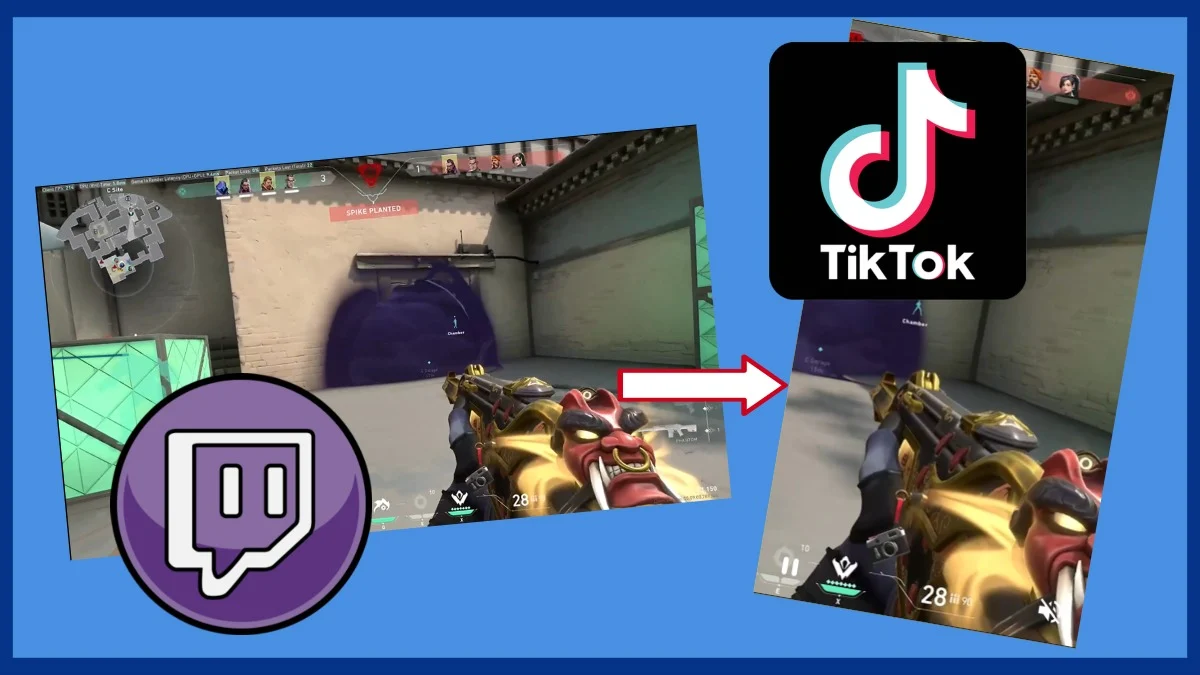
Edit Twitch clips to TikTok

TL;DR: The fastest way to turn Twitch VODs into TikTok clips automatically is to use an AI clip tool like Eklipse, it scans your VOD, detects the best moments, crops to 9:16, adds captions, and has clips ready within minutes of your stream ending. Here’s exactly how the process works.


Most streamers are sitting on a goldmine they never touch. A 4-hour stream generates roughly 240 minutes of potential content, but manually scrubbing through VODs to find the good stuff takes almost as long as the stream itself. So the clips never get made. The TikTok account stays at 200 followers. The stream stays at 12 concurrent viewers.

You already know clips drive growth. The data is unambiguous: streamers who post 3-5 TikTok clips per week see 2-4x faster follower growth than those who rely on live discovery alone. The bottleneck isn’t motivation. It’s time.

Watching your own VOD to find clip-worthy moments is genuinely painful. This guide walks you through the full automated workflow, from VOD to published TikTok clip, including which tools actually work, what the AI detects, and how to post consistently without burning hours. We’ll cover how auto-clipping works, step-by-step setup, format optimization, and a sustainable posting system.

Why Manual VOD Clipping Doesn’t Scale

Let’s be honest about what manual clipping actually costs.

A 3-hour stream. You know there was a great clutch around the 1:45 mark, a funny chat moment somewhere in hour two, and probably a solid highlight near the end. To find all three, you’re fast-forwarding through 180 minutes of footage, scrubbing back when you overshoot, then cutting, cropping to vertical, adding captions, and exporting. Then doing it again for the next clip.

For one stream, that’s 45-90 minutes of editing. If you stream four times a week, that’s potentially 6 hours of post-production on top of the streaming itself.

Most streamers hit one of two failure modes: they either spend the time and burn out, or they stop clipping entirely. Neither one grows the channel.

The math only works if the post-production time drops dramatically. That’s what automation solves.

What “Automatic” Actually Means

Automatic clipping isn’t magic, it’s pattern recognition at scale. AI clip tools analyze several signals simultaneously:

  • Chat velocity: Sudden spikes in chat messages indicate exciting moments (kills, fails, wins, jokes)
  • Audio peaks: Your mic volume spiking (you yelling, laughing, reacting) signals clip-worthy moments
  • Game event detection: Many tools recognize specific in-game events, kills, deaths, objective completions, boss kills
  • Engagement patterns: If viewers are reacting, the moment is probably worth clipping

The result: a 4-hour VOD gets scanned in 2-5 minutes, and you receive a ranked list of the 5-15 best moments. You pick which ones to use. Done.


Step-by-Step: From Twitch VOD to TikTok Clip

Here’s the complete workflow using Eklipse (the most gaming-specific option currently available):

Step 1: Connect Your Twitch Account

Link your Twitch account to Eklipse. The tool accesses your VOD library directly, you don’t need to download anything. This is a one-time setup that takes about 2 minutes.

Once connected, Eklipse can monitor your streams automatically and begin analyzing VODs as soon as they’re available (usually within 30-60 minutes of a stream ending).

Step 2: Let the AI Scan Your VOD

After your stream ends, Eklipse processes the VOD. For a 3-hour stream, this typically takes 5-15 minutes depending on server load. The AI is simultaneously analyzing chat logs, audio waveforms, and gameplay events.

You’ll receive a notification when clips are ready. No action needed on your end during this phase.

Step 3: Review the Clip Suggestions

You’ll see a dashboard with ranked clips, each with a preview, a timestamp, and a confidence score. This is where you spend most of your time in this workflow: maybe 5-10 minutes reviewing suggestions and selecting which clips to use.

What to look for when reviewing:

  • Does the clip have a clear beginning and end? (Not cutting mid-action)
  • Is the emotional peak obvious within the first 5 seconds?
  • Would someone who doesn’t watch your stream understand why this is interesting?

Discard clips that require context to appreciate. TikTok audiences don’t know your lore.

Step 4: Export in TikTok Format

Select your clips and export in 9:16 (vertical) format. Eklipse handles the crop automatically, it uses face detection and action detection to keep the important part of the frame visible, rather than just center-cropping.

At this stage, you can also:

  • Trim the clip length (target 21-34 seconds for maximum TikTok completion rate)
  • Enable auto-captions (strongly recommended, 80% of TikTok users watch without sound)
  • Add your watermark or lower-third if desired

Step 5: Write the Caption and Upload

This is the only part that requires genuine creative thought, and it should take 2-3 minutes per clip.

TikTok caption formula for gaming clips:

  • Hook (what will happen): “I shouldn’t have survived thisโ€ฆ”
  • Context (game/situation): “Valorant ranked, down to my last bullet”
  • CTA: “Follow for more ranked chaos”

Add 3-5 relevant hashtags. Upload. Move on.

Want to try the automated workflow yourself? [Start a free Eklipse account โ†’], no credit card required, and your first clips are ready within an hour of your next stream.


Mini-Story: How Kevin Went from 400 to 8,000 TikTok Followers in 8 Weeks

Kevin streams Rust on Twitch. Consistent schedule, decent gameplay, but his TikTok account had 400 followers after six months of sporadic posting. He’d upload a clip maybe once every two weeks, whenever he had time and energy to edit.

In February 2026, Kevin switched to automated clipping. His new rule: every stream gets at least 2 clips posted within 24 hours, no exceptions.

The first week felt low-effort. He spent maybe 15 minutes per stream on clips instead of his old 60-90 minutes. The quality felt the same to him. But TikTok’s algorithm rewarded the consistency.

By week 4, one clip hit 180,000 views, a chaotic base raid moment that Eklipse had flagged as a high-confidence highlight. Kevin hadn’t even thought it was that good.

Eight weeks later: 8,400 TikTok followers. More importantly, his average Twitch concurrent viewers went from 14 to 31. The clips were working as a top-of-funnel, exactly as intended.

The difference wasn’t creativity or content quality. It was removing the friction between “great moment happened” and “clip is live on TikTok.”


What the AI Gets Right (and Where It Still Needs Your Judgment)

Automated clipping is impressive, but it’s not perfect. Understanding the limitations helps you use it better.

What AI detects well:

  • High-action moments: Kills, near-deaths, clutch plays, games with discrete events are well-suited
  • Chat explosions: Any moment where 50+ people type simultaneously gets flagged
  • Audio peaks: You yelling “WHAT?!” gets captured reliably
  • Long silences followed by action: The tension-then-payoff structure is recognizable

Where human judgment still wins:

  • Comedy timing: A joke that lands depends on delivery and context the AI can’t fully parse
  • Narrative moments: “I finally beat the boss I’ve been stuck on for 3 weeks” requires knowing your arc
  • Community in-jokes: Chat references that mean something to your regulars won’t get flagged by volume
  • IRL streaming: Reaction content, conversations, and off-game moments are harder for AI to score

The practical rule: Use AI to narrow 4 hours down to 10 candidate clips. Use your judgment to pick the 2-3 that actually represent your channel’s best moments.


Format Optimization: What TikTok’s Algorithm Wants in 2026

Turning a Twitch VOD into a TikTok clip isn’t just about the content. The technical format matters a lot.

Resolution and aspect ratio

  • Required: 9:16 (vertical), 1080ร—1920 pixels
  • Black bars on the sides are an immediate quality signal to the algorithm, avoid them
  • Eklipse and most AI tools handle this automatically

Length optimization

Based on 2026 TikTok analytics data from Metricool:

  • 21-34 seconds: Highest average completion rate
  • 35-60 seconds: Still solid, works for complex moments that need setup
  • 60-90 seconds: Significant drop-off; only use for high-narrative content
  • Under 15 seconds: Can work for pure reaction/highlight clips with no setup needed

Captions

Non-negotiable for gaming content. 80% of TikTok users scroll with sound off. A kill clip without captions has no context. Add captions and your completion rate increases by an average of 12% (source: OpusClip Blog, 2026 data).

Burned-in captions (embedded in the video) perform better than TikTok’s native auto-captions because they’re visible before the video loads.

The hook frame

The first frame of your clip is your thumbnail. Make sure:

  • Something visually interesting is happening in frame 1 (not black, not loading screen)
  • Your face or the peak action is visible
  • There’s no dead air in the first 2 seconds

If your clip starts with 3 seconds of your character walking, trim it.


Building a Sustainable Clipping System

The streamers who grow consistently aren’t posting perfect clips. They’re posting clips consistently. Here’s how to build a system that doesn’t break down after two weeks.

The “2 clips per stream” rule

Commit to a minimum, not a maximum. Two clips per stream, posted within 24 hours. On a good day, you might post 4. On a rough stream, you still post 2. The floor matters more than the ceiling.

This is achievable with automated clipping. It’s not achievable with manual editing.

Batch your upload sessions

Don’t upload clips immediately after every stream. Instead:

  • After each stream, export your 2-3 best clips from the AI suggestions
  • Save them in a “clips queue” folder
  • Upload and schedule 3x per week in 20-minute sessions

This separates clip selection (right after stream, when you remember what happened) from clip posting (separate session, when you can write better captions).

Use TikTok’s built-in scheduler

TikTok’s Creator Studio allows scheduling posts up to 10 days in advance. Batch-schedule your weekly clips on Sunday or Monday. Your content goes out on optimal days/times without you manually posting each one.


Mini-Story: Sofia’s Minecraft Channel, Consistency Over Quality

Sofia had been streaming Minecraft for 18 months. She had strong technical skills and genuinely entertaining content, but her TikTok growth was flat because she only posted when she had “really good” clips.

The problem: “really good” is a high bar, and waiting for it meant posting twice a month at best.

A friend suggested lowering the bar deliberately. Instead of posting only her top 5% clips, she started posting her top 20%. The quality dip was noticeable to her. It wasn’t noticeable to anyone else, and TikTok’s algorithm rewarded her for posting every other day instead of twice a month.

Within 10 weeks, her average clip performance went up, not down. More posting meant more data. More data meant TikTok better understood who to show her content to. Her “average” clips were reaching the right audience more reliably than her “great” clips had before.

The lesson: algorithmic distribution rewards consistency. Your 7/10 clip posted twice a week beats your 9/10 clip posted twice a month.


The Best Tools for Automatically Clipping Twitch VODs

A quick comparison of the main options available to streamers in 2026:

Eklipse

Best for: Streamers who want game-aware AI clipping with direct Twitch VOD integration

Eklipse is built specifically for gaming content. It understands game events (not just audio/chat), integrates directly with Twitch VODs, exports in 9:16 with auto-captions, and provides a clip dashboard for reviewing suggestions. The most complete end-to-end solution for the Twitch-to-TikTok workflow.

CapCut

Best for: Manual editing with strong template library

CapCut doesn’t automatically detect clips, you still find the moment yourself. But once you have the clip, its editing tools and templates are excellent. Good complement to AI detection tools if you want more editorial control.

Streamlabs Highlighter

Best for: Streamers already using Streamlabs OBS

Built into the Streamlabs ecosystem. Clip detection is less sophisticated than dedicated tools, but the workflow is seamless if you’re already using Streamlabs for streaming.

Framedrop.ai

Best for: General video content (not gaming-specific)

Good AI detection for general content, but lacks gaming-specific event recognition. Works better for IRL or Just Chatting content than for game-specific highlights.

Bottom line: If you’re a gamer on Twitch, Eklipse is the purpose-built solution. For other content types, Framedrop or CapCut may serve you better.


FAQ: Turning Twitch VODs Into TikTok Clips

Do I need VOD storage enabled on Twitch?
Yes. Twitch deletes VODs after 14 days for regular users (60 days for Twitch Partners/Affiliates). Enable VOD storage in your Twitch settings, and consider downloading important streams locally as a backup. AI clipping tools need to access the VOD, so it must be available on Twitch or as an upload.

How long does it take for Eklipse to process a VOD?
Typically 5-20 minutes after the stream ends, depending on VOD length and current server load. You can set up notifications so you’re alerted when clips are ready.

Will TikTok penalize me for posting clips from Twitch?
TikTok doesn’t penalize content based on its source platform. However, TikTok does filter out clips that have watermarks from other platforms (especially TikTok competitor watermarks). Make sure your clips don’t have Twitch’s native clip player watermark, export from your editing tool, not from Twitch’s clip downloader.

How many clips should I post per week?
3-5 clips per week is the sweet spot for most gaming TikTokers in 2026. More than 5 can feel spammy and dilute your best content. Fewer than 3 means the algorithm doesn’t have enough data to optimize your distribution. Consistency matters more than volume.

Can I use the same clip on TikTok, Reels, and Shorts?
Yes, with adjustments. TikTok prefers 21-34 seconds; YouTube Shorts works better at 45-60 seconds; Instagram Reels peaks at 15-30 seconds. Adjust clip length per platform and write different captions. Don’t cross-post with watermarks visible.

What game types work best for auto-clipping?
Games with discrete events work best: CS2, Valorant, LoL, Fortnite, Apex Legends, Minecraft (for building/death moments). Open-world and narrative games with fewer discrete events (Elden Ring story moments, walking simulators) are harder for AI to score accurately, you’ll need more manual review.


Conclusion: The Stream-to-TikTok Pipeline That Actually Sticks

Turning Twitch VODs into TikTok clips automatically comes down to one simple idea: remove the friction between great moment and published clip.

The tools exist. The workflow is proven. What kills most streamers’ clip strategies isn’t lack of content, it’s the 60-90 minutes of manual work per session that slowly grinds momentum to a halt.

With automated clipping:

  • A 4-hour stream produces 2-3 TikTok-ready clips in under 20 minutes
  • You’re posting 3-5 times per week without the burnout
  • Each clip builds TikTok’s understanding of your audience, compounding over time
  • Your Twitch growth accelerates as TikTok drives new viewers to your live streams

The streamers gaining 500-1,000 Twitch followers per month from TikTok aren’t necessarily better creators. They’re just publishing more consistently, with less friction in the workflow.


Gaming Clips fรผr TikTok, Reels und Shorts gleichzeitig optimieren: Der ultimative Guide 2026

0
username generator
Source: Dunia Games

Automatische Untertitel auf deinen Gaming-Clips sind 2026 kein Nice-to-have mehr — sie sind der schnellste Weg, deine TikTok-Reichweite messbar zu steigern, ohne mehr Content zu produzieren. Studien zeigen: Videos mit Untertiteln erreichen auf TikTok eine um 12% hoehere Completion Rate — und genau die entscheidet, ob der Algorithmus deinen Clip in die naechste Welle schickt.

Doch die meisten deutschen Streamer ueberspringen diesen Schritt. Zu muehsam, zu zeitaufwendig — so die haeufigsten Erklaerungen. Was sie nicht wissen: KI-Tools erstellen diese Untertitel heute in Sekunden, automatisch und in korrektem Deutsch.

In diesem Guide zeige ich dir, warum Untertitel auf TikTok 2026 so wichtig sind, wie der Algorithmus sie bewertet, und wie du als Gaming-Creator automatische Captions in deinen Workflow integrierst — ohne einen einzigen Satz manuell tippen zu muessen.

Warum Untertitel auf TikTok 2026 entscheidend sind

Stell dir folgende Situation vor: Lena, eine Rust-Streamerin aus Hamburg mit 8.000 Twitch-Followern, postet seit sechs Monaten taeglich Clips auf TikTok. Ihre Kills sind spektakulaer, die Momente gut ausgewaehlt. Trotzdem stagnieren ihre Views bei 200 bis 400 pro Video.

Ein Creator-Coach gibt ihr einen einzigen Hinweis: “Fug Untertitel hinzu.”

Drei Wochen spaeter erreicht ein Clip 47.000 Views. Nicht weil sie ein besseres Spiel gespielt haette — sondern weil der Algorithmus ihren Content jetzt versteht.

Das ist kein Einzelfall. TikTok hat sich 2026 zu einer vollstaendigen Suchmaschine entwickelt. Der Algorithmus liest Bild, Ton und Text semantisch aus — und Untertitel sind dabei die direkteste Informationsquelle. Videos, die er klar einem Thema zuordnen kann, erhalten mehr initiale Distribution. Und genau hier liegt deine Chance als Gaming-Creator.

Der Ton-Problem: 80% der Zuschauer hoeren nicht zu

Mehr als 80% der TikTok-Nutzer schauen Videos in bestimmten Situationen ohne Ton — in der Bahn, im Wartezimmer, im Bett neben schlafenden Partnern. Wenn dein Clip keinen Text auf dem Bildschirm hat, verlierst du diese Zuschauer in den ersten zwei Sekunden.

Zwei Sekunden. Das ist die kritische Schwelle, nach der TikTok entscheidet, ob dein Video weiter ausgespielt wird.

Untertitel halten diese Zuschauer. Sie lesen, was passiert, koennen dem Moment folgen — und bleiben bis zum Ende. Eine hoehere Completion Rate bedeutet mehr algorithmische Reichweite. Mehr Reichweite bedeutet neue Follower. Neue Follower bedeuten Wachstum.


Wie TikTok Untertitel als Ranking-Signal nutzt

TikTok ist 2026 kein reines Video-Netzwerk mehr. Die Plattform hat eine Suchfunktion, die konkret mit Googles Dominanz konkurriert — besonders unter 25-Jaehrigen in Deutschland. Und wie jede Suchmaschine braucht TikTok Text, um Content zu indexieren.

Dein Video hat drei Text-Ebenen, die TikTok auswertet:

  1. Beschreibungstext und Hashtags — was du manuell eintraegst
  2. On-Screen-Text — Overlays, die du ins Video schneidest
  3. Untertitel — was gesagt wird, automatisch transkribiert

Untertitel sind dabei die reichhaltigste Signalquelle, weil sie den gesamten gesprochenen Content erfassen. Wenn du sagst “Das war der beste Rust-Raid meiner Karriere” und das als Untertitel erscheint, versteht TikTok: dieser Clip ist fuer Rust-Spieler relevant. Er wird entsprechend distribuiert — an Leute, die Rust-Content kommen, liken, speichern.

Konkret fuer Gaming-Creator bedeutet das: Nutze Spielnamen, Begriffe, Momente natuerlich in deiner Sprache waehrend des Streams. Die KI-Untertitel erfassen das automatisch und liefern TikTok das Keyword-Signal, das du sonst manuell in die Beschreibung tippen muesstest.

Laut Daten von Metricool und Socibly sind Completion Rate, Rewatches, Kommentare und Shares die zentralen Ranking-Faktoren 2026. Untertitel beeinflussen direkt die ersten drei davon.


Das Problem: Manuelle Untertitel fressen Zeit, die du nicht hast

Klar — all das klingt ueberzeugend. Aber wer schon mal manuell Untertitel erstellt hat, kennt die Realitaet: Fuer einen 60-Sekunden-Clip sitzt du leicht 20 bis 30 Minuten. Stichwort setzen, Text tippen, Timing justieren, pruefen — und das fuer jeden einzelnen Clip.

Als Streamer, der taeglich live geht und danach noch Social Content produzieren soll, ist das schlicht nicht machbar. Die meisten lassen Untertitel deshalb ganz weg — und verlieren damit systematisch Reichweite.

Die KI-Loesung: Automatische Captions in Sekunden

Das ist genau das Problem, das KI-basierte Clip-Tools 2026 geloest haben. Statt manuell zu tippen, verarbeitest du dein Twitch-VOD oder YouTube-Video durch ein KI-System, das:

  • Den gesamten Audio-Stream transkribiert
  • Den Text automatisch synchronisiert
  • Untertitel-Overlays auf das Video anwendet
  • Das Ergebnis in TikTok-Format (9:16, optimale Laenge) exportiert

Der Prozess, fuer den du fruher 30 Minuten gebraucht haettest, dauert jetzt 60 Sekunden.

Tools, die das koennen (2026):

  • Eklipse — automatische Highlight-Erkennung + deutsche Untertitel-Generierung fuer Twitch, YouTube und Kick-VODs
  • OpusClip — englischsprachig, gute Untertitel-Qualitaet
  • Vizard.ai — mit deutschem Interface, manuelle Auswahl der Clips

Eklipse ist aktuell das einzige Tool, das automatische Clip-Selektion (KI erkennt die besten Momente im Stream) mit automatischer Untertitel-Generierung kombiniert — und das native Twitch-VOD-Integration hat.

Willst du sehen, wie das in der Praxis aussieht? [Probiere Eklipse kostenlos aus — kein Account-Upgrade noetig fuer den ersten Test.]


Automatische Untertitel richtig einsetzen: 5 Regeln fuer deutsche Streamer

Nur Untertitel hinzufuegen reicht nicht. Die Art, wie du sie einsetzt, bestimmt, ob sie dir helfen oder schaden. Hier sind fuenf Regeln, die du von Anfang an beachten solltest:

1. Schriftgroesse fuer Mobile optimieren

70% aller TikTok-Aufrufe in Deutschland kommen von Smartphones. Kleine Schrift wird nicht gelesen. Als Richtwert gilt: Untertitel sollten mindestens 6% der Bildschirmhoehe einnehmen. KI-Tools skalieren das meist automatisch — pruefe es aber immer in der Vorschau auf dem Handy, nicht am Desktop.

2. Kontrastreiche Farben waehlen

Weisser Text auf einem CS2-Muzzle-Flash verschwindet. Schwarzer Text auf einem Minecraft-Nachthimmel auch. Nutze entweder:

  • Weissen Text mit schwarzem Outline — der Klassiker, funktioniert auf jedem Hintergrund
  • Gelben Text mit schwarzem Shadow — besonders hohe Lesbarkeit, Twitch-Community liebt ihn
  • Farbigen Hintergrund-Balken — etwas weniger elegant, aber maximale Lesbarkeit

Eklipse und OpusClip bieten voreingestellte Stile, die auf Gaming-Content optimiert sind.

3. Spielspezifische Begriffe pruefen

KI-Transkription ist 2026 sehr gut — aber nicht perfekt mit Gaming-Jargon. Begriffe wie “Clutch”, “Peek”, “Widowmaker” oder Spielernamen werden manchmal falsch erkannt. Nach der automatischen Generierung lohnt sich ein 30-sekuendiger Blick auf die Untertitel, um grobe Fehler zu korrigieren.

Ein falscher Untertitel (“Das war ein richtig guter Peak” statt “Peek”) wirkt unprofessionell und schadet dem Marken-Image — besonders wenn dein Clip viral geht.

4. Timing mit dem Beat synchronisieren

Gaming-Clips mit Musik im Hintergrund performen besser, wenn Untertitel-Wechsel mit dem Beat fallen. Das ist ein kleines Detail, das grosse Wirkung hat: Der Clip fuehlt sich polierter an, Zuschauer schauen laenger — und die Completion Rate steigt.

Manche Tools (darunter Eklipse) bieten automatische Beat-Synchronisierung als Option. Wenn du sie aktivieren kannst, tu es.

5. Call-to-Action als letzten Untertitel

Nutze den letzten Untertitel-Slot fuer eine direkte Aufforderung: “Folg mir fuer mehr” oder “Link in Bio fuer alle Clips”. Das ist subtil — kein schreiendes Banner, sondern nahtlos eingebetteter Text — und funktioniert wesentlich besser als ein gesonderter CTA-Slide am Ende.


Praxisbeispiel: Wie Tim seinen TikTok-Kanal mit Untertiteln verdreifacht hat

Tim streamt seit zwei Jahren League of Legends auf Twitch, hauptsaechlich auf Platin/Diamant-Level. Ende 2025 hatte er 14.000 Twitch-Follower, aber seinen TikTok-Kanal hatte er vernachlaessigt — gelegentlich ein Clip, kein System.

Im Januar 2026 aenderte er seine Strategie: Er verband seinen Twitch-Account mit Eklipse, liess die KI automatisch die besten Momente aus jedem Stream selektieren, und aktivierte deutsche Untertitel mit weissem Text und schwarzem Outline.

Sein erstes Ergebnis nach 30 Tagen:

  • Durchschnittliche Views pro Clip: von 180 auf 620
  • Completion Rate: von 34% auf 51%
  • Neue TikTok-Follower: 2.200 in einem Monat
  • Zeitaufwand fuer TikTok-Content: von 45 Minuten taeglich auf 8 Minuten

“Ich hab nicht mehr Zeit investiert. Ich hab weniger Zeit investiert. Der Unterschied war die automatische Verarbeitung — und die Untertitel”, sagt Tim.

Was besonders auffiel: Ein Pentakill-Clip auf Orianna, mit deutschen Untertiteln, wurde von einem League-Discord-Server geteilt und erreichte 34.000 Views. Die Untertitel halfen dem Algorithmus zu verstehen, dass der Clip fuer LoL-Spieler relevant ist — und TikTok spielte ihn genau dieser Zielgruppe aus.


Welche Spiele profitieren am meisten von Untertiteln?

Nicht alle Gaming-Clips profitieren gleich stark. Hier eine Einschaetzung nach Genre:

GenreUntertitel-ImpactGrund
Ego-Shooter (CS2, VALORANT)HochKommentare (“CLUTCH!”) und Gameplay-Erklaerungen halte Zuschauer
MOBA (LoL, Dota 2)Sehr hochKomplexe Momente brauchen Kontext ohne Ton
Survival (Rust, Tarkov)HochSpannungsaufbau durch gesprochene Reaktionen
Casual (Minecraft, GTA RP)Mittel bis hochHumor und Dialoge sind der eigentliche Content
Sports (FIFA, F1)MittelVisuelle Momente sind oft selbsterklaerend

Besonders stark profitieren Clips, bei denen die Reaktion des Streamers der eigentliche Content ist — also Schock, Freude, Frust. Diese emotionalen Ausrufungen in Text gefasst halten Zuschauer, die keinen Ton haben.


Haeufige Fragen zu Untertiteln auf Gaming-Clips

Muss ich Untertitel auf Deutsch machen, wenn ich auf Deutsch streame?

Ja — auf jeden Fall fuer den deutschen Markt. Automatische Untertitel in der Sprache des Inhalts haben den hoechsten Effekt, weil sie fuer die Community verstaendlich sind und TikTok den Content korrekt lokalisiert. Wenn du international wachsen willst, kannst du zus-aetzlich englische Untertitel erstellen — manche Tools bieten das mit einem Klick.

Verschlechtern fehlerhafte KI-Untertitel das Image meines Kanals?

Kleine Fehler bei Gaming-Begriffen werden von der Community meist ignoriert oder sogar humoristisch kommentiert. Grobe Fehler — falsch transkribierte Namen, sinnentstellende Fehler — solltest du korrigieren. Der 30-sekuendige Check nach der Generierung lohnt sich immer.

Wie lang sollten Untertitel-Segmente sein?

Optimal sind 3 bis 5 Woerter pro Untertitel-Block. Zu kurz (1 Wort) wirkt gehetzt, zu lang (8+ Woerter) ueberfordert den Leser. KI-Tools teilen automatisch nach Sinneinheiten — in der Regel ein gutes Ergebnis.

Lohnen sich Untertitel auch fuer kurze 15-Sekunden-Clips?

Absolut. Gerade bei kurzen Clips ist jede Sekunde Viewing entscheidend. Ein Clip ohne Untertitel verliert in den ersten zwei Sekunden alle Stumm-Zuschauer. Mit Untertiteln bleiben sie — und 15 Sekunden Completion Rate sind fuer den Algorithmus das starkste Signal, das ein so kurzer Clip liefern kann.

Kann ich automatische Untertitel mit meinem Branding (Farbe, Font) anpassen?

Die meisten professionellen Tools erlauben das. Eklipse bietet verschiedene Untertitel-Stile, Farben und Font-Groessen. Wenn du eine erkennbare Aestethik fuer deinen Kanal aufbauen willst — zum Beispiel immer gelbe Schrift mit schwarzem Shadow — lege das einmal fest und der Export ist automatisch einheitlich.


Dein naechster Schritt: Untertitel in 5 Minuten aktivieren

Du weisst jetzt, warum automatische Untertitel auf TikTok 2026 essentiell sind. Hier ist der einfachste Weg, heute damit zu starten:

  1. Twitch oder YouTube mit Eklipse verbinden — dauert 2 Minuten, kostenlos moeglich
  2. Einen bestehenden Stream oder Clip hochladen — Eklipse waehlt automatisch die besten Momente
  3. Deutschen Untertitel-Stil auswaehlen — weisser Text mit Outline fuer maximale Lesbarkeit
  4. Exportieren und auf TikTok hochladen — fertig

Du musst kein einziges Wort manuell tippen. Die KI erledigt die Transkription, das Timing und die Formatierung — du pruefst einmal kurz, ob Gaming-Begriffe korrekt sind, und postest.

Das ist der Unterschied zwischen einem TikTok-Kanal, der stagniert, und einem, der jede Woche neue Zuschauer gewinnt — nicht weil du mehr streamst, sondern weil du das Richtige mit deinen Clips machst.

[Jetzt Eklipse kostenlos testen — kein Kreditkarte erforderlich]


Fazit: Untertitel sind kein Extra — sie sind Standard 2026

Der TikTok-Algorithmus 2026 belohnt Content, den er versteht und der Zuschauer haelt. Automatische Untertitel auf Gaming-Clips erledigen beides gleichzeitig: Sie geben dem Algorithmus Keyword-Signale und halten Zuschauer, die ohne Ton schauen.

Mit einer Completion-Rate-Steigerung von bis zu 12% durch Untertitel — bei gleichzeitig positivem Effekt auf TikToks Suchranking — ist das einer der wenigen Hebel im Content-Marketing, der messbar und sofort wirkt. Und dank KI-Tools kostet er dich heute keine 2 Minuten pro Clip.

Deutsche Gaming-Creator haben hier einen konkreten Vorteil: Kein Konkurrenz-Tool hat bisher gezielt deutsche Untertitel fuer die DACH-Community gebaut. Wer das jetzt nutzt, ist frueh dran — und frueh im Algorithmus.

Streamer Content Calendar Template: How to Plan Clips, VODs, and Shorts (2026)

0

A streamer content calendar maps your stream schedule, clip posting days, VOD uploads, and Shorts releases into a single repeatable weekly plan — so you never go dark between streams and every session generates content that works for you afterward.

Most streamers treat clipping and short-form posting as things they will get to eventually. Then a week passes, then a month. The stream footage sits on a hard drive or expires from Twitch’s VOD storage, and all that gameplay never becomes content. The audience you could have built on TikTok or YouTube Shorts has no idea you exist.

A content calendar fixes this. Not by adding more work, but by making the work you already do into a scheduled habit with defined outputs. This guide covers what a streamer content calendar actually includes, how to build one that fits your schedule, and a free template structure you can copy and start using today.

Why Most Streamers Skip Content Planning (And Pay for It)

You already have a streaming schedule. Tuesday and Thursday at 8 PM, maybe Sunday afternoons. The problem is not the stream schedule — it is what happens after the stream ends.

Most streamers close OBS, hop off Discord, and move on. The VOD is sitting on Twitch for 14 days. The best clutch from the session is already forgotten. No clip was made, no short was posted, no TikTok was queued.

Then they wonder why their channel is not growing.

The viewers who discover streamers in 2026 are not browsing Twitch categories. According to streaming industry data, 38% of new viewers discover streamers through social media clips — not through Twitch itself. If you are not putting clips out consistently, you are invisible to the majority of potential viewers.

Alex had been streaming Valorant three days a week for ten months. Solid gameplay, decent production setup, usually 15-25 concurrent viewers. But his channel had been stuck for six months. He was posting clips “when he had something good” — which in practice meant once every two to three weeks.

In November 2025, he built a simple content calendar: stream Monday, Wednesday, Friday; review and post clips the same evening; upload VOD highlights to YouTube on Saturdays. Within eight weeks his TikTok had gone from 400 to 6,200 followers and his Twitch average had climbed from 20 to 55 concurrent viewers.

Nothing changed about his gameplay. Everything changed about his output system.

Want to set up the tools that make this workflow run? [Our guide to the best AI clip makers for streamers] covers every tool in this space so you can automate the clip-detection step.


The 4 Content Types in a Streamer Content Calendar

A complete streamer content calendar manages four different output types. Most streamers only think about one.

1. Live Streams

Your primary content. The foundation everything else is built on. Your calendar should include:

  • Stream days and start times (be specific — “Tuesday 8 PM” not “Tuesday evenings”)
  • Game or format per session (variety or focused on one title?)
  • Stream duration target (2 hours, 3 hours)
  • Any planned stream events (charity streams, subathons, game launches)

2. Short-Form Clips

The discovery engine. TikTok, YouTube Shorts, and Instagram Reels clips cut from stream footage. Your calendar should plan:

  • How many clips per stream day (1-3 is the sustainable target)
  • Which platform gets priority (TikTok first, then repurpose to Shorts/Reels)
  • Posting time per platform (TikTok evening posts generally outperform morning)
  • Caption review time (always needed before posting)

3. VOD Uploads

Longer highlight content for YouTube. Takes more time to produce than short clips, but serves viewers who want more than 30 seconds. Your calendar should include:

  • Which stream sessions get a VOD highlight
  • Target length (8-15 minutes performs well for gaming highlight VODs)
  • Upload day (usually 1-2 days after the stream)
  • Thumbnail and title production time

4. Community Posts

The glue that keeps your audience engaged between streams and big content drops. Discord announcements, Twitter/X updates, a Reddit post about an upcoming stream. These take 5 minutes to write and make a real difference in audience retention. Your calendar should include a weekly touchpoint even on off-stream days.


How to Build Your Streamer Content Calendar

Start with what you can actually sustain. A plan you stick to is worth ten times a plan you abandon after two weeks.

Step 1: Define Your Stream Days

Write down exactly how many days per week you stream and which days. Be honest about what is realistic given your job, sleep schedule, and life. Three consistent days beats five inconsistent days every time.

Example baseline:

  • Monday: Stream (7 PM – 10 PM)
  • Wednesday: Stream (7 PM – 10 PM)
  • Saturday: Stream (2 PM – 5 PM)

Step 2: Assign Post-Stream Clip Review Time

Block 20-30 minutes immediately after each stream for clip review. This is the single most important habit. While the session is fresh and your energy is still up, review the AI-detected clips from Eklipse or Medal.tv, pick the top 2-3, and queue them for posting.

This does not mean you have to post right now. Queuing clips for next-day posting is fine. But the review happens same-night while the context is still clear.

Step 3: Set Clip Posting Days and Platforms

Decide which days your short-form clips go live. The simplest approach: post clips the day after each stream.

  • Monday stream โ†’ Tuesday TikTok post
  • Wednesday stream โ†’ Thursday TikTok post
  • Saturday stream โ†’ Sunday TikTok post + Instagram Reels

This gives you three posting days per week without any extra filming. Every piece of content comes from footage you already generated.

Step 4: Add One VOD Highlight Per Week

Pick your best stream session of the week and turn it into a longer YouTube highlight. Saturday is a natural choice for upload day since most streamers have more time. Keep the edit simple: the top 10-12 minutes of your session, cut together. AI tools like Eklipse can generate a 10-minute highlight automatically.

Step 5: Schedule One Community Post Per Off-Day

For every day you are not streaming, schedule one community touchpoint. This can be as simple as:

  • “Streaming tomorrow at 7 PM, playing [game] — come through”
  • “Clip from last night’s session” (repurpose your TikTok to Discord)
  • “What game should I play this weekend?” (community engagement post)

Five minutes. Done.


The Weekly Template

Here is what a three-stream-day week looks like when mapped out:

Monday

  • 7-10 PM: Live stream
  • 10-10:30 PM: Review Eklipse clips, queue top 2 for Tuesday

Tuesday

  • Post 1-2 TikTok clips from Monday’s session (scheduled or manual)
  • 5 min: Community post (Discord/Twitter announcing Wednesday stream)

Wednesday

  • 7-10 PM: Live stream
  • 10-10:30 PM: Review clips, queue top 2 for Thursday

Thursday

  • Post 1-2 TikTok clips from Wednesday’s session
  • Upload Wednesday’s best clips to Instagram Reels
  • 5 min: Community post

Friday

  • Off day
  • 5 min: Community post (“Streaming tomorrow at 2!”)

Saturday

  • 2-5 PM: Live stream
  • 5-5:30 PM: Review clips, queue for Sunday
  • 6-7 PM: Edit and upload weekly YouTube VOD highlight (or use Eklipse auto-highlight)

Sunday

  • Post 2-3 TikTok clips from Saturday’s session
  • Post weekly YouTube Shorts version of VOD highlight
  • 5 min: Community post (recap of week + next week preview)

Total active time outside of streaming: Approximately 2.5-3 hours per week. That is it.


What to Put in Each Clip Slot

Knowing when to post is only half the job. The other half is knowing what type of clip fills each slot.

Lead with your best moment of the session, not your longest. A 25-second triple kill beats a 3-minute “funny moment compilation” for TikTok. Short attention, high impact.

Rotate clip types across the week:

  • Monday’s clip: gameplay highlight (kill sequence, clutch round)
  • Wednesday’s clip: reaction or personality moment (something funny or emotional)
  • Saturday’s clip: milestone or narrative moment (first win on a new character, comeback from 0-3)

Rotating types keeps your feed from looking like a montage channel. It shows different facets of your personality and gameplay, which attracts a broader audience.

Always end with a CTA. Every clip should include on-screen text in the last 2-3 seconds pointing people back to your live channel: “Live on [platform] every Monday, Wednesday, Saturday” with your stream handle. Viewers who enjoy a clip will not find you unless you show them where to go.


A Streamer Who Made the Calendar Work

Priya streams League of Legends and had been at it for a year with about 30-40 concurrent viewers. She was posting clips inconsistently — sometimes twice in a week, then nothing for three weeks. Her TikTok had 1,200 followers after 12 months of sporadic posting.

In January 2026, she built a content calendar and committed to it for 60 days. Three streams per week, two clips posted per stream day, one YouTube VOD per week. She used Eklipse on the free tier for the first month, upgraded to Premium in February once the system was clearly working.

By the end of March: 14,000 TikTok followers. Twitch average concurrent up from 35 to 90. YouTube channel at 800 subscribers from essentially zero.

The calendar did not make her a better League player. It made her a better content operator. The gameplay was always there. The system just made it visible.


Tools That Make the Calendar Easier to Maintain

A content calendar is a habit system, not a software problem. But the right tools reduce friction enough that the habit actually sticks.

For clip detection and formatting: Eklipse (cloud-based, connects to Twitch/YouTube VODs, zero FPS impact), Medal.tv (local recording for non-streamers), or Outplayed (free, in-game event detection). These handle the clip-finding step automatically so your post-stream review time is actually just review.

For scheduling posts: TikTok’s native scheduler, Buffer, or Later all support queuing clips for next-day posting. Queue your clips right after your review session and they post automatically while you sleep.

For the calendar itself: A simple Google Sheet or Notion template works better than anything more complex. You need four columns: date, content type, platform, and status (queued/posted/skipped). That is the whole system.

For VOD highlights: Eklipse Premium can auto-generate a 10-minute highlight from any stream. If you are on the free tier, use the AI-detected clips as a rough cut and trim in CapCut or DaVinci Resolve.

Building this around Eklipse? [Our complete guide to growing on TikTok as a streamer with Eklipse AI] walks through the full setup from connecting your channel to your first posted clip.


FAQ: Streamer Content Calendar

How far in advance should I plan my streaming content calendar?

Plan one week at a time, review monthly. Weekly planning keeps the schedule flexible enough to adjust for game releases, real-life changes, or performance data. Monthly reviews let you look at what content performed best and adjust your clip type rotation accordingly.

What if I miss a posting day?

Skip it and continue the next day. Do not try to make up missed posts by doubling up — this breaks the rhythm more than a single missed day does. Consistency matters over months, not days.

How many clips should I post per week as a new streamer?

Start with 3-4 clips per week — one to two per stream day. This is achievable on the free tier of most AI clip tools and sustainable long-term. Once you have a system that runs smoothly, scaling to 5-7 clips per week is straightforward.

Do I need a YouTube channel as well as TikTok?

Not at first. Build one platform well before spreading to multiple. TikTok has the strongest discovery algorithm for new streamers in 2026. Once you have a consistent TikTok posting habit and some follower growth, adding YouTube Shorts takes minimal extra work since the clips are already made.

How do I know which clips to post?

Post the clip that made you or your chat react the loudest. If nobody reacted, the clip is probably not worth posting. After 30 days of posting, check your TikTok analytics to see which clips got shares (not just views). Clips that get shared reveal what your audience wants to see more of.

Should I post the same clip on TikTok and YouTube Shorts?

Yes. Repurpose the same clip to both platforms. TikTok and YouTube Shorts audiences have minimal overlap for new creators, so you are not cannibalizing your content — you are expanding its reach. Post TikTok first, then upload the same video to Shorts 24 hours later.


Conclusion

A streamer content calendar is not a complicated system. It is a simple answer to a simple problem: most stream footage disappears without ever reaching an audience.

The template above — stream days, same-night clip review, next-day posting, weekly VOD highlight — takes about three hours of active time per week outside of streaming itself. That is the difference between a channel that grows and one that stays flat.

Start with the structure, fill in your specific stream days, and commit to it for 30 days. The algorithm rewards consistency over quality at the beginning. Once you have the habit running, you can optimize — clip type rotation, best posting times, platform expansion.

Copy the weekly template above, put your stream days in the first column, and block your post-stream review time tonight. That is the whole first step.

How to Grow on TikTok as a Streamer Using Eklipse AI in 2026

0
how to get mobile gaming on TikTok live
Source: The Streets

To grow on TikTok as a streamer in 2026, you need a consistent system for turning your best stream moments into short vertical clips and posting them daily. Eklipse AI automates most of that process — detecting highlights, reformatting for TikTok, and letting you publish in minutes instead of hours.

Here is the problem every streamer eventually faces: Twitch is no longer a discovery engine. StreamsCharts data from early 2026 confirms what most creators already feel — the algorithm does not surface new streamers the way it used to. If you want new viewers, you have to go find them somewhere else first, then bring them back.

TikTok is where that discovery happens now. An hour-long Valorant session might draw 40 concurrent viewers on Twitch. A 45-second clip of a clutch round on TikTok can hit 50,000 views in 48 hours. Same content. Completely different reach.

The bottleneck for most streamers is not talent or content quality. It is time. Manually trimming a six-hour VOD, reformatting clips to vertical 9:16, adding captions, and exporting for TikTok takes three to five hours — per stream. That is not sustainable for anyone streaming four or five days a week.

Eklipse AI solves the time problem. In this guide, you will learn exactly how to set it up, what it can and cannot do, and how to build a clip-to-TikTok workflow that actually converts viewers into regular stream followers.

Why TikTok Is Now Essential for Streamer Growth

Twitch hit a ceiling for organic discovery. With over 7 million active streamers competing for the front page in 2026, the odds of a new channel getting found through Twitch search alone are close to zero. The platform is exceptional for building a community once you have an audience. Getting that audience in the first place is a different challenge.

TikTok changed the math. The algorithm does not care how many followers you have. A brand-new account with one great clip can land on the For You Page and rack up hundreds of thousands of views. That is not a theory — it is the growth story behind most streamers who broke through in the past two years.

The numbers back it up. According to live streaming data compiled in 2026, short-form content consistently drives 2x to 5x more discovery than any other channel for streamers. And critically, 38% of new viewers say they discovered a streamer through a social media clip before ever watching live.

The challenge is execution. Most streamers know they should be posting clips. Few do it consistently, because the workflow is painful without the right tools.


What Eklipse AI Does (and How It Actually Works)

Eklipse is an AI-powered clip detection tool built specifically for streamers. Connect your Twitch, YouTube, Kick, or Facebook channel, and Eklipse scans your VODs automatically after each stream.

The AI looks for highlight moments using a combination of signals:

  • Kill detection: For FPS games like Valorant, CoD, and Apex Legends, the AI recognizes multi-kill sequences, clutches, and high-damage moments
  • Hype detection: Audio spikes, voice pitch changes, and chat velocity spikes all signal exciting moments
  • Command triggers: During a live stream, you can say “clip it” or type a command and Eklipse flags that moment for clipping
  • Game events: For supported titles (over 1,000 games), Eklipse recognizes in-game events like eliminations, win screens, and objective captures

Once highlights are detected, Eklipse automatically reformats them to vertical 9:16 for TikTok, Reels, and YouTube Shorts. It adds auto-captions, applies your branding (logos, overlays, stickers), and queues clips for review in the Eklipse Studio.

You review, make any quick edits, and post directly from the dashboard to TikTok, Instagram, and YouTube Shorts.

Where it performs best: FPS and battle royale games. Valorant, Fortnite, Call of Duty, and Apex Legends all get high detection accuracy. If you play slower-paced games like strategy or simulation titles, detection accuracy drops — more on that below.


Setting Up Eklipse: Step-by-Step

Getting Eklipse running takes about 10 minutes. Here is the exact process.

Step 1: Create Your Account and Connect Your Channel

Go to eklipse.gg and sign up with your Google or Twitch account. Once inside the dashboard, navigate to Connected Accounts and link your streaming platform.

For Twitch users, Eklipse requests read access to your VODs. Make sure your Twitch channel has Store past broadcasts enabled under channel settings — Eklipse cannot process streams it cannot access.

For YouTube streamers, connect your Google account and grant Eklipse access to your channel’s video library.

Step 2: Configure Your Game Detection Settings

Under Clip Settings, select the games you stream most. For each game, you can set:

  • Minimum clip length (15s to 3 minutes)
  • Maximum clips per stream
  • Sensitivity level (Low, Medium, High — start at Medium)
  • Whether to enable voice-command clipping during live sessions

Higher sensitivity catches more moments but also generates more low-quality clips to review. Medium sensitivity is the right starting point for most streamers.

Step 3: Customize Your Clip Template in Eklipse Studio

Before your first batch of clips goes live, set up your template. Eklipse Studio lets you add:

  • A profile picture frame (shown in the corner of vertical clips)
  • Your channel name overlay
  • Custom captions style (font, color, position)
  • Intro/outro frames

Spend 20 minutes here once and every future clip will automatically match your branding.

Step 4: Run Your First Stream and Review Clips

After your next stream ends, Eklipse processes your VOD (this takes 20 to 60 minutes depending on stream length and your plan tier). You will get a notification when clips are ready.

Open the Eklipse dashboard, review your clips, trim any that need it, and queue the best three to five for posting.

Want to see how Eklipse fits into a full streamer growth system? Check out our guide on [building a content calendar for streamers] for the complete workflow.


Free vs. Premium: What You Actually Need

Eklipse offers a free plan that is genuinely useful, not a crippled demo. Here is the honest breakdown:

FeatureFreePremium (~$12.50/mo)
Clips per streamUp to 15Unlimited
Video quality720p1080p
WatermarkYesNo
Processing speedStandard10x faster
Storage14 daysExtended
Voice-command clippingNoYes
Direct TikTok postingYesYes

Start with the free plan. The 720p quality and watermark are a real limitation, but they are acceptable while you are testing whether clip-posting actually drives growth for your channel. Once you are posting consistently and seeing viewer engagement from TikTok, upgrading to Premium makes sense — the watermark alone is worth removing once your clips are reaching real audiences.

The break-even math is simple: if one TikTok clip drives three new Twitch subscribers and you are monetized, Premium pays for itself in a single month.


How to Turn Eklipse Clips Into TikTok Growth

Getting clips out of Eklipse is only half the job. The other half is creating TikToks that actually convert viewers into stream followers. These are not the same skill.

Hook in the First Two Seconds

TikTok users scroll fast. If your clip does not grab attention immediately, they are gone. The AI highlight is usually the exciting moment — but that is not always the right starting point for a TikTok.

Consider trimming five to ten seconds of buildup before the peak moment and starting directly on the action. For a clutch kill sequence, open on the shot, not the setup. For a funny reaction, open on the expression, not the context.

Always End With a Clear CTA

Every clip needs to answer “what should I do next?” for a viewer who just watched. The best streamers treat every TikTok clip as an advertisement for their live channel.

Use on-screen text or a verbal mention at the end of the clip:

  • “Live on Twitch every Tuesday and Thursday”
  • “Full VOD on YouTube — link in bio”
  • “Stream is live right now”

Eklipse lets you add end-frame overlays with your Twitch URL. Use this. Viewers who enjoy a clip will not automatically find your channel — you have to tell them where to go.

Caption Everything

Most TikTok views happen with the sound off. Eklipse auto-captions are a good starting point, but review them before posting — gaming commentary includes a lot of abbreviations, callouts, and slang that AI captions get wrong.

Accurate captions also make your clips accessible to viewers with hearing impairments and those browsing in public. It is a small investment that meaningfully increases watch time.

Post Daily, Not Occasionally

Jamie, a Valorant streamer who went from 200 to 4,100 Twitch followers between June and December 2025, tried posting clips only when he got an “especially good” moment. He posted maybe twice a week. His TikTok sat at 800 followers for months.

In August he switched strategies: one to three clips every stream day, regardless of how impressive they seemed. He stopped filtering by “is this good enough?” and started filtering by “is this watchable?” Three months later his TikTok had 18,000 followers and his average concurrent Twitch viewers had doubled.

The algorithm rewards consistency over perfection. A three-kill clip posted every day outperforms a ten-kill clip posted once a month.

Ready to build this into a repeatable system? [Our content calendar guide for streamers] walks through how to plan your clip schedule around your stream days.


What Eklipse Does Not Do Well

Eklipse earned its 4.2/5 rating on Trustpilot honestly — but there are real limitations to know before committing.

Slow-Paced Games

If you stream games without clear kill events or action peaks (city builders, farming sims, RPGs with story focus), Eklipse detection accuracy drops significantly. The AI was designed around FPS and battle royale mechanics. For other genres, you will find yourself manually selecting clips more often than the tool finds them automatically.

For slower games, a tool like Descript or manual VOD review with a clip shortcut gives you more control.

Long Review Time on Free Plan

Processing a three-hour VOD on the free plan can take 45 to 90 minutes after your stream ends. If you stream late at night and want clips ready to post first thing in the morning, this usually works fine. If you need clips within an hour of going offline, Premium’s 10x faster processing is worth the upgrade.

Auto-Captions Need Review

Eklipse auto-captions are useful but not publish-ready. Plan to spend three to five minutes reviewing captions per clip before posting. This is a minor time investment, but it is not zero.


Building Your Full TikTok Growth System

Eklipse handles the clip detection and reformatting. The system around it is what turns clips into compound growth.

Here is a simple weekly workflow:

Stream days (3-4 per week):

  1. Stream normally — Eklipse runs in the background
  2. After stream, open Eklipse dashboard and review clips (15 minutes)
  3. Select 2-3 clips, do a quick caption review, queue for posting
  4. Schedule posts via Eklipse’s direct TikTok integration across the day

Off-stream days:

  1. Review TikTok analytics — which clips got shares, not just views?
  2. Note what worked: was it the gameplay, a reaction, a funny moment?
  3. Adjust stream style or clip selection based on what performs

Weekly:

  • Identify your top-performing clip of the week
  • Consider repurposing it for Instagram Reels and YouTube Shorts (Eklipse exports work for all three)

The entire active time investment is about 20 to 30 minutes per stream day. That is it. Eklipse does the heavy lifting on the detection and formatting side.


FAQ: Growing on TikTok as a Streamer

How many TikTok followers do I need before it drives real Twitch growth?

You do not need a large TikTok following for individual clips to drive Twitch viewers. A clip with 10,000 views on TikTok can send 50 to 200 real viewers to your Twitch channel, even with only 500 TikTok followers. The For You Page distributes content regardless of follower count.

Does Eklipse work for YouTube streamers, not just Twitch?

Yes. Eklipse supports YouTube live streams and processes YouTube VODs after streams end. The clip detection and vertical reformatting work the same way.

Will posting short clips hurt my Twitch VOD views?

No — in practice, TikTok clips and full VOD views target different viewer behaviors. People who watch a 45-second highlight and want more are the exact viewers who seek out full VODs. Short clips act as trailers, not replacements.

How long should my TikTok clips be?

Between 20 and 60 seconds performs best for gaming clips in 2026. Under 20 seconds can work for very high-impact moments (one-shot kills, instant win plays). Over 60 seconds tends to see higher drop-off unless the clip has a strong narrative arc.

Is Eklipse better than Spikes Studio for streamers?

Both are strong tools for streamer clip automation. Eklipse has an edge for FPS/battle royale detection accuracy and a cleaner free tier. Spikes Studio offers stronger branded template customization and slightly better non-gaming content detection. For most streamers who play mainstream titles, Eklipse is the better starting point.


Conclusion

Growing on TikTok as a streamer in 2026 is not complicated — it just requires consistency and the right tools. Twitch will not surface your channel for new viewers, but TikTok will, if you give it content to work with.

Eklipse removes the biggest barrier: the time cost of turning VODs into polished short clips. Connect your channel, let it detect your highlights, review and caption in 15 minutes, and post. Repeat every stream day.

The streamers gaining ground right now are not the ones with the best clips. They are the ones showing up on TikTok every day with something watchable. Start with the free plan, post for 30 days, and track where your new Twitch viewers say they found you. The data will tell you whether to invest further.

Ready to set up your clip workflow? Start your free Eklipse account, then bookmark our guide to building a streamer content calendar to map out your full posting schedule.

Best Free AI Clip Makers for Streamers (No Budget Required) 2026

0

The best free AI clip makers for streamers are Eklipse (up to 15 clips per stream at 720p), Medal.tv (unlimited local recording with auto-clip AI), and Outplayed by Overwolf (completely free with real-time in-game event detection). All three let you clip, review, and share highlights without paying a cent.

The catch is that “free” means different things for each tool. One caps your clip quality. Another watermarks everything. A third limits how many highlights it auto-detects per session. Understanding exactly what you get before you start means you pick the right tool on day one instead of switching platforms three weeks in.

Here is what every free tier actually includes, which tools have the most useful no-cost plans, and how to build a real clip workflow without spending anything.


What “Free” Actually Means for AI Clip Tools

Before comparing tools, it helps to understand the four ways free tiers are typically restricted:

Quality caps: Many free plans limit exports to 720p. The clips work fine for testing your workflow, but if you are posting to TikTok or Shorts where 1080p is the norm, you will notice the difference — especially on streams with fast gameplay.

Watermarks: Some tools add a visible overlay with their logo to free-tier exports. This is the most visible limitation. It does not affect clip detection or usability for personal review, but it matters if you are posting clips to build a public audience.

Volume limits: Free plans often cap how many AI-detected clips you get per stream or per month. If your tool finds 40 highlights but only delivers 5, you are making do with a partial picture.

Feature locks: Some premium features — voice-command clipping, instant processing, direct social posting — are gated behind paid plans. The free tier can still be genuinely useful even without them.

Knowing which limitation matters most to you makes choosing much simpler. If you are just starting out and testing whether clip-posting even moves the needle for your channel, quality and watermarks matter less than whether the AI detection actually works.


The 5 Best Free AI Clip Makers for Streamers

1. Eklipse — Best Free Tier for Twitch and YouTube Streamers

Eklipse is the strongest free option if you stream on Twitch, YouTube, Kick, or Facebook. Connect your channel, and after each stream the AI processes your VOD in the cloud — no software to install, zero FPS impact while you play.

Free tier includes:

  • Up to 15 AI-detected clips per stream
  • 720p export quality
  • Eklipse watermark on exports
  • 14-day clip storage
  • Direct TikTok and Instagram posting
  • Auto-captions (review before posting)
  • Vertical 9:16 reformatting

What you actually get: 15 clips is enough to cover a 3-4 hour stream at reasonable detection sensitivity. The AI flags kill sequences, multi-kills, audio hype spikes, and clutch moments, then queues them in a dashboard for your review. You spend 10-15 minutes reviewing and selecting the best 2-3, then post.

The 720p quality and watermark are real limitations if you are actively building an audience, but they are fine for testing whether the workflow fits how you play and stream. Once your clips are reaching real viewers, the case for upgrading to Premium ($12.50/month annual) is easy to make.

What the free tier cannot do: Process faster than standard speed (Premium is 10x faster), allow voice-command clipping mid-stream, or store clips longer than 14 days.

Twitch requirement: You must enable “Store past broadcasts” in your Twitch channel settings. Eklipse accesses VODs after your stream ends. No VOD access means no clips.

Best for: Streamers who want a cloud-based, set-and-forget pipeline and do not mind the watermark while testing.


2. Medal.tv — Best Free Tier for Non-Streaming Gamers

Medal.tv works differently from Eklipse. Instead of processing VODs after your stream, it records a rolling buffer locally while you play. Hit a hotkey or say “Medal clip that” after a good moment, and Medal saves the last 15-60 seconds automatically.

Free tier includes:

  • Unlimited local recording and hotkey clipping
  • Auto-Clip AI (detects moments without manual trigger)
  • No watermark on clips
  • Basic trim and overlay editing
  • Instant share links for Discord and Reddit
  • Community feed with 15 million+ gamers

What you actually get: Medal is the most capable free tier for gamers who are not streaming at all. The no-watermark policy on the free plan is a genuine differentiator — you can post Medal clips publicly without any platform branding. The auto-clip AI works in the background and flags moments for review, similar to Eklipse but locally rather than cloud-based.

The social layer is also useful early on. Medal has a built-in gaming community, and clips you post there get organic views from other gamers without requiring a TikTok following or Twitch audience first.

Where it falls short for streamers: Medal is not designed for streamers. It does not connect to Twitch or YouTube VODs, does not auto-reformat to vertical 9:16, and does not have native TikTok posting. If you stream and want clips pushed to TikTok automatically, Medal requires extra steps — you export locally, then reformat and post manually.

System overhead: Medal uses 8-12% RAM overhead in the background. On systems with 16GB+ RAM this is not noticeable. On older machines it can affect performance.

Best for: Non-streaming PC gamers who want zero-cost local recording with no watermark.


3. Outplayed by Overwolf — Best 100% Free Option

Outplayed is free. No paid tier, no watermark, no clip limit. It runs as part of the Overwolf platform and detects in-game events for supported titles using Overwolf’s API integrations — meaning detection happens at the data layer, not just visual analysis.

Free tier includes:

  • Unlimited clip detection (no cap per session)
  • In-game event detection for supported titles (LoL, Valorant, CS2, Apex, Fortnite, and 1,000+ more)
  • Hotkey clipping with configurable buffer length
  • Local save and cloud sync
  • Basic editing tools
  • No watermark

What sets it apart: For supported games, Outplayed knows when a kill happened because it reads game events directly — not just because the visual pattern looks like one. This makes detection more reliable than tools that rely purely on video analysis. A Valorant ace registers as an ace, not just “something exciting happened.”

For unsupported games, it falls back to visual detection and accuracy drops.

Where it falls short: Outplayed is not built for social posting. The export tools are basic, there is no vertical reformatting to 9:16, no caption generator, and no direct TikTok posting. If your goal is a complete clip-to-TikTok workflow, you will need to pair Outplayed with a reformatting tool like StreamLadder (see below) or Kapwing.

Overwolf overlay adds some system overhead — typically 3-5% CPU depending on the game. For most modern PCs this is not a problem, but competitive players in frame-rate-sensitive games have noticed it.

Best for: PC gamers who play supported titles and want the most accurate free clip detection available, and do not mind handling posting separately.


4. StreamLadder — Best Free Vertical Video Converter

StreamLadder is not an AI clip detector. It is a conversion tool. You bring it a Twitch clip (or upload any video), and StreamLadder reformats it to vertical 9:16 with auto-captions, overlays, and facecam positioning for TikTok, Reels, and Shorts.

Free tier includes:

  • Twitch clip import (direct URL) or file upload
  • Vertical 9:16 conversion
  • Basic caption templates
  • Facecam repositioning
  • StreamLadder watermark on exports
  • Standard processing speed

What you actually get: StreamLadder solves a specific problem well: you have a horizontal Twitch clip and you need it reformatted for TikTok. If you are already clipping via Outplayed or Medal but struggling with the vertical reformat step, StreamLadder fills that gap for free.

The watermark on the free tier is visible and center-bottom on the clip, which is more intrusive than Eklipse’s branding. For public posting to TikTok, you will want to upgrade ($12/month for the Streamer plan) or use the watermark as a temporary testing phase.

Where it falls short: StreamLadder does not detect highlights or do any AI analysis of your footage. It only handles the reformatting step. You still need a separate tool to identify which moments are worth clipping.

Best for: Streamers who already have a clipping workflow but want a free way to handle vertical reformatting.


5. Flowjin — Best Free Option for Low-Volume Uploaders

Flowjin is a cloud-based clip tool that accepts uploaded footage — stream VODs, recorded gameplay, any video file — and identifies highlight moments automatically using audio and activity analysis.

Free tier includes:

  • 60 minutes of uploaded content per month
  • AI highlight detection
  • Vertical video export
  • Basic caption generation

What you actually get: 60 minutes per month is tight if you stream regularly. One 3-hour stream blows past that limit immediately. Where Flowjin’s free tier works well is for casual streamers who record a session once or twice per month and want clips from that footage without committing to a subscription.

The AI detection is solid for gameplay with clear audio peaks (reactions, callouts, intense moments). It is not game-specifically trained like Eklipse, so accuracy for kill events versus general hype is more variable.

Best for: Occasional streamers who want AI clipping for low-volume use without cost.


How to Build a Free Clip Workflow That Actually Works

Knowing which tools exist is not the same as having a system. Here is a workflow that uses only free tools and requires about 20 minutes of active work per stream.

If you stream on Twitch or YouTube:

  1. Enable Eklipse on your channel (free tier, connect Twitch VODs)
  2. After each stream, review your 15 AI-detected clips in the Eklipse dashboard (10 minutes)
  3. Select the top 2-3 clips
  4. Post directly to TikTok from Eklipse, or export and use StreamLadder for additional vertical formatting
  5. Add a CTA to every clip pointing viewers to your live schedule

If you play offline without streaming:

  1. Run Medal.tv in the background during your session (auto-clip AI on)
  2. After your session, review flagged moments in the Medal dashboard (10 minutes)
  3. Export your top 2-3 clips
  4. Upload to StreamLadder for vertical conversion if needed
  5. Post to TikTok or share on Discord/Reddit

If you play supported competitive titles:

  1. Run Outplayed via Overwolf during your session (zero cost)
  2. After your session, review auto-detected clips (10 minutes)
  3. Export your top clips
  4. Run through StreamLadder for 9:16 conversion
  5. Post to TikTok, add captions in TikTok’s native editor if needed

The tools change but the system is identical: play, review clips, pick the best two or three, reformat if needed, post with a schedule CTA.


What Happens When You Outgrow Free

Jordan started streaming Valorant in January 2026 with no following and no budget. He set up Eklipse on the free tier and Medal for offline ranked sessions. His first month: 31 TikTok clips posted, 800 new followers, and a Twitch concurrent average that went from 3 to 11 viewers.

At that point the Eklipse watermark was starting to bother him. He was hitting the 15-clip limit regularly and occasionally seeing clips he wanted that had not been captured. He upgraded to Eklipse Premium ($12.50/month) in February.

The point of the story is the sequence. He used free tools long enough to prove the workflow was worth paying for. The free tier did not limit his growth — it let him validate the approach before spending anything. By the time he paid, the ROI was obvious.

Free tools are not permanent. They are the right starting point. Most streamers who build real audiences using AI clipping start free, hit a friction point, and upgrade once the results justify the cost.


Free Tier Comparison at a Glance

ToolCostClips Per SessionQualityWatermarkBest For
EklipseFree15720pYesTwitch/YouTube streamers
Medal.tvFreeUnlimitedVariesNoOffline PC gamers
OutplayedFree (always)UnlimitedVariesNoSupported competitive titles
StreamLadderFreeN/A (converter)1080pYesVertical reformatting only
FlowjinFree60 min/monthVariesNoCasual/low-volume use

FAQ: Free AI Clip Makers for Streamers

Is there a completely free AI clip maker with no watermark?

Yes — Medal.tv and Outplayed by Overwolf both offer free tiers with no watermark. Medal.tv handles local recording for PC gamers; Outplayed handles in-game event detection for supported titles. Neither requires a subscription or adds branding to your exports.

Can free AI clip makers post directly to TikTok?

Eklipse’s free tier includes direct TikTok posting. Medal.tv and Outplayed require you to export locally first, then post manually or use a scheduling tool. StreamLadder exports to file only on the free tier — direct posting is a paid feature.

Do free AI clip tools work on console?

No — the tools covered here are PC-focused. For console recording, you need a capture card (Elgato, AVerMedia) to route footage to your PC, after which you can process it through Eklipse or Flowjin via upload. Medal.tv and Outplayed do not support console recordings at all.

Will using free clip tools affect my game performance?

Cloud-based tools like Eklipse process footage after your stream ends, so there is zero performance impact during play. Local tools like Medal.tv use 8-12% RAM overhead in the background. Outplayed via Overwolf adds a small CPU overhead (3-5%) from the overlay. If frame rate is critical, Eklipse is the cleanest option.

How many clips should I post per week as a streamer?

Consistency outperforms volume in 2026. Posting one to three clips per stream day outperforms posting five clips in a single day and then going quiet. Start with whatever the free tier supports and build the habit. The algorithm rewards regular posting far more than occasional high-volume bursts.

What is the best free AI clip maker for Twitch specifically?

Eklipse. It connects directly to Twitch VODs via API, runs in the cloud after your stream ends, and delivers clips to a dashboard for review. The free tier cap of 15 clips per stream is sufficient for most streamers, and the direct TikTok posting integration means you can go from stream to published clip without leaving the dashboard.


Conclusion

The best free AI clip maker for streamers depends on how you play. Eklipse free tier covers Twitch and YouTube streamers who want a cloud-based pipeline. Medal.tv covers offline PC gamers who want no-watermark local recording. Outplayed covers anyone playing supported competitive titles who wants zero cost and the most accurate detection available.

None of these tools require a paid subscription to start. The free tiers are capable enough to build a real clipping habit and generate real results — the watermarks and quality caps are friction, not blockers.

Start with the free plan that fits your setup. Post consistently for 30 days. When the free tier starts limiting what you can actually do with your audience, upgrading becomes a straightforward business decision rather than a leap of faith.

Pick your free tool above, set it up this session, and post your first clip today. The best time to start was last month. The second best time is now.

Best AI Twitch Clip Editor for Streamers Who Don’t Have Time (2026)

0
Edit Twitch clips to TikTok

The best AI Twitch clip editor for streamers who don’t have time is Eklipse: it connects to your Twitch channel, auto-detects your best moments after each stream, reformats them to vertical video, and lets you post directly to TikTok — all without opening a single timeline. For streamers who want hands-on control, CapCut and DaVinci Resolve are strong manual alternatives.

Here’s the real problem. You streamed for four hours last night. You had at least two clips worth posting. But sitting down to scrub through the VOD, trim to the right moment, reframe to 9:16, add captions, and export for TikTok? That’s a 45-minute job for a 30-second clip. Most streamers don’t do it. The footage expires. The audience you could have found on TikTok never sees it.

AI Twitch clip editors collapse that 45 minutes to about 10. The AI watches your footage, flags the good moments, handles the formatting, and queues the clips for your review. You pick the best ones and post. That’s it.

This guide covers which AI Twitch clip editor actually fits your workflow, what each tool does and doesn’t do well, and how to pick the right one based on how you stream.


Why “Twitch Clip Editor” Means Two Different Things

When streamers search for a Twitch clip editor, they usually have one of two very different things in mind.

The first type: A tool that watches your stream footage and finds the good moments for you. No scrubbing, no timeline, no manual trimming. The AI does the detection and serves up clips to review. These are AI-powered tools designed to eliminate editing work, not facilitate it.

The second type: A traditional video editor where you import your VOD, find the moment yourself, cut it, add effects, and export. More control, more time, more skill required.

Most streamers who say “I don’t have time to edit” are actually looking for the first type — they want the AI to do the heavy lifting and surface the good moments automatically. The second type is still valuable for streamers who care deeply about the final aesthetic of their clips, but it requires a real time investment.

This guide covers both. But if you are streaming four or five days a week and the clips never get made because editing is too slow, the AI tools are where to start.


The Best AI Twitch Clip Editors (Ranked by Time Savings)

1. Eklipse — Best AI Twitch Clip Editor Overall

Eklipse is built specifically for streamers. Connect your Twitch channel, and after each stream the AI processes your VOD in the cloud: detecting kills, clutches, hype moments, and audio spikes. It delivers ready-to-review clips to a dashboard within 20-60 minutes of going offline.

How it handles the editing step: Eklipse auto-crops to vertical 9:16, adds auto-captions, applies your channel branding (logo, overlays, intro frame), and queues everything for review. You are not editing — you are approving. The typical post-stream workflow is 10-15 minutes of clip review and queuing, then Eklipse posts directly to TikTok, Instagram Reels, and YouTube Shorts on your schedule.

Where it performs best: FPS and battle royale titles — Valorant, Call of Duty, Apex Legends, Fortnite. Eklipse is trained on over 1,000 game titles, and detection accuracy is highest for games with clear kill events and action peaks. Slower-paced games (strategy, RPGs, simulation) get less reliable detection.

Free tier: Up to 15 clips per stream at 720p with watermark. Sufficient for testing the workflow and validating whether clip-posting actually grows your channel before spending anything.

Premium (~$12.50/month billed annually): Unlimited clips, 1080p, no watermark, 10x faster processing, voice-command clipping mid-stream (“Eklipse, clip that”).

The one limitation to know: Eklipse requires VOD access. Twitch users must enable “Store past broadcasts” in their channel settings or Eklipse has nothing to process. YouTube streamers connect their Google account and it works automatically.

Ready to test the workflow? [Connect your Twitch channel to Eklipse free] and run it on your next stream before deciding whether to upgrade.


2. Medal.tv — Best for Streamers Who Also Play Offline

Medal takes a different approach. It records a rolling buffer locally while you play — not by processing your VOD after the stream ends. Hit the hotkey (or say “Medal clip that”), and Medal saves the last 15-60 seconds.

Why this matters for some streamers: If you play ranked games offline between streams and want those clips without setting up a VOD workflow, Medal handles it. The Auto-Clip AI also watches for game events automatically and flags them without a hotkey.

Free tier: Unlimited recording and hotkey clipping with no watermark. The most capable no-cost local recording tool available.

Where it falls short as a Twitch clip editor: Medal doesn’t connect to Twitch VODs. It’s a local recorder, not a VOD processor. If your goal is to automatically clip the best moments from a three-hour stream you just finished, Medal requires you to have been running it during that stream. It also doesn’t natively reformat to 9:16 or post to TikTok directly.

Best for: Streamers who want local recording as a supplement to their Eklipse workflow, or offline gamers who don’t stream at all.


3. StreamLadder — Best for Reformatting Clips You Already Have

StreamLadder isn’t an AI clip detector. It’s a converter. Bring it a Twitch clip URL or upload a video file, and it reformats to vertical 9:16 with auto-captions, facecam repositioning, and brand overlays.

When this fits: You’re already clipping via Outplayed or Twitch’s native clip tool, but you need a fast way to reformat to vertical without a full editor. StreamLadder does that conversion in a few clicks.

Free tier: Twitch clip import and vertical conversion with StreamLadder watermark. The watermark is center-bottom and fairly visible — fine for testing, limiting for public posting.

Paid (~$12/month Streamer plan): Removes watermark, unlocks direct TikTok scheduling, adds more caption styles.

Best for: Streamers who have a clipping workflow but need a dedicated vertical conversion step without the full feature set of Eklipse.


4. CapCut — Best Manual Editor for Streamers

If you want hands-on control over your clips — specific cuts, transitions, effects, audio sync — CapCut is the best free manual editor for streaming content in 2026.

What it does well: Auto-captions (accurate, styleable), background removal, scene cuts, speed effects, and a massive template library tuned for short-form content. The mobile app means you can edit clips from your phone while you’re away from your PC.

What it doesn’t do: Auto-detect highlights from your Twitch VOD. You find the moment, you import it, you edit. CapCut handles the editing step well; it doesn’t replace the detection step.

Best for: Streamers who have a specific creative vision for their clips — intro animations, sound effects, custom transitions — that automated tools can’t match. Also strong for non-gaming content creators who stream variety content where AI detection is unreliable.

Free tier: Fully functional. CapCut doesn’t cap quality or add visible watermarks on the free plan.


5. DaVinci Resolve — Best Free Professional Editor

DaVinci Resolve is a professional-grade video editor used in film and television production. It’s also free for the full version, which makes it an unusual option in this space.

Why streamers use it: The color grading tools are best-in-class, the timeline editor is powerful, and the free version is genuinely complete — not a stripped-down demo. If you’re serious about the quality of your content long-term and willing to invest time in learning the tool, DaVinci Resolve pays off.

The honest tradeoff: The learning curve is steep. Getting a basic Twitch clip to a TikTok-ready export in DaVinci takes significantly longer than in CapCut until you’ve built a workflow. For streamers who are already time-constrained, this is the wrong starting point.

Best for: Streamers who are also growing a YouTube presence with longer-form content, where the production quality investment makes sense.


AI Editing vs. Manual Editing: Which Actually Fits Your Schedule?

The right tool depends on one honest question: how much active time can you put into editing each stream?

Available time per streamRight tool
Under 15 minutesEklipse (AI auto-detects, you review)
15-30 minutesEklipse + StreamLadder for extra formatting
30-60 minutesCapCut for custom creative control
60+ minutesDaVinci Resolve for full production quality

Most streamers who consistently post clips are in the “under 15 minutes” category. Not because they don’t care about quality — because they’ve figured out that posting consistently at 80% quality outperforms posting occasionally at 100% quality.

The algorithm rewards frequency. A three-kill clip posted every day beats a ten-kill clip posted once a month. AI clip editors make the daily clip achievable without burning out.


What Eklipse Actually Does to Your Footage

It helps to understand exactly what happens when Eklipse processes a Twitch VOD — because “AI editing” can sound vague.

After your stream ends and your VOD is accessible, Eklipse pulls the video and runs it through a multi-signal analysis:

  • Kill detection: For supported FPS titles, the AI recognizes kill events by analyzing visual patterns specific to each game. A Valorant ace registers differently than a CS2 clutch.
  • Audio hype detection: Volume spikes, voice pitch changes, and sudden silence all signal moments worth reviewing.
  • Chat velocity: A surge in chat messages often correlates with an exciting play.
  • Voice command flags: If you said “Eklipse clip that” mid-stream, those moments get flagged immediately.

The result is a prioritized list of candidate clips. Eklipse Studio then applies your template — profile frame, channel name overlay, caption style — to each clip automatically. You review the list, trim if needed (usually not necessary), and post.

The captions need a review pass before posting. Gaming commentary includes slang, callouts, and abbreviations that AI captions misread. Plan three to five minutes per clip for caption review. This is the one step that stays manual, and it’s worth doing properly.


A Streamer Who Made the Switch

Kai had been streaming Apex Legends for 18 months. His editing setup was Adobe Premiere — professional tool, slow workflow. He’d spend 90 minutes producing one good TikTok clip after each stream, which meant he was posting maybe twice a week on good weeks. His TikTok sat at 2,300 followers after a year and a half of effort.

In October 2025, a friend showed him Eklipse. His first reaction was skepticism about the output quality. But he ran his next stream through it anyway.

That session generated 12 AI-detected clips. He reviewed them in 12 minutes, picked three, fixed the captions on one, and posted all three. Total active time: 20 minutes. The next week he posted 11 clips across five stream days.

By January 2026, his TikTok had 19,000 followers. His Twitch average concurrent went from 18 to 64. He still uses Premiere for his monthly YouTube highlight video — but for daily TikTok clips, Eklipse handles it.

“I spent 90 minutes making one clip and it got 400 views,” he said. “Now I spend 20 minutes making three clips and they each get 3,000. The math wasn’t complicated.”


FAQ: AI Twitch Clip Editors

Does Eklipse work with YouTube live streams, not just Twitch?

Yes. Eklipse supports Twitch, YouTube, Kick, and Facebook live streams. For YouTube, connect your Google account and grant Eklipse access to your channel’s video library. The clip detection and vertical reformatting work the same way as Twitch.

What’s the difference between Eklipse and just using Twitch’s built-in clip tool?

Twitch’s built-in clip tool requires you to find the moment manually and clip it yourself — it’s not automated. Eklipse watches the full VOD after your stream and finds the moments for you. Twitch clips are also horizontal 16:9 by default; Eklipse automatically reformats to vertical 9:16 for TikTok. They solve different problems.

Will running Eklipse slow down my PC during a stream?

No. Eklipse is entirely cloud-based and processes your VOD after your stream ends. Nothing runs on your PC during the session. There is zero performance impact.

Can AI clip editors handle non-gaming Twitch streams?

Partially. Eklipse’s kill and event detection is trained on gaming content. For IRL streams, just chatting, or music streams, the AI detection relies on audio hype signals and chat velocity rather than visual game events. Detection accuracy is lower, but the formatting and posting features still work. You’ll likely select clips manually more often for non-gaming content.

How long does Eklipse take to process a VOD?

On the free plan, a three-hour stream VOD takes roughly 45-90 minutes to process after you go offline. Premium is 10x faster — the same VOD processes in 5-10 minutes. If you stream late at night and want clips ready for morning posting, the free plan timing usually works fine.

Is CapCut safe to use for streaming content?

CapCut is owned by ByteDance, the same parent company as TikTok. Some creators have concerns about data practices given this ownership. For gaming clips, the content itself is low-sensitivity. If you have concerns, Canva’s video editor or Adobe Express are solid CapCut alternatives with similar feature sets.


Conclusion

The best AI Twitch clip editor for most streamers is Eklipse — not because it’s the most powerful tool in every scenario, but because it solves the actual problem: the clips don’t get made because editing takes too long.

Connect your Twitch channel, let Eklipse detect your highlights, spend 15 minutes reviewing and queuing, and post to TikTok the same night. Repeat every stream day.

If you want manual creative control over specific clips, CapCut handles the editing step well and it’s free. If you’re already clipping but struggling with vertical formatting, StreamLadder fills that specific gap.

The streamers growing on TikTok in 2026 are not the ones with the most polished clips. They’re the ones posting consistently. AI clip editors make consistency achievable for people with real schedules.

Start with Eklipse’s free tier on your next stream. Connect your channel tonight, run the session, and see what the AI finds. If it saves you 30 minutes on your first session, it’s earned a permanent spot in your workflow.

Already have Eklipse set up? [Our streamer content calendar guide] walks through how to build the weekly posting system around it — so the clips don’t just get made, they get posted on schedule.

AI Clip Maker for Gaming: Best Tools for Auto-Highlighting Kills and Clutch Moments (2026)

0

The best AI clip makers for gaming in 2026 are Eklipse, Medal.tv, and Spikes Studio — each built to automatically detect kills, clutches, and hype moments so you never have to scrub through hours of footage manually.

You already know the feeling. You played a genuinely insane game last night. Maybe a five-kill clutch in Valorant, maybe a final-zone win in Apex. You want to share it. But finding the exact moment inside a three-hour VOD, trimming it, adding captions, resizing it for TikTok — that is 45 minutes of work for a 30-second clip.

Most gamers just skip it. The moment disappears.

AI clip makers solve this problem by watching your footage automatically and flagging the best moments before you ever open an editor. The right tool processes your stream or recording in the background, surfaces the highlights, and has them ready for export while you are still in your post-game lobby.

The catch: not all AI clip tools work the same way. Some are built for live-stream VOD processing. Others record locally while you play. Some excel at FPS games and miss everything else. Picking the wrong tool means you either get no usable clips or spend more time fixing bad ones than you would have spent editing manually.

This guide covers the best AI clip makers for gaming in 2026, how to choose between them based on your setup, and how to build a workflow that turns your best moments into consistent content.


What Makes an AI Clip Maker for Gaming Different

Not every clip tool that calls itself “AI” earns the label. There is a real difference between tools that passively record footage and let you clip manually versus tools that actively analyze your gameplay to find the moments worth sharing.

True AI gaming clip makers use at least one of these detection methods:

  • Kill and event detection: The AI recognizes in-game events — kills, deaths, multi-kills, objective captures — by analyzing visual and audio patterns specific to each game title
  • Audio hype detection: Voice pitch spikes, sudden shouting, or chat message velocity signal exciting moments
  • Game-specific training: The AI is trained on footage from specific titles to recognize what “exciting” looks like in that game’s context
  • Real-time flagging: Some tools let you trigger a clip mid-game via voice command or hotkey, which the AI then polishes automatically

The practical result is that you stream or record your session, and when you come back the tool has already identified your best 10 to 20 moments. You review, trim if needed, and post. That is the workflow.


The 5 Best AI Clip Makers for Gaming in 2026

1. Eklipse — Best for Active Streamers

Eklipse is built specifically for streamers on Twitch, YouTube, Kick, and Facebook. Connect your channel, and after each stream the AI processes your VOD in the cloud, identifies highlights using kill detection and audio hype signals, and delivers ready-to-review clips to your dashboard.

What sets it apart: Zero FPS impact during your stream. Because everything happens in the cloud after the session ends, there is nothing running on your PC while you play. For streamers already pushing their systems, this matters.

Game coverage: Trained on over 1,000 titles. Detection accuracy is highest for FPS and battle royale games — Valorant, Call of Duty, Fortnite, Apex Legends, and similar titles get the most reliable automatic clipping. Slower-paced strategy and RPG games see lower accuracy.

Vertical video support: Eklipse automatically reformats clips to 9:16 for TikTok, Reels, and Shorts. Add captions, memes, overlays, and your channel branding inside Eklipse Studio, then post directly from the dashboard.

Pricing:

  • Free: Up to 15 clips per stream, 720p, watermarked, 14-day storage
  • Premium (~$12.50/month annual): Unlimited clips, 1080p, no watermark, 10x faster processing, voice-command clipping

Best for: Twitch or YouTube streamers who want a cloud-based, set-and-forget clipping pipeline.

Limitations: Requires VOD access after stream ends (Twitch users must enable “Store past broadcasts”). Does not work for offline recording sessions.


2. Medal.tv — Best for Non-Streamers Recording Locally

Medal.tv takes a different approach. Instead of processing VODs after the fact, it runs in the background while you play and captures a rolling buffer of your recent gameplay. Hit a hotkey (or use voice commands), and Medal saves the last 15 to 60 seconds as a clip.

It also has an Auto-Clip AI feature that watches for game events and flags them automatically — no hotkey required.

What sets it apart: Medal works for gamers who are not streaming at all. If you play ranked games offline and want to capture your best moments without running OBS, Medal handles it. The social layer is also genuinely useful — a community of over 15 million gamers shares clips natively on the platform.

System requirements: Works on any GPU with hardware-accelerated encoding. Intel integrated graphics, AMD, Nvidia — all supported. The trade-off is 8-12% RAM overhead while running in the background.

Sharing workflow: Medal generates instant embed links formatted for Discord, Reddit, and other platforms. Clips save locally and sync to Medal’s cloud. The built-in editor lets you trim and add basic overlays before sharing.

Pricing: Medal has a free tier with solid core functionality. Premium tiers add 4K recording, extended clip length, and priority cloud sync.

Best for: Non-streamers who play ranked or casual games and want automatic local recording without a full streaming setup.

Limitations: Less optimized for TikTok-style vertical content than cloud-based tools. The social feed is gaming-specific and does not cross-post to TikTok or Reels natively.


3. Spikes Studio — Best for TikTok-First Creators

Spikes Studio is designed for creators who prioritize aesthetic output. Where Eklipse and Medal focus on detection accuracy, Spikes emphasizes what the final clip looks like on social media.

The AI identifies highlight moments from uploaded footage or stream VODs, then applies fully customizable templates: animated text, branded overlays, transitions, hashtag suggestions, and platform-specific formatting. The output looks polished without manual design work.

What sets it apart: The best template and branding customization of any tool on this list. If you care about your clips having a consistent visual identity — fonts, colors, animations — Spikes gives you more control than Eklipse or Medal.

Detection approach: Spikes analyzes uploaded footage (not live-stream connected) using audio and activity signals. It supports gaming content but is not trained on game-specific events the way Eklipse is, so detection is slightly more generic.

Pricing: Paid plans starting around $19/month. No meaningful free tier for ongoing use.

Best for: Gaming content creators with an established TikTok or YouTube Shorts presence who prioritize visual branding over raw detection volume.

Limitations: More expensive than Eklipse. Requires manual upload rather than automatic stream processing. Detection accuracy lower for game-specific events.


4. Outplayed (by Overwolf) — Best for In-Game Integration

Outplayed is built into the Overwolf platform, which means it runs as an in-game overlay while you play. When a kill happens, the overlay registers the event and saves it — no manual input required.

What sets it apart: Real-time in-game event detection. Rather than analyzing footage after the fact, Outplayed works with the game’s event data directly (via Overwolf’s API integrations) for supported titles. This makes detection more reliable than visual analysis alone.

Supported games: Strongest for League of Legends, Valorant, CS2, Apex, and other popular esports titles with Overwolf API support. For unsupported games, it falls back to visual detection.

Pricing: Free with an Overwolf account.

Best for: PC gamers who play supported competitive titles and want zero-latency event detection without streaming.

Limitations: Overwolf overlay adds some system overhead. Not available for console gaming. Less polished video export than Eklipse or Spikes.


5. Clypse — Best for Casual Gamers on a Budget

Clypse is a newer entry in 2026 that targets casual gamers who want AI clip detection without a steep learning curve or high price point. Upload any game recording, and Clypse identifies highlight moments and generates short clips automatically.

What sets it apart: Simplicity. The interface is stripped down, the workflow is straightforward, and the free tier is genuinely usable for low-volume clipping.

Pricing: Free tier available; paid plans under $10/month.

Best for: Casual gamers who record occasionally and want a simple way to clip highlights without committing to a full platform.

Limitations: Less accurate detection than Eklipse for specific game events. Limited customization options. No direct social posting integration.


How to Choose the Right AI Clip Maker for Your Setup

The best tool depends on three things: whether you stream, which games you play, and how you plan to distribute your clips.

If you stream on Twitch or YouTube

Use Eklipse. The cloud-based processing, zero FPS impact, and direct TikTok/Reels posting integration make it the cleanest workflow for streamers. Start with the free plan and upgrade when your clips are regularly reaching real audiences.

If you play offline without streaming

Use Medal.tv. The local buffer recording catches moments as they happen, and the auto-clip AI surfaces them for review. The community of 15 million gamers is a real bonus for getting early views on clips.

If you are building a gaming brand on TikTok

Use Spikes Studio (or Eklipse + Spikes in combination). Spikes’ template system gives you the brand consistency that builds recognizable short-form content over time.

If you play supported competitive titles on PC

Use Outplayed. Real-time in-game event detection is more reliable than post-hoc visual analysis for games with Overwolf API support.


Building a Gaming Clip Workflow That Actually Runs

Having the right tool is only half of it. The other half is making clip creation a repeatable habit rather than an occasional project.

Here is what a sustainable workflow looks like:

During your session: Play normally. If you are using Eklipse, nothing extra is needed. If you are using Medal, use the voice command “Medal clip that” after anything worth saving. Do not stop to review clips mid-session.

Immediately after your session: Spend 10-15 minutes in your clip dashboard. For Eklipse, this means reviewing the AI-detected clips and selecting the top 2-3. For Medal, it means reviewing flagged moments. You are looking for three things: a killer opening moment (no pun intended), a clear outcome, and something that makes someone watching want to see more.

Caption and format: Every clip needs captions. Most TikTok views happen without sound — a clip without captions loses a significant portion of its potential reach. Eklipse auto-captions are a useful starting point but need review. Gaming callouts, game-specific slang, and audio quality issues all produce caption errors.

Post with a CTA: Every clip you post should point people somewhere. Your Twitch channel, your YouTube, your next stream time — pick one and make it visible. Overlay text in the last two seconds works well: “Live on Twitch every night, 9PM EST.”

Review what performs: After 30 days, look at which clips got shares, not just views. Clips that get shared are the ones that made someone want to show their friends. That tells you what content to prioritize.


A Gamer Who Changed His Approach

Marcus had been streaming Apex Legends for 14 months with the same 30-50 concurrent viewers. He was clipping manually, maybe once a week when he had something “good enough.” His TikTok sat at 900 followers.

In September 2025, he switched to a daily clip routine using Eklipse. Not because every session was spectacular, but because posting consistently mattered more than posting perfectly. He also added a simple rule: every clip ends with a 3-second screen showing his stream schedule.

By December, his TikTok had 12,000 followers. His average Twitch concurrent went from 40 to 110. He did not get better at Apex. He got better at showing up consistently with content that pointed people back to his live channel.

The shift was not the tool. The shift was the system.

Want to build your own system? [Our full guide to growing on TikTok as a streamer] covers the complete workflow from stream to post.


FAQ: AI Clip Makers for Gaming

What is the best free AI clip maker for gaming?

Eklipse offers the most capable free tier for streamers — up to 15 clips per stream at 720p with watermark. Medal.tv is the best free option for non-streamers recording locally. Outplayed by Overwolf is free and has strong in-game event detection for supported titles.

Do AI clip makers work with console games?

Most AI clip makers are PC-focused. Medal.tv and Eklipse do not directly support console recordings. For console clips, you need a capture card (Elgato, AVerMedia) to route footage to your PC, then process it through your preferred tool. Eklipse can handle VODs uploaded from console recordings this way.

How accurate is AI kill detection for FPS games?

For top FPS titles like Valorant, Call of Duty, and Apex Legends, Eklipse reports high accuracy because its AI is trained specifically on those games’ visual events. Accuracy drops for lesser-played titles and for games with unusual visual styles. Expect to review AI-flagged clips rather than posting them blindly — the AI surfaces good candidates, but you make the final call.

Will running a clip tool slow down my game?

Cloud-based tools like Eklipse process footage after your session ends, so there is zero performance impact during play. Local tools like Medal.tv use 8-12% RAM overhead in the background. Outplayed via Overwolf adds a small overlay. If frame rate matters for your gameplay, Eklipse is the cleanest option.

How long should gaming clips be for TikTok?

Between 15 and 60 seconds performs best for gaming clips on TikTok in 2026. Under 15 seconds works for single-moment highlights like one-shot kills or instant wins. Over 60 seconds tends to see steeper drop-off unless the clip has a strong narrative (comeback win, full round clutch). Aim for 30-45 seconds as a default.


Conclusion

An AI clip maker for gaming removes the biggest obstacle between you and consistent content: the time cost of editing. The tools in 2026 — Eklipse for streamers, Medal.tv for offline players, Spikes for brand-focused creators, Outplayed for in-game detection — all reduce a 45-minute manual editing task to a 10-15 minute review session.

The choice between them comes down to your setup. Streamer on Twitch? Eklipse. Non-streaming PC gamer? Medal. Building a TikTok brand? Spikes or Eklipse plus a template workflow.

What does not change is the system: play, review clips, caption everything, post with a CTA, and check what gets shared. The tool automates the hard part. The consistency is still on you.

Gaming Clips fรผr TikTok, Reels und Shorts gleichzeitig optimieren: Der ultimative Guide 2026

0

TL;DR — Lade nicht exakt denselben Clip unverรคndert รผberall hoch! Jede Plattform hat eigene Regeln: TikTok liebt 21โ€“34 Sekunden mit KI-Untertiteln, Reels belohnen knackige 15โ€“30 Sekunden mit hohem “Save”-Potenzial, und YouTube Shorts glรคnzen bei 45โ€“60 Sekunden mit suchmaschinenoptimierten Titeln. Nutze den “One-Clip-Three-Platforms”-Workflow kombiniert mit KI-Tools wie Eklipse.gg, um deine Twitch-VODs automatisch zuschneiden und anpassen zu lassen. So bespielst du alle drei Plattformen perfekt optimiert und sparst dir bis zu 8 Stunden manuelle Schnittarbeit pro Woche.


Gaming Clips gleichzeitig fรผr TikTok, Instagram Reels und YouTube Shorts zu optimieren spart bis zu 3 Stunden pro Woche, und verdreifacht deine Reichweite ohne extra Aufwand. Hier erfรคhrst du, wie deutsche Streamer einen einzigen Clip in drei plattformgerechte Versionen verwandeln.

Stell dir vor: Du hast gerade einen perfekten Pentakill in League of Legends gelandet. Der Chat explodiert. Du weiรŸt, das ist Clip-Material. Aber dann kommt die Ernรผchterung, TikTok will 9:16 mit Untertiteln und maximal 3 Minuten. Instagram Reels bevorzugt 15โ€“30 Sekunden mit starkem Hook in den ersten 2 Sekunden. YouTube Shorts braucht eine saubere Beschreibung und die richtigen Tags. Drei Plattformen, drei Formate, drei Export-Sessions. Fรผr viele Streamer bedeutet das: Der Clip landet irgendwo, schlecht optimiert, oder gar nicht.

Das muss nicht so sein.

In diesem Guide lernst du den exakten Workflow, mit dem du einen Clip einmal bearbeitest und auf allen drei Plattformen optimal verรถffentlichst. Wir schauen uns die Formatunterschiede an, den One-Clip-Three-Platforms-Workflow, welche Tools wirklich helfen, und warum Automatisierung der entscheidende Unterschied ist.


Table of Contents

Warum ein einziger Export nicht reicht

Viele Streamer machen denselben Fehler: Sie exportieren einen Clip in 9:16, laden ihn auf TikTok hoch, und dann unverรคndert auf Reels und Shorts. Das Ergebnis ist eine suboptimale Performance auf allen drei Plattformen.

Hier sind die konkreten Unterschiede, die du kennen musst:

TikTok (Deutschland 2026)

  • Seitenverhรคltnis: 9:16 (Pflicht), 1080ร—1920 px
  • Optimale Lรคnge: 21โ€“34 Sekunden (hรถchste Completion Rate); maximal 3 Minuten
  • Captions: Automatische Untertitel erhรถhen die Completion Rate um 12%, fast obligatorisch
  • Hook-Fenster: Erste 1โ€“2 Sekunden entscheiden รผber Weiterscrollen
  • TikTok-Algorithmus 2026: Bevorzugt Clips mit hohem Re-Watch-Wert und Kommentarinteraktion
  • Engagement Rate DE: 3,70% (Deutschland, +49% YoY)

Instagram Reels (Deutschland 2026)

  • Seitenverhรคltnis: 9:16 bevorzugt, auch 4:5 mรถglich
  • Optimale Lรคnge: 15โ€“30 Sekunden fรผr maximale Reichweite; bis 90 Sekunden mรถglich
  • Captions: Burn-in Captions (eingebrannt, nicht auto-generiert) performen besser
  • Hook-Fenster: Erste 2โ€“3 Sekunden, besonders wichtig weil Reels im Feed autoplay ohne Ton
  • Besonderheit: Hashtags haben 2026 weniger Gewicht; Saves und Shares sind die wichtigsten Signale

YouTube Shorts (Deutschland 2026)

  • Seitenverhรคltnis: 9:16, maximal 60 Sekunden (Update 2024: bis 3 Minuten, aber 60s performen besser)
  • Optimale Lรคnge: 30โ€“55 Sekunden (beste Retention bei dieser Lรคnge)
  • Captions: Auto-Captions von YouTube sind relativ zuverlรคssig; eigene Captions fรผr bessere Kontrolle
  • Titel-Optimization: Titel sind wichtiger als bei TikTok/Reels, Shorts tauchen in der regulรคren YouTube-Suche auf
  • Besonderheit: Shorts kรถnnen Subscriber auf den Hauptkanal treiben, wichtig fรผr Streamer mit VOD-Strategie

Die hรคufigsten Fehler beim Multi-Platform-Publishing

Frustrated Content Creator Sitting at Desk with Hands on Head Struggling  with Creative Block 65944458 Stock Video at Vecteezy

Bevor wir zum Workflow kommen: Diese Fehler sehen wir am hรคufigsten bei deutschen Gaming-Creatoren.

Fehler 1: Gleiche Caption auf allen Plattformen

TikTok-Captions sind oft umgangssprachlich und kurz (“POV: Du landest den Ace ๐Ÿ”ฅ”). YouTube-Shorts-Titel sollten searchable sein (“CS2 Ace in ranked, keine Chance gegen diesen Spieler”). Reels-Captions liegen dazwischen, mit Fokus auf Saves (“Speicher dir das fรผr dein nรคchstes ranked match”).

Fehler 2: Kein plattformspezifischer Hook

Ein Hook, der auf TikTok funktioniert (“Warte auf Sekunde 18…”), muss auf Reels nicht funktionieren. Reels-Nutzer scrollen in einem anderen Mindset als TikTok-Nutzer.

Fehler 3: Zu langer Clip auf allen Plattformen

Ein 90-Sekunden-Clip funktioniert auf YouTube Shorts. Derselbe Clip auf TikTok verliert nach 34 Sekunden dramatisch an Completion Rate. Die Lรถsung: Zwei Versionen, eine kurze (25s) fรผr TikTok/Reels, eine lรคngere (55s) fรผr Shorts.

Fehler 4: Kein Seitenverhรคltnis-Check

Wenn dein Stream in 16:9 lรคuft und du einfach exportierst, bekommst du schwarze Balken oben und unten. Auf TikTok ist das ein direkter Algorithmus-Nachteil.


Der One-Clip-Three-Platforms-Workflow