Home Blog Page 10

How to Make a Gaming Montage in 2026 (Fast, No Editing Skills)

0
best call of duty montage editor
Source: Blizzard News - Blizzard Entertainment

Making a gaming montage in 2026 means collecting your best gameplay clips, cutting them together with music and transitions, and exporting for YouTube or TikTok. With AI highlight detection tools like Eklipse, the clip-finding step takes minutes instead of hours.

The biggest barrier to gaming montages has never been editing skill. It has been the clip-finding step. Watching back 8 hours of gameplay footage to find 90 seconds of usable material is genuinely terrible. Most people start the process, watch 40 minutes of VOD, find one mediocre clip, lose motivation, and never finish.

This guide solves that problem. You will learn how to build a montage clip pipeline that automatically surfaces your best moments, how to structure a montage that keeps viewers watching, and the fastest free editing approaches for different skill levels.

Key Takeaways

  • AI highlight detection (Eklipse) eliminates the manual VOD-scrubbing step, reducing clip sourcing from 2-4 hours to 15-20 minutes per session
  • Gaming montages that tell a story (progression narrative, themed compilation, or session recap) outperform random “best clips” compilations on YouTube and TikTok
  • Music sync is the single most impactful production element in a gaming montage; cuts and transitions timed to beat drops and musical peaks dramatically increase watch-through
  • Vertical (9:16) montages for TikTok/Reels/Shorts perform better than horizontal ones for short-form distribution; horizontal 16:9 works better for YouTube long-form
  • Starting a montage project with 20-30 raw clips and editing down to 15 is better than starting with 10 clips and padding; you want to cut good material, not search for it

What Makes a Gaming Montage Worth Watching

Most gaming montages fail for one of three reasons: no narrative arc (just random clips), poor music selection or no sync, or too long with not enough payoff per minute.

The gaming montages that accumulate millions of views share specific structural traits regardless of the game, the creator, or the year they were posted.

A clear theme or story. “My best Valorant clips ever” is not a theme. “The match where everything went wrong and then right” is a theme. “30 days of improving my movement in Apex” is a theme. Even a simple theme like “kills only headshots” gives the viewer a reason to keep watching because they know what they are waiting for.

Musical pacing. The music is not decoration. It is the structural skeleton. Good montage editors choose music first and cut clips to fit the music’s rhythm. The energy arc of the song (quiet intro, building verse, explosive chorus) matches the energy arc of the clips (setup moment, escalating action, peak kill or clutch).

Front-loaded payoffs. The first 10 seconds determine whether someone watches the rest. Open with your second or third best clip, not your absolute best (save that for the 60-70% mark, which is the typical “re-engagement moment” for edited video content).

Tight cuts. Remove the dead time. In a montage, the viewer wants the moment, not the walk to it. Cut into a clip right before the exciting moment starts and cut out immediately after the payoff. Five seconds per clip is often enough.


Step 1: Build Your Clip Library with AI Detection

The traditional gaming montage workflow starts with recording or streaming, then manually scrubbing footage for highlights. This is where 90% of montage projects die.

The faster approach: Let AI do the scrubbing.

Eklipse connects to your Twitch, YouTube, or Kick stream VODs and automatically detects high-action moments based on gameplay signals, audio peaks, and action density. After a two-hour session, Eklipse surfaces your 10-20 best timestamp ranges for review. You spend 10-15 minutes looking at highlighted clips rather than two hours watching full VOD.

For non-streamers recording gameplay: Use your platform’s built-in clip tools (NVIDIA ShadowPlay, PS5 Create button, Xbox DVR) to capture moments as you play. Set a keyboard shortcut or controller button to capture the last 30-60 seconds after any standout moment. Over a week of gaming sessions, you will accumulate 30-50 raw clips without watching back any footage.

Building a clip backlog: The best montage projects have more material than they need. Target 25-40 raw clips before starting to edit. You will cut 50-60% of them in the editing process. Starting with abundance means your montage contains only your actual best moments.

How Eklipse’s AI highlight detection works for your game.


Step 2: Choose Your Music Before Editing

Most beginner montage editors choose music last. That is backwards.

Choose your music track before you open your editing software. The music determines the structure of everything that follows.

What makes good gaming montage music in 2026:

Copyright-free tracks that will not get your video muted or claimed. YouTube’s Audio Library, Epidemic Sound (paid but royalty-free), and Pretzel Rocks (streamer-friendly) are reliable sources. Search “gaming montage music,” “EDM drop,” or “[game] montage beat” to find tracks other creators use successfully.

A clear energy arc. The track should have a quiet or moderate opening section, a building section, at least one drop or peak, and an outro. This gives you emotional range to work with in your edit.

Length matching your clip count. A 90-second track fits a short-form montage of 10-15 clips. A 3-minute track fits a longer YouTube montage of 25-40 clips. Do not stretch clips to fill music or cut music abruptly; build your clip library to match your chosen track length.

Recommended track search terms: “EDM gaming montage,” “lofi gaming highlights,” “cinematic gaming beats,” “phonk gaming.” Different game communities have preferred music genres that match their community’s taste and resonate better in discovery feeds.


Step 3: Organize and Rank Your Clips

Before opening editing software, review all your raw clips and rank them.

Tier A (must include): Your absolute best 5-8 moments. These are reserved for your opening hook and your 60-70% payoff moment.

Tier B (strong includes): Good moments that show skill, humor, or emotional range. These fill your montage’s body.

Tier C (cuts): Clips that seemed good when they happened but do not hold up on review. Cut these ruthlessly. A montage is only as strong as its weakest clip.

Mini-story: Dante had been saving gaming clips for three months across Warzone and Apex Legends. He had 67 raw clips saved when he finally sat down to make his first montage. In his initial sort, he categorized 12 as Tier A, 20 as Tier B, and cut 35 entirely. His finished montage was 2:40 long, used 22 clips, and felt tightly paced throughout. He said the hardest part was cutting clips he personally liked but that did not serve the video. The final result had zero filler.

Once ranked, arrange your selected clips in a rough sequence before starting the actual edit. Map the energy arc: start strong, build, peak, slightly lower the energy, then end with your absolute best or most satisfying moment.


Step 4: The Edit (Tools by Skill Level)

Level 1: Eklipse Studio (No Prior Editing Experience)

For creators who want a clean, shareable highlight reel without learning editing software, Eklipse Studio is the fastest path. After Eklipse detects and clips your highlights, Studio lets you arrange clips, apply a vertical or horizontal template with captions and branding, add music, and export in one workflow.

Best for: short-form montages (15-90 seconds) for TikTok, YouTube Shorts, and Instagram Reels.

Limitations: Less control over timing and transitions than desktop editors. Better for highlight clips than long narrative montages.

Level 2: CapCut (Beginner-Friendly with Music Sync)

CapCut (free, available desktop and mobile) has a dedicated “auto beat sync” feature that analyzes your music and places cut points on musical beats automatically. You import your clips, import your music, and CapCut suggests cut points. You review, adjust, and export.

This feature alone makes CapCut the best beginner tool for music-synced montages. The auto-sync is not perfect, but it gets you 70% of the way to a professional-feeling edit in minutes instead of hours.

CapCut gaming montage workflow:

  1. Import clips and music
  2. Enable Auto Beat Sync (tap the music icon, then Auto Beat Sync)
  3. CapCut places your clips on beat markers
  4. Review and manually adjust any cuts that feel off
  5. Add transitions (cut is fine; dissolve or match-cut for smoother feel)
  6. Export in 1080p for YouTube or 1080×1920 for TikTok

Level 3: DaVinci Resolve (Professional Control, Free)

DaVinci Resolve is free, professional-grade editing software used for Hollywood films and major streaming productions. For gaming montages, it offers full control over every cut, color grading, sound design, and effects.

The learning curve is steeper than CapCut. Plan for 2-4 hours of tutorial watching before your first comfortable edit. The payoff: production quality that matches any paid editing software, with no watermarks or feature limitations.

Best for: YouTube long-form montages, creators who edit regularly and want to improve their skills, projects where production quality is a priority.


Step 5: Formatting for Each Platform

One edit rarely serves all platforms equally. Here is how to format your montage for maximum performance on each.

YouTube (16:9, 1080p60): No length restriction, but most gaming montages perform best at 2-5 minutes. Longer than 5 minutes requires a strong narrative justification. Shorter than 90 seconds often fails to build enough momentum for the YouTube algorithm to recommend it.

TikTok (9:16 vertical, up to 3 minutes): 30-90 seconds is the sweet spot. Lead with your absolute best clip in the first 3 seconds. Add captions to all spoken commentary. Use the trending audio feature rather than custom music for better TikTok reach.

YouTube Shorts (9:16, under 60 seconds): Tight, punchy, single-theme clips outperform multi-clip montages on Shorts. A 30-second compilation of your five best headshots in the same session is better than a 58-second general montage.

Instagram Reels (9:16, up to 3 minutes): Similar to TikTok but slightly more tolerant of longer formats. Gaming content on Reels benefits from clear captions and a recognizable game branding moment (brief scoreboard, kill feed, or title card) early in the video.

Start using Eklipse free and build your first highlight reel today.


Common Mistakes That Kill Gaming Montages

Too long. A 10-minute gaming montage needs 10 minutes of genuinely compelling content. Most do not have it. Tighter is almost always better. When in doubt, cut a minute.

Slow starts. Opening with 15 seconds of a title card, a loading screen, or a slow intro kills watch-through before the first clip appears. Start with action within 3 seconds.

Random music volume. Game audio and music need balanced mixing. Game audio adds authenticity (the impact of a shot, the sound of a clutch situation) but it must be mixed under the music, not competing with it. Target music at 70-80% volume with game audio at 30-40%.

No variety. A montage of 20 consecutive kills in the same game mode with the same weapon is monotonous regardless of skill level. Vary the game modes, situations, and types of moments even within a single-game montage.

Ignoring the thumbnail. Your thumbnail determines your click-through rate, which determines whether anyone watches your edit at all. A high-contrast thumbnail with a clear visual subject (your best moment, your reaction face, or a dramatic in-game scene) gets more clicks than a blurry game screenshot.


The Short-Form Montage Advantage

Mini-story: Riley spent 14 hours editing a 6-minute Apex montage for YouTube. She was proud of it. It accumulated 340 views in its first month. Frustrated, she started experimenting with short-form instead: 30-60 second vertical clips from the same raw footage, posted to TikTok. Her third TikTok from that footage hit 55,000 views. Her sixth hit 280,000. By the end of the month, her YouTube channel (linked in TikTok bio) had gained 1,200 subscribers from TikTok referrals. The six-minute montage she spent 14 hours on got fewer views than a 40-second highlight she spent 20 minutes making.

Short-form is not a replacement for long-form montages. It is a testing ground and a discovery engine. Post your best individual clips as short-form first. The ones that perform are telling you which moments your audience loves most. Use that data to build your long-form montage.


FAQ: How to Make a Gaming Montage

Do I need to stream to make a gaming montage?
No. Any recorded gameplay works: NVIDIA ShadowPlay recordings, PS5/Xbox saved clips, screen recordings. Streaming creates the most footage most efficiently, but non-streamers can build clip libraries by saving captures during regular play sessions.

How long should a gaming montage be?
For TikTok and YouTube Shorts: 20-60 seconds. For YouTube long-form: 2-5 minutes for most games, up to 8-10 minutes for narrative-heavy compilations. Err shorter; you can always add clips later.

Do I need to pay for music?
Not necessarily. YouTube’s Audio Library has thousands of royalty-free tracks. Searching for “no copyright gaming music” on YouTube yields thousands of tracks created specifically for this use case. Paid services like Epidemic Sound ($15-20/month) offer better selection and Shorts/Reels protection.

Can I use Eklipse for non-stream footage?
Eklipse primarily processes stream VODs from connected accounts (Twitch, YouTube Live, Kick). For offline recorded gameplay, you can upload footage manually. Check eklipse.gg for current upload options.

How do I make my montage go viral?
There is no formula. But consistent posting of quality short-form clips dramatically increases the chances of one breaking through. Post 3-5 clips per week. The streamers with viral montages are usually the ones who posted 200 clips before one hit, not the ones who crafted a single perfect video.


Start Building Your Clip Library Now

The clips you need for your first montage are probably already sitting in your VOD history or your console’s saved captures. The step most people skip is the systematic collection of those moments into an organized library.

Set up automatic clip detection with Eklipse and let your next three to four sessions build your raw clip pool. By next week, you will have enough material for your first highlight reel.

Connect your stream to Eklipse and start collecting highlights automatically.

How to Go Live on TikTok as a Gamer in 2026 (Full Guide)

0
how to get mobile gaming on TikTok live
Source: The Streets

Going live on TikTok as a gamer in 2026 requires a minimum of 1,000 followers, the TikTok app on iOS or Android, and a stable internet connection. Once eligible, you can go live from your phone while streaming gameplay from a console or PC running in the background.

TikTok Live is one of the most underused tools in gaming in 2026. Every gaming content creator talks about posting clips. Few talk about TikTok Live, where the real-time gift economy and live viewer engagement can generate meaningful income and audience growth that clips alone cannot.

This guide covers the requirements to go live on TikTok, the optimal setup for gaming live streams on the platform, monetization through TikTok’s live gift system, and how to use your existing clip strategy to build the 1,000 followers you need before your first Live.

Key Takeaways

  • TikTok Live requires 1,000 followers; consistent clip posting is the fastest path to hitting that threshold for new accounts
  • TikTok Live is a separate content format from TikTok clips; Live favors real-time personality and viewer interaction while clips favor standalone highlight moments
  • TikTok’s live gift system converts viewer engagement into real money; a single successful Live session can generate $50-500+ depending on viewer count and gift activity
  • Gaming live streams on TikTok work best as reaction content (reacting to clips, viewer challenges, playing with followers) rather than pure gameplay broadcast
  • MULTICAST: Going live simultaneously on TikTok and Twitch/Kick using tools like Restream.io maximizes reach without doubling your streaming hours

TikTok Live Requirements for Gamers in 2026

Before you can go live on TikTok, your account must meet these requirements:

1,000 followers minimum. This is the hard threshold. Accounts under 1,000 followers cannot access TikTok Live regardless of how long the account has been active or how much content has been posted.

Age requirement: 16+. Accounts must be 16 or older to go live. To send or receive gifts during a live, accounts must be 18+. TikTok verifies age through account settings.

TikTok app on a mobile device. TikTok Live is currently only accessible through the official iOS or Android app. You cannot initiate a Live from TikTok’s website or third-party software without additional workarounds.

Account in good standing. Accounts with recent community guideline violations or content removal notices may have Live access restricted. Keep your clip content compliant with TikTok’s community guidelines.

How to check if you are eligible: Open TikTok, tap the “+” (create) button, and swipe to “LIVE” in the creation mode selector. If you see the Live option, you are eligible. If it is absent or grayed out, you have not yet met the requirements.


How to Get to 1,000 Followers Before Your First TikTok Live

If you are not yet at 1,000 followers, here is the fastest sustainable path to get there.

Post gaming clips consistently. Five clips per week is the minimum. Daily is better. TikTok’s algorithm rewards posting frequency on new accounts because it needs data to learn your content niche and audience. Sparse posting means slow algorithmic learning means slow follower growth.

Use Eklipse to keep clip production fast. The bottleneck for most creators is not motivation, it is production time. Eklipse detects highlights from your stream or recorded gameplay automatically, formats them vertically, and lets you add captions and templates in one workflow. Daily posting becomes manageable when each clip takes 10-15 minutes instead of an hour.

Clip a range of moments. TikTok’s “For You Page” algorithm tests your content against multiple audience segments before deciding where to place it. A pure kill-montage channel reaches one audience. A channel that mixes skill clips, funny moments, and reaction content reaches a larger audience and grows faster.

Engage with the gaming community. Reply to every comment on your early clips. TikTok’s algorithm counts comment responses as engagement signals. Accounts that respond to comments get their content shown to more of the commenter’s followers. This is free distribution.

Use trending sounds occasionally. TikTok’s discovery algorithm gives a temporary boost to content using trending sounds because it signals cultural relevance. Gaming clips with a well-matched trending audio track can reach non-gaming feeds, which expands your potential follower pool.

How streamers grow on TikTok using consistent clip posting.


Setting Up Your First TikTok Live as a Gamer

Once you hit 1,000 followers, here is how to set up your first gaming live stream on TikTok.

Option 1: Phone Camera + Console/PC in Background

The simplest setup: your phone is propped showing your face or your game, and you talk through your gaming session. Your gameplay runs on your main monitor; your phone broadcasts to TikTok.

Best for: Casual gaming commentary, playing with followers, reaction content. Simple to start. Requires no additional hardware.

Limitations: Viewers see your face reacting to the game or a fixed phone-camera view of your screen. They do not see clean gameplay unless you position your phone to capture your monitor directly (lower quality) or use a capture card solution.

Option 2: Capture Card + Facecam to PC TikTok Live

For a professional gaming live stream setup on TikTok:

  1. Capture card sends console gameplay to PC
  2. OBS mixes gameplay + facecam + overlays
  3. Use a TikTok-compatible live streaming software (Streamlabs or OBS with TikTok RTMP integration)
  4. Stream the OBS output to TikTok using your stream key

This setup requires TikTok’s RTMP live streaming access, which is available to accounts with 1,000+ followers via Settings > Creator Tools > Live > Go Live with PC/streaming software. This feature has expanded significantly in 2026 and is now available to standard creator accounts.

The result: your TikTok Live shows clean gameplay footage just like a Twitch or YouTube stream. You can go live on TikTok and Twitch simultaneously using a multistreaming service like Restream.io, which takes one OBS output and sends it to multiple platforms simultaneously.

Option 3: Mobile Gaming Live Stream

If you play mobile games (Mobile Legends, PUBG Mobile, Call of Duty Mobile, Genshin Impact), TikTok Live is your native platform. Go live directly from your phone while your game runs in a split-screen or picture-in-picture mode.

TikTok has native integrations with several mobile games that allow in-app streaming to TikTok Live without leaving the game. Check your mobile game’s settings for a “stream to TikTok” option.


What Content Works on TikTok Live for Gamers

TikTok Live is fundamentally different from Twitch or YouTube Live. The audience arrives through the “LIVE” tab and For You Page, which means they are often discovering you for the first time, not tuning in as regulars.

What works:

Viewer challenges and interactive gaming. “Comment your favorite weapon and I will only use it for the next 10 minutes” creates immediate participation from new viewers. Interactive challenges make first-time visitors feel involved before they even know who you are.

Play with viewers. “Join my lobby” content where TikTok followers can enter your game creates high-participation live sessions. The personal connection of playing with the streamer converts live viewers into followers at much higher rates than passive watching.

React to your own clips. Go live and react to your best TikTok gaming clips with new commentary. This bridges your clip audience (who know your best moments) and your live audience (who want to see your real personality). It also recycles successful content with new value.

Teach and explain. “Watching my followers’ gameplay and giving tips” or “breaking down why this Valorant round went wrong” positions you as knowledgeable without being show-offy. Educational live content attracts viewers who want to improve at the game, which is a large audience.

What does not work as well:

Pure gameplay broadcast without commentary or interaction. TikTok Live viewers want to engage. Silent gameplay streams perform poorly compared to Twitch where VOD watchers are used to passive viewing.

Long sessions without pacing changes. TikTok Live viewers are mobile-first and more likely to pop in and out. Structure your Live in 20-30 minute segments with a clear hook at the start of each segment rather than one continuous stream without pause.


TikTok Live Gifts: How Gaming Streamers Get Paid

TikTok Live’s monetization system is based on virtual gifts. Viewers purchase coins with real money and send virtual gifts during your live stream. Gifts convert to Diamonds, which TikTok pays out to creators.

How the economics work:

  • 1 TikTok coin costs approximately $0.01-0.015 USD
  • Viewers purchase coins and send gifts ranging from small (1-5 coins) to large (1,000-5,000+ coins for premium gifts)
  • TikTok takes a 50% fee on all gifts
  • Creators can withdraw once they reach $100 minimum balance to PayPal

Realistic TikTok Live earnings for gaming creators:

A 1-2 hour live stream with 100-300 concurrent viewers might generate $20-100 in gifts on a typical session. Streamers with 1,000+ regular Live viewers can earn $200-1,000+ per session. Top TikTok Live streamers report $3,000-10,000+ from single live sessions, but this is exceptional.

What drives gift activity:

Viewer interaction and acknowledgment dramatically increases gifting. When you read the viewer’s username and react to a gift, you are publicly recognizing them, which motivates further gifting from them and from observers.

“Gift goals” (setting a clip or challenge that happens when you reach a gift milestone) create game mechanics around gifting that keep viewers engaged and motivated to participate.

Mini-story: Maya had 2,400 TikTok followers from eight months of gaming clip posting. She went live for the first time in January 2026 for a “play with viewers” Valorant session. She had 85 concurrent viewers at peak. Her first live session generated $67 in gifts. By her fifth session (three weeks later), her regular live audience had grown to 200 concurrent viewers and she averaged $140 per session. She was earning $280-400/month from two TikTok Lives per week without changing her clip posting schedule at all.


Growing Your TikTok Following Faster with LIVE

TikTok rewards accounts that use Live. Going live regularly gives your account additional algorithmic signals that boost your regular clip posts as well. Here is why: TikTok measures “creator activity” across all format types. Accounts that post clips AND go live regularly score higher creator activity than accounts that only post clips, which gives their content a slight algorithmic advantage.

Live frequency recommendation: Two to three Lives per week once you are established. Daily posting of clips plus two Lives per week is the high-effort, high-growth schedule. One Live per week is a sustainable maintenance schedule.

Cross-promote between clips and Lives:

  • Post a clip from a recent Live session as a regular TikTok post. This shows non-Live followers what they missed and drives them to turn on Live notifications.
  • Announce upcoming Lives in your regular video captions: “Going live Thursday 8pm to play with followers.”
  • Pin your most recent Live announcement to your profile.

TikTok Live for Streamers Already on Twitch or YouTube

If you already stream on Twitch or YouTube, TikTok Live is an additional revenue and discovery layer that does not require replacing your existing setup.

Multistreaming: Use Restream.io or OBS Multistream to broadcast to TikTok, Twitch, and YouTube simultaneously. One session, three platforms, three potential audience pools. Most streamers who try this find that their audiences on each platform are largely distinct, with minimal viewer overlap.

Time-shifting: Stream on Twitch or YouTube at your regular time. Then go live on TikTok at a different time (often midday) with lighter content like clip reactions, viewer Q&A, or game discussion. TikTok Live’s shorter-form audience does not require the same production setup as a full Twitch session.

Eklipse connects to Twitch and YouTube streams automatically. Use your existing Twitch highlights as clip material for TikTok between your Live sessions.


FAQ: Going Live on TikTok as a Gamer

What are the requirements for TikTok Live in 2026?
Minimum 1,000 followers, age 16 or older, and the TikTok app on iOS or Android. To receive gifts during Live, you must be 18 or older. RTMP streaming (for PC/console setup) is available with 1,000+ followers via Creator Tools settings.

Can I stream my PS5 or Xbox directly to TikTok?
Not natively. You need a capture card connecting your console to a PC running OBS, then stream the OBS output to TikTok via RTMP. Alternatively, you can use a phone to record your TV screen showing your gameplay, though quality is lower.

How much money can I make from TikTok Live as a gamer?
At 100-300 concurrent viewers, expect $20-100 per session from gifts. At 1,000+ concurrent viewers, $200-1,000+ per session is realistic. Earnings depend heavily on how interactive your live is and how much you acknowledge and engage with gift senders.

Does going live hurt my regular TikTok clip performance?
No. Going live increases your account’s overall activity score, which can slightly boost your clip algorithm performance. The two formats are additive, not competitive.

How long should a TikTok gaming Live session be?
60-90 minutes is optimal for most gaming Live sessions. Under 30 minutes does not give the algorithm time to surface your Live to new viewers. Over 2 hours requires content planning to maintain energy and viewer engagement throughout.


Go Live This Week

Your path to TikTok Live is simpler than it looks:

If you are under 1,000 followers: post daily gaming clips using Eklipse for two to three months consistently. Most creators reach 1,000 followers within 4-8 weeks of daily posting with engaging clip content.

If you are over 1,000 followers: open TikTok, tap the create button, swipe to LIVE, and go live today. Your first session will be rough. That is normal. The second and third sessions improve rapidly as you learn what your specific Live audience responds to.

The creators making the most from TikTok Live in 2026 were not born entertainer. They started Live sessions with 10 viewers, learned what worked, and built from there.

Your clips are already your proof of concept. Use Eklipse to keep your clip pipeline running while you build toward your TikTok Live debut.

How to Clip on Kick: The Complete Guide for Streamers in 2026

0
kick clip downloader

Clipping on Kick works directly from the stream interface: hover over any live or VOD timestamp to use Kick’s built-in clip tool, or use Eklipse to automatically detect your best moments and export them as short-form content for TikTok, YouTube Shorts, and Instagram Reels.

Kick has grown significantly since its launch, and clipping has become one of its most requested features. The native Kick clip system allows viewers to share moments from live streams directly. But for streamers who want to turn their Kick highlights into a clip distribution system, the native tool is only the starting point.

This guide covers how to use Kick’s native clipping features, how to access and download your Kick VODs, and how Eklipse’s Kick integration handles the full pipeline from stream to published short-form content.

Key Takeaways

  • Kick has a native clip tool accessible during live streams and in VOD playback that lets anyone create a 30-60 second clip and share it directly
  • Streamers can download their Kick VODs from the Kick Creator Dashboard and use them as source material for longer-form editing
  • Eklipse’s Kick integration automatically scans your stream VODs for highlights, eliminating the manual clip-finding step entirely
  • Kick clips distributed to TikTok and YouTube Shorts drive more channel growth than relying on Kick’s internal discovery alone
  • Kick’s 95/5 revenue split means your stream income is stronger than Twitch, but clip-based discovery is still necessary to bring new viewers to your channel

Kick Native Clipping: How It Works

Kick’s built-in clip tool is available to all users, viewers and streamers alike. Here is how to use it in both scenarios.

Clipping During a Live Stream (Viewer)

  1. While watching a live Kick stream, look for the clip icon in the player controls (scissors icon or “Clip” button in the lower right of the player)
  2. Click it to open the clip creation window
  3. Kick captures the last 30-60 seconds of the live stream (you can adjust the clip window)
  4. Add a title for the clip
  5. Click Create Clip
  6. Your clip is saved to your Kick profile and you get a shareable link

Kick clips created by viewers are automatically associated with the streamer’s channel. Popular viewer clips can appear in the channel’s clips section, giving the moment additional visibility.

Clipping in VOD Playback (Streamers and Viewers)

After a stream ends, Kick saves the VOD to the channel (if the streamer has VOD saving enabled). Anyone watching the VOD can:

  1. Pause or navigate to the moment they want to clip
  2. Click the clip icon in the VOD player
  3. Set the clip start and end points (up to 60 seconds)
  4. Title and save the clip

For streamers: VOD clipping is how you should be finding your own highlights after each session, unless you are using an automated tool. Kick’s VOD interface lets you scrub through your stream and manually identify the best timestamps.

The limitation: manual VOD scrubbing for a 3-hour stream to find 5 clips takes 45-90 minutes. That is 45-90 minutes of passive watching that most streamers realistically skip, which is why most Kick streamers are significantly under-clipping their content.


How to Enable and Access Kick VODs

Before any clipping can happen from your past streams, VOD saving must be enabled in your Kick Creator Dashboard.

Enabling VOD saving:

  1. Log in to kick.com and go to your Creator Dashboard
  2. Navigate to Settings > Stream Settings
  3. Find the VOD Storage or Past Broadcasts section
  4. Enable VOD saving
  5. Set your VOD retention period (Kick currently stores VODs for 7-30 days depending on account tier)

Accessing your VODs:
Past broadcasts appear in the Videos section of your Kick channel. From here, you can watch them back in the Kick player (with clip tool available), download the full video file if you want to edit offline, or share specific timestamps directly.

Downloading Kick VODs: From the Videos section, click on a past broadcast. Use the Download button (available to streamers on your own content) to download the full MP4 file. This lets you import the footage into editing software like DaVinci Resolve or CapCut for manual editing.


The Clip Gap on Kick: Why Most Streamers Under-Distribute Their Content

Kick streamers have a specific problem that Twitch streamers share but feel more acutely: Kick’s internal discovery is still developing. The browse page and recommendation system on Kick does not surface new streamers as aggressively as the platform eventually aims to.

This means Kick streamers are even more dependent on external clip distribution for growth than Twitch streamers.

The Kick growth paradox: Kick’s 95/5 revenue split means you earn more per subscriber and per gifted subscription than on Twitch. But Kick’s smaller active user base and developing discovery system means your live audience will grow more slowly through platform-native discovery alone.

The solution is the same as it is for Twitch: clips distributed to TikTok and YouTube Shorts are your primary growth engine. Kick provides the monetization-per-viewer advantage. Short-form clips provide the discovery advantage. Together they form a complete creator strategy.

Mini-story: Luis switched from Twitch to Kick in August 2025, bringing his 800-viewer Twitch audience with him. He appreciated the revenue improvement immediately but noticed that new viewer growth had slowed significantly. His existing followers came over, but clip-driven discovery was not filling in the way it had on Twitch. He connected Eklipse to his Kick streams and started posting daily clips to TikTok. Within six weeks, he had added 1,200 new Kick followers who had discovered him through TikTok clips rather than Kick’s internal browse. His live viewer count recovered to 650-750 concurrent viewers, close to his Twitch numbers, within two months of consistent clip posting.


Eklipse Kick Integration: Automated Highlight Detection

Eklipse supports Kick streams directly. Here is how the integration works:

Connect your Kick account: In your Eklipse dashboard, add your Kick channel under Connected Platforms. Eklipse accesses your Kick VODs after each stream ends.

Automatic highlight detection: Eklipse’s AI scans your Kick stream VOD for high-action moments, audio peaks, and gameplay density markers. It surfaces your top 10-20 highlight timestamps for review. No manual scrubbing required.

Review and select: In your Eklipse highlights queue, preview each detected clip. Select the ones you want to keep (typically 3-7 per session), discard the rest.

Format and export: Use Eklipse Studio to convert clips to vertical 9:16 format, add captions, apply your brand template, and export for TikTok, YouTube Shorts, or Instagram Reels. Eklipse can schedule posts directly to TikTok.

Total time: 15-20 minutes per session for a 2-3 hour Kick stream. Compared to 45-90 minutes of manual VOD scrubbing plus editing time.

Start Eklipse free and connect your Kick stream.


What Makes a Good Kick Clip

Kick’s streaming culture has developed specific clip norms that differ slightly from Twitch. Understanding what performs on Kick’s own clips section and on external platforms helps you prioritize which moments to keep.

For Kick’s internal clip system: Clips that Kick viewers share within the platform tend to be longer (30-60 seconds) and reward community-specific humor or skill that Kick’s audience base appreciates. Kick has a slightly older-skewing viewer demographic than TikTok, so clips that require a bit of context perform better here than on TikTok.

For TikTok and YouTube Shorts (from Kick footage): Same rules as any other platform: the first 2 seconds must hook, the clip must be self-contained in under 60 seconds, and the payoff must be visually clear without requiring game knowledge.

Kick-specific clip opportunities:

Chat interaction clips: Kick’s chat culture has distinct elements. Clips showing funny or notable chat interactions travel well within the Kick community.

Kick-exclusive streamer moments: If you have notable guests, special events, or moments specific to your Kick stream that would not happen in the same way on Twitch or YouTube, these have an exclusivity angle that motivates existing followers to share them.

Gaming performance clips: Same rules as any gaming clip platform. Kills, clutches, and reactions are universally shareable regardless of which platform they came from.


Kick Clips and the Platform Strategy

Mini-story: Nadia started streaming exclusively on Kick in early 2026. She had no prior streaming history. She used Eklipse from day one to automatically clip her Valorant streams and posted five clips per week to TikTok. By month two, she had 380 Kick followers. By month four, she had 1,100 Kick followers and was qualifying for the Kick Creator Program. At her current growth rate, she projected reaching Kick Partner-level viewership within 12 months. She attributed her growth specifically to the clip pipeline: “Nobody was going to find me on Kick’s browse page. My TikTok clips were the only way new people found me.”

For new Kick streamers specifically, the clip-to-follower pipeline is more critical than on any other platform. Kick’s browse function and recommendation algorithm is still maturing. The streamers building audiences on Kick in 2026 are doing it almost entirely through external clip distribution.

The recommended Kick creator stack for 2026:

Kick (streaming): Your home base for live content and the 95/5 revenue share.

Eklipse: Automated highlight detection from your Kick VODs.

TikTok: Primary clip distribution, largest mobile gaming audience.

YouTube Shorts: Secondary clip distribution, longer shelf life through YouTube search.

Discord: Community management and follower relationship building.

This stack requires roughly 30-45 minutes of clip production work per streaming session. Everything else is automated.


Advanced: Clipping Strategy for Kick’s 95/5 Revenue Model

The higher revenue share on Kick changes the math on converting followers to subscribers. Since Kick streamers keep 95% of subscription revenue versus 50% on Twitch, each subscriber is worth nearly twice as much on Kick.

This means conversion optimization is more valuable on Kick. Converting a clip viewer into a subscriber through your Kick channel is worth more than the equivalent conversion on Twitch.

Optimize your clip-to-Kick-conversion path:

Your TikTok bio and clip captions should include your Kick URL specifically (“Live on Kick” or “Watch live at kick.com/[yourname]”). Viewers who discover you through clips and want to watch live need a direct, frictionless path to your stream.

Mention your Kick subscription model in clips occasionally without being pushy. A brief verbal mention (“if you want to support the stream, subscriptions on Kick go directly to me”) in clips that are doing well gives interested viewers the action step they need.

Use clip success as a subscriber growth catalyst. When a clip performs well on TikTok or YouTube Shorts, that is an opportunity to go live on Kick with a follow-up session and explicitly invite the new audience: “I went viral last week, come watch the follow-up live.”

Learn more about the Kick Creator Program and what it offers streamers.


FAQ: How to Clip on Kick

Does Kick have a built-in clip tool?
Yes. Kick has a native clip tool accessible during live streams and in VOD playback. Click the clip icon (scissors) in the player controls to create a clip of up to 60 seconds and share it directly.

Can I download my Kick VODs?
Yes. Go to the Videos section of your Kick Creator Dashboard. Click on any past broadcast and use the Download option to save the full video file to your computer.

How do I get Eklipse to work with my Kick stream?
Connect your Kick account in your Eklipse dashboard under Connected Platforms. After each stream, Eklipse automatically accesses your Kick VOD and detects highlights. No manual VOD upload required.

Do Kick clips work on TikTok?
Yes. Kick clips exported as MP4 files work on all social platforms. Eklipse formats them for vertical (9:16) distribution automatically, which is required for TikTok, YouTube Shorts, and Instagram Reels.

How many clips should I post per Kick stream session?
Three to five clips per session is the sustainable target. Consistent daily posting of three to five clips outperforms one weekly batch-posting of 20 clips. Algorithmic consistency rewards accounts that post regularly.

Does Kick have a clip highlights page like Twitch?
Kick has a Clips section on each channel page where viewer-created and streamer-created clips are displayed. Clips that receive the most views and shares can appear in Kick’s platform-wide clips browse section, providing some native discovery for popular moments.


Your Kick Clip Pipeline Starts Today

Whether you have been streaming on Kick for months without posting clips, or you are setting up a Kick channel for the first time, the clip distribution step is the highest-use growth action available to you right now.

Your past streams are sitting in your Kick VOD library. Eklipse can scan them and surface your best moments. Your next session adds to that library automatically.

The streamers building real audiences on Kick in 2026 are doing it through clips posted consistently to TikTok and YouTube Shorts. The native Kick discovery will improve over time. While it does, clips are your growth engine.

Connect Eklipse to your Kick stream and start automating your highlights today.

Streaming Equipment Guide for Beginners in 2026 (What You Actually Need)

0

Streaming Equipment Guide for Beginners in 2026 (What You Actually Need)

The streaming equipment you actually need to start in 2026 is a computer or console capable of running your game, a USB microphone ($40-80), a stable internet connection (minimum 10 Mbps upload), and free broadcasting software. Everything else is optional until you start growing.

The streaming equipment industry is extremely good at convincing you that you need $2,000 of gear before your first stream. Capture cards, 4K webcams, dedicated streaming PCs, broadcast-grade mixers, RGB lighting rigs. Most of it is unnecessary for starting, and some of it is never necessary at all.

This guide separates what actually matters for a beginner streamer from what is marketing. You will learn what to buy first, what to buy after your first 100 followers, and what established streamers have that you do not need yet.

Key Takeaways

  • A USB microphone is the single most impactful equipment upgrade for new streamers; audio quality affects viewer retention more than video quality
  • You do not need a capture card to start; PS5, Xbox, and most gaming PCs can stream directly to Twitch and YouTube
  • Free software (OBS Studio) matches the output quality of any paid streaming software at any budget level
  • Internet upload speed is often the bottleneck that no hardware upgrade fixes; check yours before buying any equipment
  • Lighting for your webcam matters more than the webcam itself; a $20 ring light improves a $50 webcam more than a $200 webcam upgrade

The Beginner Streaming Setup: What You Actually Need

Before the full breakdown, here is the honest minimum viable streaming setup:

ItemMinimum RequirementBudget Option
PC or ConsolePC with gaming capability OR PS5/XboxYou probably already have this
MicrophoneUSB microphoneHyperX SoloCast ($49)
Broadcasting SoftwareOBS StudioFree
Internet10+ Mbps uploadCheck via Speedtest.net
Platform AccountTwitch, YouTube, or KickFree

That is the complete list for starting. Total new spending: $49-100 for the microphone if you do not have one.

Everything else on this list, webcams, capture cards, lighting, audio interfaces, dedicated streaming PCs, stream decks, is an upgrade that becomes relevant as your channel grows. Buying it before you have an audience means spending money before you have confirmed that you will stick with streaming.


The Most Important Piece of Equipment: Your Microphone

No single equipment upgrade has more impact on viewer experience than microphone quality.

Here is why this matters more than video: viewers will tolerate 720p gameplay if they can hear you clearly. They will leave within 30 seconds if your audio sounds like you are speaking from inside a tin can. Audio is processed at a subconscious level before video quality is consciously noticed.

The built-in microphone on laptops, the microphone on gaming headsets, and the microphone in controller 3.5mm jacks all have the same problem: they were designed for voice chat, not broadcast. They pick up keyboard clicks, mouse movement, ambient room noise, and produce a tinny, compressed sound that reads as unprofessional to viewers.

The fix costs $49.

The HyperX SoloCast is the best beginner streaming microphone in 2026. It connects via USB, requires no additional software, and works on PC, PS5, and Xbox out of the box. It captures your voice in a cardioid pattern (focused forward, rejecting side and rear noise) and sounds dramatically better than any gaming headset microphone in its price range.

For a step up in quality without crossing $100: the Blue Yeti Nano ($79) and Razer Seiren Mini ($49) are both excellent. The Yeti Nano offers two polar patterns (cardioid and omnidirectional) which is useful if you ever want to capture multiple voices or room audio.

What to avoid: Avoid combo headset microphones marketed specifically as “for streaming.” They are gaming headsets repackaged with streaming buzzwords and priced accordingly. A $100 dedicated USB microphone will always outperform a $100 headset microphone.


Broadcasting Software: OBS Studio Is Free and Good Enough Forever

OBS Studio (Open Broadcaster Software) is free, open-source, and used by streamers with 100,000 concurrent viewers. There is no paid streaming software that meaningfully outperforms it for a beginner, and for most intermediate to advanced streamers as well.

Initial OBS setup for beginners:

  1. Download OBS from obsproject.com
  2. Run the Auto-Configuration Wizard (it detects your hardware and suggests optimal settings)
  3. Add a Scene with a Game Capture source (captures your game window)
  4. Add your webcam as a Video Capture Device source (optional)
  5. Add your microphone as an Audio Input Capture source
  6. Connect to your streaming platform (Settings > Stream > enter your stream key)

The Auto-Configuration Wizard handles the technical decisions most beginners overthink: encoder settings, bitrate, resolution, and frame rate. Let it run first and adjust manually only if you see performance issues.

Key OBS settings to verify before your first stream:

Output Mode: Set to Simple for beginners. This is enough for most setups.

Video Bitrate: 4500-6000 Kbps for 1080p60 on Twitch. 6000 Kbps is the Twitch maximum for standard streamers (Twitch Partners can go higher). If your upload speed is 15 Mbps or lower, use 4500 Kbps to leave headroom for other network activity.

Audio: Set sample rate to 44.1 kHz. Check that your USB microphone appears as the Audio Input Capture source and test it before going live.


The Internet Question (Check This Before Buying Anything)

Your internet upload speed determines your stream quality ceiling. No hardware upgrade overcomes insufficient upload bandwidth.

Run a speed test at Speedtest.net right now before reading further. Note your upload speed.

Upload SpeedWhat You Can Do
Under 5 Mbps720p30 streaming only; unstable at 1080p
5-10 Mbps720p60 or 1080p30 reliably
10-20 Mbps1080p60 reliably with headroom
20+ Mbps1080p60 comfortably; can stream and use Discord/browse simultaneously

If your upload speed is under 10 Mbps, the priority before any equipment purchase is addressing your internet situation: upgrading your plan, switching providers, or at minimum using a wired Ethernet connection instead of WiFi (wired connections deliver more consistent speeds and dramatically lower packet loss, which matters more than raw speed for streaming).

WiFi vs. Ethernet for streaming: Use Ethernet. The speed difference is often small, but WiFi’s variable latency creates dropped frames and stream stutters that no bitrate setting fixes. A $15 Ethernet cable to your router is the first infrastructure upgrade every streamer should make.


PC Streaming: Setup by Budget Level

Budget Level 1: $0-100 (Start Streaming Now)

If you already have a gaming PC, you already have a streaming setup. Add a USB microphone and download OBS. That is your starting point.

Minimum PC specs for streaming 1080p60:

  • CPU: Intel Core i5 (8th gen+) or AMD Ryzen 5 3600+
  • RAM: 16 GB
  • GPU: GTX 1060 or RX 580 equivalent

Use OBS’s hardware encoding (NVENC for Nvidia, AMF for AMD) to offload stream encoding to your GPU, reducing CPU load during gameplay.

Budget Level 2: $100-300 (Early Upgrade Tier)

Once you have consistent viewers and a streaming habit, these upgrades improve the experience:

Webcam ($60-100): The Logitech C920 ($79) has been the reliable budget webcam recommendation for years and remains excellent in 2026. 1080p30 recording, reasonable low-light performance, plug-and-play USB. Avoid “gaming webcams” at the same price point; they are usually repackaged C920-tier sensors with RGB lighting added.

Lighting ($20-40): A ring light positioned slightly above and behind your monitor at eye level dramatically improves webcam image quality regardless of webcam model. Consistency of light matters more than intensity. Turn off overhead lights and let the ring light be your primary source.

Acoustic treatment ($30-50): If your room echoes (hard floors, sparse furniture), a foam acoustic panel behind your microphone or a reflection filter attached to your microphone stand reduces room reverb. This is a meaningful audio upgrade for rooms that cause voice echo.

Budget Level 3: $300-700 (Growing Channel Investment)

At this level, you have a consistent audience and are ready to invest in professional production quality.

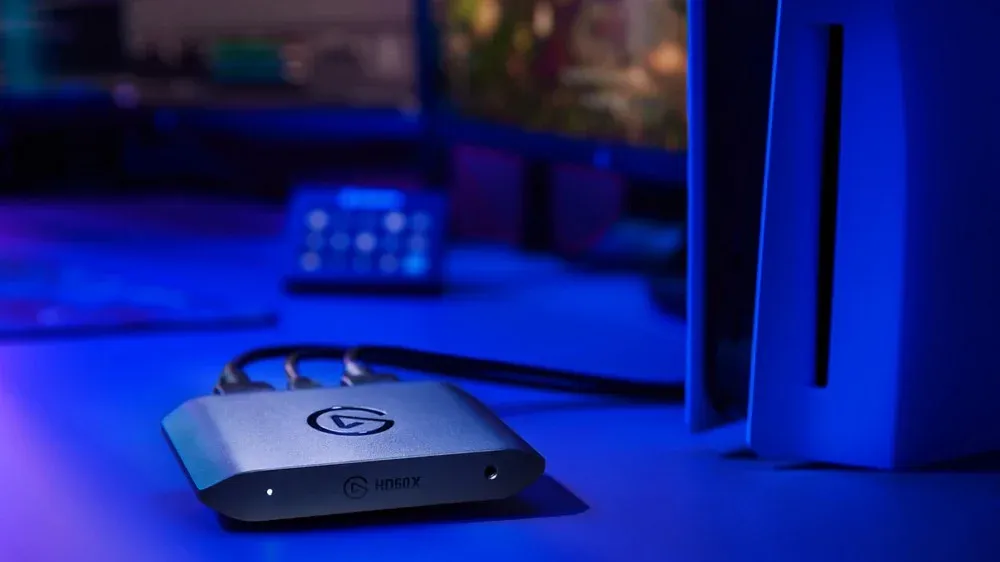
Capture card ($100-200): If you stream from a console, a capture card gives you OBS control, custom overlays, and potentially higher bitrate output. Elgato HD60 X ($149) is the reliable standard for PS5 and Xbox.

Green screen ($30-150): A green screen behind your webcam lets you key out the background in OBS, placing your facecam cleanly over your gameplay with no messy background. A collapsible pop-up screen ($40-60) works well for most setups without permanent installation.

Stream Deck ($100-150): The Elgato Stream Deck Mini is a programmable button pad that lets you switch OBS scenes, trigger alerts, mute/unmute audio, and control streaming with a single button press. It does not improve output quality but reduces the mental load of managing your stream while playing.


Webcam: Do You Actually Need One?

No. Facecam is strongly optional, especially when starting.

The data on this is less clear-cut than many streaming guides claim. Some research suggests channels with facecams convert at higher rates because viewers feel a stronger personal connection. Other data shows that reaction-focused channels are outperformed by gameplay-only channels in certain games (Apex, Warzone, Valorant) where the action is the primary draw.

The honest answer: If you are comfortable on camera and your reactions are part of your entertainment value, use a webcam. If facecam feels like a distraction or you are uncomfortable being on camera, do not use one. Build your stream personality first; add facecam when it feels natural.

One practical middle ground: stream without webcam, but record your reactions with a phone or secondary camera. Review them after. If your reactions add to the entertainment, add a webcam.


The Clip-to-Social Pipeline: The Equipment Most Beginners Ignore

Mini-story: Sam spent six months building a solid streaming setup: good microphone, 1080p webcam, ring light, stream deck. His Twitch streams looked and sounded professional. He had 80-100 concurrent viewers and was happy with his production quality. The problem was that almost no one was discovering him. He had invested in the live production but had no discovery system.

In January 2026, he set up Eklipse and started posting five clips per week to TikTok and YouTube Shorts from his streams. He had not changed his streaming setup at all. By March, he had 3,800 new TikTok followers and his Twitch average viewer count had grown from 90 to 280. The equipment he already had was fine. The missing piece was clip distribution.

Most beginner streaming equipment guides focus exclusively on live production quality. That matters. But in 2026, the growth engine for streaming channels is short-form clip distribution, not live stream production quality.

Your streaming setup produces raw material. Eklipse turns that raw material into shareable content automatically. The combination of a solid live setup and a consistent clip output is what compounds into channel growth.

Your existing gaming PC or console already produces clip-ready footage. Connect it to Eklipse and start your clip pipeline today.


Software You Need (Almost All Free)

Beyond OBS, these free tools fill out a complete streaming toolkit:

OBS Studio: Free. Broadcasting and recording. Download at obsproject.com.

Canva: Free tier. Thumbnail design, channel art, social media graphics. Works in browser, no install.

Eklipse: Free tier. Automatic highlight detection, clip editing, short-form scheduling. Connects to Twitch and YouTube VODs.

Discord: Free. Community management, team communication, viewer engagement between streams.

StreamElements or Streamlabs: Free tier. Overlay management, alerts, loyalty points, chat bot. Choose one; both work well with OBS via browser source.

Total cost for this software stack: $0. This is the complete toolkit for a professional-quality streaming operation. Paid tiers unlock more features but are not necessary to start.


FAQ: Streaming Equipment for Beginners

Do I need a gaming PC to start streaming?
No. You can stream directly from PS5 or Xbox without a PC. If you do use a PC, it needs to handle both gaming and encoding simultaneously. The minimum specs are an Intel i5 8th gen or AMD Ryzen 5 3600 with 16 GB RAM.

What is the minimum internet speed required for streaming?
10 Mbps upload for reliable 1080p60 streaming. Use a wired Ethernet connection for consistency. Check your speed at Speedtest.net before investing in equipment.

Should I buy a gaming headset or a dedicated microphone?
A dedicated USB microphone. The HyperX SoloCast ($49) will sound better than any gaming headset microphone under $150. Audio quality is more important than video quality for viewer retention.

Do I need a capture card if I stream from a PS5 or Xbox?
Not to start. Both consoles support native 1080p60 broadcasting without a capture card. A capture card becomes useful once you want OBS control, custom overlays, and higher bitrate output.

Can I start streaming on a laptop?
Yes, with limitations. Most gaming laptops handle streaming at 720p or 1080p30 acceptably. Laptop streaming at 1080p60 requires a relatively recent gaming laptop (RTX 3060 or equivalent). Use hardware encoding (NVENC/AMF) and reduce game graphics settings to free up CPU headroom.


Start Streaming This Week

The equipment you have right now is probably enough to start. The upgrade you need most is probably a $49 microphone and a wired internet connection.

Everything else on this list becomes relevant after you have started, built a streaming habit, and confirmed that this is something you want to invest in. The streamers who buy $2,000 setups before going live once are the same ones who stop streaming after three weeks.

Go live first. Upgrade based on what is actually limiting your viewer experience.

Once you are streaming, set up your clip pipeline. Eklipse is free to start and turns your streams into shareable short-form content automatically.

How to Grow a YouTube Gaming Channel from Zero in 2026

0

Growing a YouTube gaming channel from zero in 2026 means starting with YouTube Shorts to build algorithmic momentum, using those views to seed a long-form audience, and automating your clip pipeline so you can post consistently without spending 4 hours editing per video.

Starting a gaming YouTube channel in 2026 feels overwhelming. 800 hours of gaming content are uploaded to YouTube every minute. The discoverability problem is real. But it is also solvable, and the strategy is more accessible than it has ever been.

The streamers and gaming creators who are building YouTube channels from scratch right now are not doing it by out-editing everyone. They are doing it by understanding how YouTube’s two algorithms work (Shorts and long-form), feeding both consistently, and letting compound growth do the work over 6-12 months.

This guide lays out the exact playbook.

Key Takeaways

  • YouTube Shorts is the fastest path to algorithmic reach from zero; start with Shorts before uploading long-form content
  • AI clip tools like Eklipse reduce the time to post a Shorts clip from 2-3 hours to 15-20 minutes, enabling the posting frequency that growth requires
  • Long-form videos (8-20 minutes) work as depth anchors; Shorts bring viewers in, long-form turns them into subscribers
  • YouTube search is a durable traffic source; titles that answer specific questions (“how to get kills in Warzone”) compound over months unlike social algorithms
  • Consistency matters more than perfection; a channel posting 3 Shorts and 1 long-form video per week for 6 months will outgrow a channel that posts sporadically at higher quality

Understanding YouTube’s Two Algorithms in 2026

YouTube is actually two different platforms occupying the same website. Understanding this is the foundation of a growth strategy.

The Shorts algorithm works like TikTok and Instagram Reels. It pushes content to non-subscribers based on engagement signals (watch-through rate, likes, shares, comments). A well-performing Short can reach millions of people who have never heard of your channel. The downside: Shorts views do not translate directly to subscribers at high rates. They are awareness, not loyalty.

The long-form algorithm works on search, recommendations, and subscriber behavior. It rewards consistent upload schedules, strong click-through rates (thumbnail plus title), and long average watch duration. Long-form viewers subscribe at a much higher rate than Shorts viewers. But they require an established library to find you.

The 2026 strategy: Use Shorts as your awareness engine and long-form as your conversion engine.

Post Shorts frequently (daily or near-daily) to build algorithmic reach. Use those views to redirect people to your channel, where your long-form videos turn curious browsers into subscribers. YouTube has recently improved cross-format recommendations, meaning strong Short performers are more likely to show your long-form content to the same viewers than in previous years.


Step 1: Set Up Your Channel for Discovery

Before you post a single video, these channel settings affect whether YouTube recommends your content.

Channel name: Include a gaming-related keyword if possible. “IronFist Gaming” is better than “IronFist5892” for searchability. Your channel name appears in suggested video thumbnails, so make it memorable.

Channel description: Write 200-300 words describing what you play, who your content is for, and when you upload. Include your primary game names as natural mentions. This text is indexed by YouTube and Google.

Channel trailer: A 60-90 second trailer that answers “what is this channel?” increases subscriber conversion from profile visitors. Use your best existing clip or a short introduction video. Update this every 3-6 months as your content evolves.

Channel art and profile picture: Consistent visual branding (same colors across banner, profile picture, and thumbnails) creates immediate recognition. Use a template system in Canva or Adobe Express so every thumbnail looks like it came from the same channel.

Channel sections: Organize your channel homepage with sections: “Start Here” (your best videos), “Gaming Shorts,” and playlists by game. This structure keeps new visitors engaged rather than landing on a random video page.


Step 2: Start with YouTube Shorts

For a channel starting from zero, Shorts are your first priority. Here is why: a long-form video on a zero-subscriber channel will get almost no impressions. YouTube does not know who to show it to yet. A Short on a zero-subscriber channel can still reach thousands of viewers in the first 48 hours if the content is engaging.

Shorts build your channel’s track record with the algorithm. A channel that accumulates 50,000 Shorts views in its first month will have long-form content surface to more viewers than a channel with zero Shorts history.

What makes a good gaming Short:

The first two seconds are everything. Start with action, not buildup. Cut straight to the moment, the kill, the reaction, the impossible shot. Do not open with your face staring at the camera saying “alright guys what is up.”

Keep it between 20 and 55 seconds. Under 20 seconds often lacks enough context for the moment to land. Over 60 seconds is technically long-form on YouTube. The sweet spot is a complete micro-story: setup (brief), payoff (the moment), and reaction (genuine).

Add captions. 40% of YouTube Shorts are watched with sound off at some point in the viewing session. If your content only works with audio, you are losing 40% of potential engagement.

The posting rhythm for early growth: Five Shorts per week for the first three months. This feels like a lot, but with AI clip detection, the barrier is actually producing five hours of gameplay, not spending five days editing.

Eklipse automates the hardest part of Shorts production. After your gaming session (stream or recorded gameplay), Eklipse scans the footage and surfaces your top moments. You review, select, apply a vertical template with captions, and export directly to YouTube Shorts. What used to take an hour per clip takes 10-15 minutes for your whole session’s output.

How to create viral YouTube Shorts from gaming replays with Eklipse.

Want to see how Eklipse speeds up your Shorts pipeline? Start free and process your first gaming session.


Step 3: Build Your Long-Form Strategy

Long-form videos (8-20 minutes) are how YouTube channels build lasting subscriber bases. They take more production effort, but they compound over time through search and recommendations in ways that Shorts do not.

The two long-form formats that work in gaming

Let’s Play and commentary content works best when your personality is the draw. Pure gameplay commentary with a strong personality can build loyal audiences, but it is a crowded format. To differentiate: have a specific angle (educational breakdowns, chaotic commentary, challenge runs) rather than just playing the game.

Educational and guide content is more searchable and has longer shelf life. “How to get better at sniping in Warzone” will receive search traffic for 18+ months. A Let’s Play from the same date will not. If you are skilled at a game, mixing guide content with entertainment content gives you both discoverability and personality-driven loyalty.

Long-form titles that drive search traffic

YouTube is a search engine. Titles that match what people actually type into the search bar get organic traffic that does not depend on algorithmic luck.

Research titles using YouTube’s autocomplete (type your game name and see what searches it suggests) or VidIQ’s keyword tool. Titles like:

  • “How to get better at [game] as a beginner”
  • “Best settings for [game] in 2026”
  • “[Game] tips nobody tells beginners”
  • “How I went from [X] to [Y] in [game]”

These rank for searches, get recommended alongside similar videos, and continue generating views for months.

Production standards for long-form

You do not need 4K video or professional editing at the start. Three things matter more than anything else:

Clear audio. A USB microphone is non-negotiable. Viewers will tolerate 720p video with great audio. They will not sit through 4K video with laptop microphone quality.

Good thumbnail. Your thumbnail and title determine whether anyone clicks your video. A high-contrast thumbnail with a clear visual subject and minimal text outperforms a busy, cluttered one. Test two thumbnail options using YouTube’s thumbnail A/B test feature.

Consistent upload day. Posting every Tuesday gives your subscribers a reason to check their feed. Posting whenever you finish editing creates no pattern for the algorithm or your audience to learn from.


Step 4: The Cross-Platform Content Loop

Mini-story: Devon started a Valorant YouTube channel in September 2025 with zero subscribers. He set up a 3-week posting schedule: five Shorts per week from his practice sessions (clipped automatically using Eklipse) and one 10-minute ranked breakdown video per week. By month three, his Shorts had accumulated 280,000 views and his channel had 1,400 subscribers. By month six, he crossed 5,000 subscribers and YouTube included one of his educational videos in the “Up Next” queue for a top Valorant creator’s videos. He had not spent money on promotion. He had just fed both algorithms consistently.

Your gaming content should form a loop across platforms:

  1. Play your sessions (stream or record)
  2. Eklipse detects highlights automatically
  3. Post 5-7 Shorts/TikToks/Reels per week from those highlights
  4. Use your two or three best clips as previews or teasers for your long-form YouTube video
  5. Your long-form video dives deeper into the session, strategies, or moments the clips teased
  6. Short-form viewers who are curious follow to your YouTube channel for more context
  7. YouTube subscribers get notified of new long-form content and become repeat viewers

The key insight: your short-form clips and your long-form videos are not competing for your time. They are the same content in different formats, and each format serves the other.


Step 5: The Consistency System

Consistency is the single factor that separates channels that grow from channels that plateau and die. Not perfection, not production quality, not trending games. Consistency.

The channels that fail consistently underestimate the time cost of the clip-to-upload workflow and burn out when real life conflicts with their posting schedule.

Build a system, not a goal.

Weekly production schedule example:

Monday: Play or stream for 2-3 hours. Eklipse detects highlights automatically overnight.

Tuesday: Review Eklipse highlights (15 min), select best 5-7, add captions and templates (30 min), schedule to post Tuesday through Sunday on Shorts.

Wednesday or Thursday: Record or pull footage for long-form video. Write script outline.

Friday: Record voiceover or commentary for long-form. Basic editing (trim dead air, add a few cuts).

Saturday: Thumbnail, title research, upload to YouTube scheduled for Tuesday.

Total weekly time investment: approximately 4-5 hours. Posting output: 5-7 Shorts plus 1 long-form video per week.

This is sustainable over a year. A year of this schedule produces 250-365 Shorts and 50 long-form videos. That library compounds.


Common Mistakes That Kill Early-Stage Gaming Channels

Waiting for permission to start. The most common reason gaming channels never get started: “I’ll start when I have better equipment,” “when I’m higher ranked,” “when I have more time.” None of those conditions improve before you start. They improve because you start.

Making every video a passion project. Your first 50 videos are practice. Approach them with professional execution but without the expectation that they will go viral. The channel that posted 50 practice videos is better than the one that spent 6 months perfecting its first video.

Ignoring Shorts for “real” content. Creators who skip Shorts because they feel beneath them often have channels that never leave single-digit subscribers for months. Shorts are not lower quality content. They are a different format that serves as your distribution engine.

Not using viewer data. YouTube Studio shows you exactly which videos drove the most subscribers, which had the longest watch time, and which had the best click-through rate. Check this weekly and make more of what works.


FAQ: Growing a YouTube Gaming Channel

How long does it take to grow a gaming YouTube channel from zero?
Most gaming channels see meaningful traction (1,000 subscribers, regular search traffic) within 6-12 months of consistent posting. Channels that post 5 Shorts plus 1 long-form video per week tend to hit 1,000 subscribers in 4-6 months.

Do I need to stream to grow a YouTube gaming channel?
No. Streams generate footage efficiently, but you can record regular gameplay sessions and clip them the same way. Streaming helps because it generates more footage per session and Eklipse integrates directly with Twitch and YouTube Live VODs.

What games should I make YouTube content about?
Start with a game you play well and enjoy. Layer a searchability check: does the game have a large community searching for tips and content? Warzone, Fortnite, Valorant, and Minecraft have massive search volumes. Niche games have smaller but more passionate audiences.

How many Shorts should I post per day?
1-2 Shorts per day is the sustainable target for growth. More than 2 per day on a new channel can actually hurt if the Shorts underperform, as YouTube weights recent performance. One well-performing Short per day beats three mediocre ones.

Can I grow a gaming channel without showing my face?
Yes. Many of the fastest-growing gaming clips and channels do not include a facecam. Strong gameplay, good audio commentary, and engaging captions carry channels without facecam. If you do use a facecam, reaction shots during big moments add significant engagement.


The Six-Month Benchmark

Six months of consistent execution on this strategy should produce:

  • 120-180 Shorts posted
  • 20-25 long-form videos published
  • 1,000-5,000 subscribers (varies significantly by game and Short performance)
  • A growing long-tail search traffic base from educational long-form content
  • A clip archive that continues generating views after posting

This is a marathon, not a sprint. The creators who commit to six months without checking the scoreboard every week are the ones who find themselves at 5,000 subscribers wondering how it happened.

Start your posting schedule this week. The channel you build in the next six months started today.

Let Eklipse handle your clip detection and Shorts production so you can focus on the content.

How to Get More Twitch Followers in 2026 (Proven Methods)

0

Getting more Twitch followers in 2026 requires a clip-first discovery strategy, consistent stream scheduling, and cross-platform promotion, since Twitch’s internal discovery algorithm rarely surfaces small channels to new viewers on its own.

Most Twitch growth advice tells you to stream consistently and engage your chat. That is necessary but nowhere near sufficient. If you are waiting for Twitch’s browse page to send you new viewers, you are waiting for a system that is designed to surface established channels, not new ones.

The streamers gaining followers in 2026 are building their own discovery pipeline: creating clips that reach new audiences on TikTok, YouTube Shorts, and Instagram, then converting those clip viewers into Twitch followers. This guide covers the complete growth system, starting with why Twitch’s native discovery fails small streamers, and then the methods that actually work.

Key Takeaways

  • Twitch’s browse and discovery algorithm heavily favors channels with existing viewers, making organic Twitch-only growth extremely slow for channels under 100 concurrent viewers
  • Clips posted to TikTok, YouTube Shorts, and Instagram Reels are the primary driver of new Twitch follower growth for channels under 1,000 concurrent viewers in 2026
  • Stream schedule consistency is a retention multiplier: followers who know when you go live show up; followers who do not know skip and eventually unfollow
  • Raids, host channels, and community networking remain underused growth tactics that can add 10-50 followers per session at zero cost
  • Converting clip viewers to followers requires an obvious path: your TikTok bio, clip descriptions, and comments must clearly state when and where you stream

Why Twitch Discoverability Is Broken for Small Streamers

Open Twitch right now and browse any popular game. The top of the directory is dominated by channels with thousands of concurrent viewers. Below them, channels with hundreds. Below them, a wall of 1-3 viewer channels that most browsers will never scroll to.

This is not an accident. Twitch’s algorithm surfaces channels based on current viewer count, which creates a compounding advantage for established streamers and nearly zero organic discovery for small ones.

The data backs this up. According to Twitch Tracker and SullyGnome analytics, over 90% of active Twitch channels average fewer than 5 concurrent viewers. Of those, the vast majority receive no organic discovery from Twitch’s browse system at all during any given week.

If you are a small streamer relying on Twitch’s internal algorithm to bring you new viewers, you are competing with thousands of channels for the attention of a fraction of browsers who scroll past the top 10.

This is not a reason to stop streaming on Twitch. It is a reason to stop relying on Twitch for discovery.

The fix: build your discovery system off-platform, then bring viewers to Twitch.


The Clip-to-Follower Pipeline

The most reliable growth method for Twitch channels in 2026 is the clip-to-follower pipeline. Here is how it works and why it is more effective than any Twitch-native tactic.

Step 1: Create clip-worthy content every session. You do not need to play differently. You need to identify your best moments after each session. These are 20-60 second clips with a clear payoff: a kill, a clutch, a reaction, a funny moment, or a surprising interaction.

Step 2: Distribute clips to short-form platforms. Post three to five clips per session to TikTok, YouTube Shorts, and Instagram Reels. Short-form algorithms show content to non-followers based on engagement, which means cold audiences who have never heard of you will see your clips.

Step 3: Convert clip viewers to Twitch followers. Every clip you post is a recruitment tool. Your bio, video description, and caption comments must answer “where can I watch more of this?” with a clear answer: your Twitch URL and stream schedule.

Step 4: Twitch follows compound. Each follower who shows up to your next stream increases your viewer count, which improves your position in the Twitch directory, which creates slightly more organic discovery, which compounds over time.

The key is step 2. Most streamers know they should post clips but do not do it consistently because manual clipping takes too long.

Eklipse automates the detection and formatting step. After your Twitch stream ends, Eklipse scans the VOD and surfaces your highlight moments automatically. You review, select, apply a vertical template, and post. What used to be a 2-hour manual process takes 15-20 minutes.

See how Eklipse clips your Twitch stream automatically.


Method 1: Fix Your Twitch Profile for Conversion

Before driving any external traffic to your Twitch channel, make sure your profile converts visitors into followers. A clip viewer who lands on an incomplete or confusing profile will leave without following.

Profile photo: Use a clear, recognizable image. Your face, a custom avatar, or a logo. Anything that can be recognized at thumbnail size. Avoid screenshots from games, dark images, or anything that looks like a placeholder.

Bio: Write two to three sentences that answer: who you are, what you play, and when you stream. Include your schedule explicitly. “I stream Valorant and Apex Legends, Mon/Wed/Fri at 8pm EST” is infinitely better than “gamer, streamer, have fun.” Visitors who cannot immediately answer “when does this person go live?” are unlikely to follow.

Panels: Set up at least three channel panels: a schedule panel, a social media panel (link to your TikTok, YouTube, and Instagram), and a community panel (Discord, if you have one). Panels signal that you are a real, active creator rather than someone who occasionally goes live.

Stream title and category: Every stream should have a specific, descriptive title. “Valorant Ranked Grind | Road to Diamond” is better than “playing games.” The title appears in Twitch directory listings and tells potential new viewers what they are clicking into.


Method 2: Post Clips Consistently to TikTok and YouTube Shorts

Mini-story: Carla had 340 Twitch followers after 10 months of streaming. She streamed four nights a week and was consistent, but her viewer count sat between 8 and 15 concurrent viewers. In February 2026, she started posting daily TikTok clips from her streams using Eklipse. She committed to one month of daily posting before evaluating. By day 22, one of her Apex Legends clips hit 85,000 views. Her Twitch channel gained 340 followers in 10 days, doubling her total in less than two weeks of consistent clip posting.

Carla did not change her streaming quality, schedule, or personality. She added a clip distribution system.

How to build a sustainable clip posting routine:

Connect your Twitch account to Eklipse. After each stream, Eklipse automatically processes your VOD and surfaces highlight timestamps. You review (5-10 minutes), select the best three to five clips, apply a vertical template with captions, and schedule the posts.

Post at consistent times. TikTok and YouTube Shorts algorithms reward accounts that post at consistent times. Pick two to three daily posting windows and stick to them for at least six weeks before evaluating performance.

Use your Twitch URL and schedule in every caption. “Clip from my Apex stream. I stream live on Twitch Mon/Wed/Fri at 9pm EST. Link in bio.” Simple, direct, and effective.

How streamers are growing Twitch channels through TikTok clips.


Method 3: Build a Consistent Stream Schedule and Stick to It

Follower count is a vanity metric without follower retention. The goal is not just getting someone to click Follow. It is getting them to show up to your next stream.

Followers who know your schedule show up. Followers who do not know when you go live treat you as background noise and eventually unfollow when they forget why they followed.

Set a schedule you can actually keep for three months. Not the schedule you want in an ideal week. The schedule you can maintain when life is busy. Three streams per week at consistent times is better than seven streams per week for a month followed by a two-week break.

Communicate your schedule everywhere:

  • Twitch bio and schedule panel
  • TikTok bio
  • YouTube channel description
  • Instagram bio
  • Every clip caption that performs well

Use Twitch’s own schedule feature. Twitch allows you to set a recurring schedule visible on your channel page. Followers who browse your profile when you are offline can see exactly when you go live next. This feature is underused and free.

Go live on time. “I usually start around 8pm” is not a schedule. “I go live at 8pm” is a commitment your followers can plan around. Starting late consistently trains your audience that the start time is a suggestion, which reduces punctual viewership over time.


Method 4: Raid and Network Within Your Game’s Community

Twitch Raids (sending your viewers to another streamer’s channel when you end your stream) are a genuine growth tactic that most small streamers underuse.

The mechanism is simple: when you end your stream, you raid a channel in your game’s community. Your viewers arrive in that streamer’s channel. The streamer thanks you on screen and chat. The streamer’s audience now knows you exist. Some will check your channel and follow.

How to raid effectively:

Target channels with a similar viewer count (within 2-3x of yours). Raiding a 5,000-viewer channel when you have 15 viewers creates an awkward disproportion and rarely results in reciprocal raids. Raiding a 20-40 viewer channel creates a peer relationship.

Build relationships first. Watch streams of other small creators in your game’s community. Clip their streams (with credit). Participate in their Discord. Raid them first. Reciprocal raid networks among small streamers are one of the most underused growth mechanisms on Twitch.

Join Discord communities for your game. Nearly every active game has a streamers-focused Discord server where small creators network. These communities share raid trains, host channels, and clip each other’s content. Participating regularly for two to three months builds relationships that translate into consistent viewer cross-pollination.


Method 5: Use Your Chat as a Growth Engine

Small-stream chat engagement is different from large-stream chat management. With 5-30 viewers, you can have a genuine conversation with every person in chat. That intimacy is a competitive advantage that large streamers cannot replicate.

Use viewer names. Refer to every chatter by their username. This sounds obvious but most streamers acknowledge chat as a group (“thanks for the sub chat”) rather than individual people. Naming viewers makes them feel seen and dramatically increases return visit rates.

Create inside jokes and references. Inside jokes that develop naturally over time are your brand culture in action. When a returning viewer drops a reference to something that happened in a previous stream, they are signaling investment in your channel. Acknowledge it. Build on it.

Ask questions that invite ongoing participation. “What’s everyone playing this weekend?” is better than “how’s everyone doing?” Specific questions get specific answers, which makes the conversation feel real rather than performative.

Clip your community moments. Funny interactions, surprising chat moments, and viewer-driven bits make excellent clips that humanize your channel and give existing followers content to share with their own networks.


Method 6: Cross-Promote Strategically, Not Desperately

Cross-promotion done poorly feels like spam. Cross-promotion done well feels like giving people something valuable.

The wrong way: “I stream on Twitch, follow me at [link]” posted in every gaming subreddit and Discord server you find.

The right way: Post your best clips to relevant subreddits with no sales pitch. The clip speaks for itself. When people enjoy it, they check your profile. Your bio (which mentions your Twitch and stream schedule) does the conversion work.

Subreddits relevant to your game (r/Apexlegends, r/Valorant, r/FortniteBR) allow clip posts and have millions of members. A genuinely good clip posted to the right subreddit can send hundreds of profile visits in a day. No self-promotion required.

Twitter/X: Gaming Twitter has an active clip culture. Post your best clip of the week with relevant game hashtags and tag the game’s official account. Game companies regularly retweet impressive gameplay from their community, which can send thousands of impressions to your profile instantly.


Method 7: Play Searchable Games at Strategic Times

This is the one Twitch-native discoverability lever that small streamers can actually pull. It requires understanding when certain games have lower competition in the directory.

Large games like Fortnite or Valorant have thousands of concurrent streamers. Even with perfect stream timing, you will be buried pages deep in the directory.

The discoverability window strategy: Find games with dedicated communities but fewer concurrent streamers. Check the game’s Twitch directory and count the channels within 2-3x of your viewer count. If there are fewer than 20 channels near your viewer count, you have a real chance of appearing near the top of the relevant directory tab.

Smaller viewer counts can mean real discovery in mid-tier game directories. A 10-viewer stream can appear on the first page of a 300-streamer directory and get genuine organic clicks from Twitch browsers.

This tactic works best for games with active Reddit and Discord communities but moderate Twitch competition: Rust, Hunt: Showdown, Deep Rock Galactic, games with recent major updates that spike search interest temporarily.


How Fast Can You Grow?

Mini-story: Ben started streaming in October 2025 with zero followers. He played Apex Legends, set a Monday/Wednesday/Friday schedule, used Eklipse for daily TikTok clips, and joined an Apex streamers Discord. By month two, he had 280 followers. By month four, 890. By month six, he crossed 1,500 followers and was hitting 40-60 concurrent viewers per stream. He had not bought followers, run ads, or found a viral moment. He had built a system and run it consistently for six months.

Realistic Twitch growth benchmarks for a consistent execution approach:

MonthFollowers (Consistent Execution)
150-150
2150-400
3400-800
61,000-3,000
123,000-10,000

These ranges vary significantly based on clip performance and game choice. One viral clip can compress these timelines dramatically. The floor matters more than the ceiling: the consistent floor of daily clip posting is what guarantees the baseline.


FAQ: Getting More Twitch Followers

Why am I not getting any new followers even though I stream consistently?
Consistent streaming builds loyal viewers but does not generate discovery on Twitch. If no one new is finding your channel, you need an off-platform discovery system. Start posting three to five clips per week to TikTok or YouTube Shorts and include your Twitch link and schedule in your bio.

How many Twitch followers do I need to get paid?
Twitch Affiliate requires 50 followers, an average of 3 concurrent viewers over 30 days, 500 total minutes broadcast, and 7 unique broadcast days. Most streamers reach Affiliate within two to three months of consistent streaming with clip promotion.

Does having more followers help with Twitch discoverability?
Follower count alone does not improve your Twitch directory position. Concurrent viewer count and stream activity level have more influence on directory placement. Followers help when they show up and watch, which increases your concurrent viewer count.

How important is it to play games that are trending?
Trending games spike interest temporarily but also spike competition. A 10-viewer stream gets buried in a 2,000-channel Fortnite directory. Trending games work better as clip subjects (for TikTok) than for Twitch native discovery.

Should I buy Twitch followers?
Never. Purchased followers are inactive accounts that lower your average concurrent viewer rate, hurt your channel’s engagement metrics, and can result in Twitch penalties. Zero genuine benefit.


The Compounding Effect

Twitch growth feels slow at the start because the compounding has not kicked in yet. The channel going from 0 to 100 followers is working harder per follower than the channel going from 1,000 to 2,000, where the clip archive is larger, the community generates its own word-of-mouth, and the Twitch algorithm starts giving slightly more organic reach.

The growth that feels invisible in months one and two becomes visible in months four and five, and exponential by months six through twelve.

Build the clip distribution system. Keep the stream schedule. Engage every single person in chat. It compounds.

Start automating your Twitch clip pipeline with Eklipse today.

How to Build a Personal Brand as a Gaming Streamer (2026)

0

Building a personal brand as a gaming streamer means defining a clear identity (niche, visual style, personality angle) and showing it consistently across every platform where your clips and content appear.

Most streamers think about branding backward. They wait until they have thousands of followers before they “worry about branding.” That is the wrong order. Brand clarity is what gets you to thousands of followers. It is the difference between someone watching your clip and scrolling on versus watching your clip, recognizing your style in the thumbnail, and clicking your profile to see more.

This guide walks through every layer of streamer brand building: from finding your niche and developing a visual identity to showing up consistently across TikTok, YouTube Shorts, and Twitch. The streamers who grow in 2026 are not the ones with the best hardware. They are the ones viewers can identify in two seconds.

Key Takeaways

  • Your brand niche should sit at the intersection of what you are genuinely good at and what has an audience searching for it, not just what is popular right now
  • Visual consistency (consistent colors, overlays, and clip style) makes your content recognizable in TikTok and YouTube Shorts feeds before the viewer even reads your name
  • Personality-driven streamers outgrow game-dependent channels because their audience follows the person, not the title
  • Cross-posting consistent clips from Twitch/Kick/YouTube to short-form platforms is the fastest way to grow your brand to new audiences in 2026
  • Building your brand archive, your best clips organized by your consistent identity, compounds over time even while you sleep

Why Personal Branding Matters More Than Follower Count

Two streamers both hit 200 concurrent viewers. One has 5,000 Twitch followers. The other has 5,000 followers, a recognizable visual style across all platforms, a consistent clip archive on TikTok and YouTube Shorts, and a Discord where their community uses language specific to the streamer’s brand. Which one is building something that lasts?

Followers are a lagging indicator. Brand recognition is the leading one.

When someone saves your TikTok clip to their bookmarks, they are saving your brand, not just the moment. When someone says “I found this streamer through their clips,” they are describing your brand’s distribution system. When someone says “you remind me of this other creator,” they are identifying your brand positioning in the market.

The practical result: streamers with clear brands convert clip viewers into channel followers at a much higher rate. A strong clip without a clear brand is a one-time event. A strong clip with a recognizable brand is a recruitment tool.

Want to build a clip archive that shows off your brand consistently? Eklipse automatically clips your best moments so you can focus on your identity, not your VOD.


Step 1: Find Your Niche (Be Specific, Then Expand)

The word “niche” sounds limiting. It is actually the opposite. A specific niche helps you dominate a corner of the market before you expand. “Gaming streamer” is not a niche. “High-kill Apex Legends solo player with dry comedy commentary” is a niche.

There are three dimensions to a good streaming niche:

Game or game category – You do not need to play one game forever, but starting with a strong association with one or two titles builds initial recognition. People search for specific game content, which is how they first find you.

Playstyle or skill angle – Are you a top-tier competitive player, a chaotic casual, a speedrunner, a story-first player, a builder? Your playstyle is a brand dimension that stays consistent even when you switch games.

Personality or comedy angle – Are you dry and calm? Hype and reactive? Educational and analytical? Chaotic and unhinged? This is often the element that separates creators who build loyal communities from those who plateau.

The sweet spot is where your genuine strengths meet an audience that already exists. Do not pick a niche because you think it will grow fast. Pick the one you can show up for consistently across a year of streaming, because brand building is a long game.

Mini-story: Jake had been streaming Fortnite for 14 months with inconsistent growth. He was good at the game but his streams felt generic. In a community survey, his existing 300 followers kept mentioning the same thing: they loved when he calmly explained his decision-making while doing impossible things. He leaned into it, rebranding around “high IQ, low chaos Fortnite.” Three months later, one clip of him explaining a 1v4 clutch in his signature calm voice hit 400,000 TikTok views. His Twitch followers went from 300 to 2,100 in six weeks. He had not changed his gameplay. He had clarified his angle.


Step 2: Build Your Visual Identity

Your visual identity is everything that makes your content visually recognizable before someone reads your name. On TikTok and YouTube Shorts where viewers scroll at speed, this matters enormously.

Color Palette and Logo

Pick two to three brand colors and use them everywhere: overlays, thumbnails, clip captions, social media profile photos, channel art. Your colors do not need to be unique in the world. They need to be consistent across your content so that your clips become recognizable by pattern.

Tools like Canva make it easy to create consistent clip templates, channel banners, and social graphics without design experience. Pick a palette and stick with it for at least six months before evaluating whether to change.

Your logo should work at small sizes (a TikTok profile circle is tiny) and large sizes (channel banner). Simple, bold, and memorable beats complex every time.

Stream Overlay Consistency

Your in-stream overlay (camera border, alerts, info panels) is part of your brand. A viewer who watches your Twitch stream and then sees a clip from your stream on TikTok should visually connect the two.

Keep your camera position and frame consistent across sessions. Streamers who constantly move their webcam or resize their overlay look unpolished to new visitors who encounter clips across multiple sessions.

Clip Style and Captions

How you package clips is a brand signal. Are your clips clean and minimal with subtle captions? Do you add meme overlays and sound effects? Is your caption style factual (“1v4 clutch, ranked”) or dramatic (“I should not have survived this”)?

Develop a clip style template and apply it consistently. Eklipse’s Studio lets you create reusable templates for your clips so you apply the same framing, captions, and branding every time rather than starting from scratch.


Step 3: Develop Your On-Stream Personality Anchor

You do not need to be a character. You need to be a consistent version of yourself.

The streamers who burn out are usually trying to be hype all the time when they are naturally more chill, or trying to be educational when they just want to play and joke around. Authentic personality is easier to maintain, more recognizable to your audience, and more enjoyable for you.

Identify your three to five personality traits that show up every stream without effort:

  • Do you get suspiciously calm when you are about to lose?
  • Do you over-explain everything you do like a sports commentator?
  • Do you have a signature reaction to specific in-game events?
  • Do you have a running joke or bit with your community?

These consistent elements become brand touchstones. Your regulars will expect them, new viewers will discover them through clips, and they make your content instantly recognizable.

One practical step: Watch back three to four of your past stream VODs without sound. Note what visually happens repeatedly. Note when chat spikes. Those recurring moments are your personality anchors. Lean into them deliberately.


Step 4: Build Your Brand Through Consistent Clip Posting

Your clips are your brand’s distribution engine. Every clip you post is a tiny advertisement that goes out to a platform’s algorithm and says “this creator exists, here is what they are like.”

The math is simple but most streamers underinvest in it. If you post five clips per week from your streams, that is 260 brand impressions per year. Each one has the potential to reach new audiences through short-form algorithms. Each one that performs brings new people back to your profile.

The key word is consistent. A burst of 30 clips in one week followed by silence for three weeks teaches the algorithm and your potential audience that you are unreliable. Five to seven clips posted weekly, week after week, builds algorithmic momentum and gives people a reason to follow.

Use Eklipse to automate the clip detection step. Instead of watching back two hours of VOD to find your five clips, Eklipse scans your stream and surfaces the timestamps with the highest action density. You review, select, and export in minutes. The time you save on detection is time you spend on the creative work, writing captions, adding your brand template, and scheduling posts.

How to grow on TikTok as a streamer using clip automation.


Step 5: Cross-Platform Consistency

Your brand needs to feel like the same brand everywhere a potential fan might encounter it.

This does not mean posting identical content everywhere. It means your visual identity, tone, and personality are consistent across:

  • Twitch/Kick/YouTube Live: Your home base, where your community lives
  • TikTok: Where new audiences discover you through clips
  • YouTube Shorts: Where longer-tail clips compound over time (YouTube search is powerful)
  • Instagram Reels: Where lifestyle and personality content supplements gameplay
  • Twitter/X: Where real-time commentary and community conversation happens

The mistake many streamers make is treating these as separate channels with separate strategies. They are one brand with different content formats per platform. Your TikTok clip of a Valorant ace should feel like it came from the same creator as your tweet about the game, the same creator as your Twitch stream, the same creator as your YouTube long-form video.

Practical tip: Write a one-sentence brand statement and test every piece of content against it. “I am the calm, analytical Apex player who explains exactly why every decision was correct while also being casually devastating.” Does this clip, this tweet, this thumbnail match that statement? If not, refine or skip it.


Step 6: Engage Your Community Like a Brand

The brands that last in streaming are not just content factories. They are communities with a shared identity.

Your community’s language is part of your brand. If your regulars use specific terms, phrases, or inside jokes that originated on your stream, you have brand culture. These elements make your community feel exclusive and recognizable, which makes membership more valuable.

Build community rituals:

  • A consistent stream start time and format (viewers know what to expect)
  • A recurring bit or question you ask your community each session
  • A channel-specific term for your viewers (beyond the default “viewers” or “guys”)
  • Occasional community events that only your regulars understand the context for

None of this requires a large audience to start. It requires intentionality. The streamer who treats 40 viewers like an event will get to 4,000 faster than the one waiting to feel “big enough” to build culture.


Step 7: Track What Reinforces Your Brand

Brand building is not a set-and-forget project. You need to know which content is bringing in new followers who then stay, and which content is drawing clicks without building loyalty.

Track monthly:

  • Which clips drove the most profile visits
  • Which clips drove the most follows (not just views)
  • What games or moments appeared in your top performers
  • What your new followers say they found you through

This is different from tracking raw views. A clip with 50,000 views that brings in 30 followers is less valuable than a clip with 10,000 views that brings in 200 followers. The second clip is speaking directly to your target audience.

Mini-story: Priya had been posting consistently for five months when she noticed a pattern in her analytics. Her Minecraft clips averaged 8,000 TikTok views. Her Valorant clips averaged 22,000 views. But her follow-through rate on Minecraft clips was 4.2% versus 0.8% on Valorant. The Minecraft audience was her audience. The Valorant views were borrowed from the wider gaming community and did not convert. She shifted to 70% Minecraft content. Her follower growth rate tripled in the following two months while her average view count dropped. She had found her real audience.


FAQ: Building a Personal Brand as a Streamer

How long does it take to build a recognizable streaming brand?
Most streamers start to see brand recognition kick in after three to six months of consistent, on-brand posting. The timeline depends on posting frequency and brand clarity. A streamer posting daily with a sharp, specific identity can reach recognition faster than one posting weekly with a vague identity.

Do I need a logo to have a streaming brand?
A logo helps, but it is not required to start. Consistent colors and a consistent clip style create brand recognition even without a formal logo. Build the logo once your style is settled so it reflects what you have already developed.

Should I pick one game or play multiple?
Start with one to two games where you can demonstrate a consistent skill level and personality. Once your brand is established around your personality rather than a specific title, switching games is much easier because your audience follows you, not the game.

How do I know if my brand is working?
Watch your follow-through rate on short-form clips. If viewers watch a clip but do not click to your profile, your content is entertaining but your brand is not compelling. If they click and then follow, your brand is working. Aim for a 1-3% follow rate on your best clips.

Is it too late to rebrand if I started without a clear identity?
Not at all. Most successful streamers have rebranded at least once. The key is making the new direction authentic and sticking with it long enough for the algorithm and your audience to recalibrate. Give a rebrand at least three months before evaluating.


The Long Game

Building a personal brand as a streamer is a compounding investment. Every consistent clip, every on-brand stream, every community moment adds to an archive of identity that makes the next new viewer’s decision easier.

The streamers who built durable audiences in 2024 and 2025 did it the same way the ones growing in 2026 are doing it: clear niche, consistent visual identity, personality-driven content, and a reliable clip output that keeps putting their brand in front of new audiences.

Your clips are already being created every time you stream. Whether they work for your brand depends on how well you have defined what that brand is.

Start with a clear niche, build your visual identity around it, and let Eklipse handle the clip detection so you can spend your time on the work that only you can do.

Start building your clip library with Eklipse today, free to get started.

Console Streaming Guide: How to Stream on PS5 and Xbox in 2026

0

Streaming on PS5 and Xbox in 2026 is straightforward using built-in broadcast tools that send your gameplay directly to Twitch or YouTube without a PC or capture card. For more control over quality, overlays, and clip output, a capture card setup gives you professional-grade output from your console.

Console streamers used to be treated as the “lesser” option compared to PC setups. That gap has closed significantly. Modern consoles broadcast at 1080p60, support direct platform integration, and with tools like Eklipse’s Console Streamer feature, can automatically generate highlight clips without any additional hardware.

Whether you are picking up a controller for the first time or upgrading a basic setup you have had for years, this guide covers everything from first-stream setup to building a clip workflow that actually grows your audience.

Key Takeaways

  • PS5 and Xbox both support native streaming to Twitch and YouTube directly from the console, no PC required
  • A capture card unlocks OBS, custom overlays, and higher bitrate streams but adds cost and complexity
  • Console streaming audio is the biggest quality bottleneck for most beginners; a dedicated microphone makes a bigger difference than a capture card
  • Eklipse’s Console Streamer feature automatically detects and clips highlight moments from console gameplay, solving the biggest pain point for console content creators
  • Your first stream does not need to be perfect; getting live and iterating weekly beats waiting for an ideal setup that never arrives

Why Console Streaming Has Become Viable in 2026

Three years ago, the honest answer to “should I stream from console or PC?” was almost always “PC if you can.” OBS, scene switching, alerts, overlays, facecam control, and high-bitrate streaming all required a desktop. Console streamers were limited to whatever the platform’s built-in broadcast tool offered.

In 2026, that calculus is different.

PS5’s updated broadcast interface supports 1080p60 native streaming to Twitch with direct audio mixing. Xbox’s streaming app received major updates in late 2025, including custom overlay support and Twitch channel point integration. Both platforms now support direct Discord voice integration, which was previously a PC-exclusive workflow.

More importantly for content creators: the clip-to-short-form pipeline is no longer PC-dependent. Tools like Eklipse process your stream VOD automatically regardless of whether it was captured from a PS5, Xbox, PC, or mobile device. Console streamers can now generate, edit, and schedule TikTok clips without touching a computer.

The remaining gap is customization depth and bitrate ceiling. PC OBS setups still win on both. But for streamers who want to go live from a PS5 or Xbox and build a real audience, the workflow is fully viable.

Eklipse’s Console Streamer feature was built specifically for this. See how it works for PS5 and Xbox streamers.


PS5 Streaming: Complete Setup Guide

Native Broadcasting (No Extra Hardware)

PS5 includes a built-in broadcasting system accessible from the Create menu. Here is the full setup process:

Step 1: Link your streaming account
Go to Settings > Users and Accounts > Linked Services. Link your Twitch or YouTube account here. You only need to do this once; PS5 will remember your credentials.

Step 2: Start a broadcast
Press the Create button on your controller. Select Broadcast > Start Broadcasting. You will see options for title, commentary (microphone on/off), camera (PS Camera or USB webcam), and streaming platform.

Step 3: Configure audio and video
In Broadcast settings, set your stream quality. PS5 supports 1080p60 for Twitch and YouTube. Set audio levels for game audio versus microphone. The default balance is game-heavy; most streamers prefer 60-70% game audio, 30-40% microphone.

Step 4: Go live
Select Start Broadcasting. The console shows a countdown, then you are live. A small broadcast indicator appears in the corner of your screen.

Key PS5 settings for better stream quality:

  • Enable Enhanced Broadcast in Settings > Captures and Broadcasts > Broadcasts
  • Set microphone level in the broadcast overlay rather than using PS5’s game chat audio (they are separate)
  • If using a USB microphone (recommended), check that it shows as the active audio input before starting

PS5 Capture Card Setup (For Advanced Streamers)

A capture card lets you run your PS5 output through OBS on a PC, giving you scene switching, custom overlays, alerts, facecam control, and higher bitrate streaming.

What you need:

  • A capture card (Elgato HD60 X or AVerMedia Live Gamer Portable 2 Plus are the most reliable PS5-compatible options in 2026)
  • A PC capable of running OBS (most gaming PCs qualify)
  • An HDMI splitter (optional, allows you to play on your TV while streaming through the capture card)

Setup steps:

  1. Connect PS5 HDMI output to capture card input
  2. Connect capture card to PC via USB
  3. Connect monitor or TV to capture card’s HDMI passthrough output
  4. Install capture card software and OBS
  5. In OBS, add a Video Capture Device source and select your capture card
  6. Configure OBS settings (1080p60, bitrate 6000-8000 Kbps for Twitch)
  7. Go live through OBS

The capture card setup takes more time to configure initially but gives you broadcast-quality control. Most PS5 streamers who build beyond 200 concurrent viewers eventually move to this setup.


Xbox Streaming: Complete Setup Guide

Native Broadcasting (No Extra Hardware)

Xbox Series X and S have strong native streaming support built directly into the console OS.

Step 1: Link your streaming account
Go to Profile & System > Settings > Account > Linked Social Accounts. Link Twitch and/or YouTube. Xbox allows simultaneous linking to both.

Step 2: Configure streaming settings
In Settings > Captures & Broadcasts, set your stream resolution and bitrate. Xbox Series X supports 1080p60 natively. Set your default microphone source here as well.

Step 3: Start a stream
Double-press the Xbox button to open the Guide. Go to Captures & Broadcasts > Live Streaming. Select your platform, set your stream title, toggle camera and microphone, and start streaming.

Xbox-specific advantages over PS5 native streaming:

  • The Xbox streaming overlay app supports basic text overlays and on-screen alerts without a capture card
  • Party chat integration is cleaner on Xbox for group streams
  • Xbox’s stream preview window shows actual viewer count during the stream without opening a phone

Key Xbox settings:

  • Enable Do Not Disturb mode before going live to prevent notifications appearing on stream
  • Set Game Chat and Party Chat audio mixing in Settings > General > Volume & audio output before your first stream
  • Use Xbox’s built-in DVR (Record That function) as a backup clip capture alongside Eklipse’s cloud detection

Xbox Capture Card Setup

The process is nearly identical to PS5’s capture card setup. Xbox HDMI output connects to your capture card, passthrough to your monitor, and USB to your PC running OBS.

Xbox-specific note: Xbox Series X and S do not have HDCP restrictions on game content by default, unlike PS5 which requires you to manually disable HDCP in Settings > System > HDMI for capture cards to work. This makes initial Xbox capture card setup slightly faster.


The Audio Problem (And How to Fix It)

Streaming audio quality is the single biggest quality gap between professional-looking streams and amateur ones. Viewers will watch a 720p stream with a great microphone. They will immediately leave a 4K stream with laptop microphone or headset mic audio.

Console streamers have three common audio mistakes:

1. Using the controller headset microphone
The 3.5mm headset jack on PS5 and Xbox controllers picks up controller sounds, chair movement, and ambient noise. It works for gaming but sounds poor on stream.

2. Using USB gaming headset microphone
One step better than controller audio, but still not optimized for streaming. Gaming headsets are tuned for voice chat, not broadcast.

3. Mixing game audio and microphone incorrectly
Streaming with game audio at 100% drowns your voice. Most viewers are watching with speakers or earphones where microphone audio needs to be clear and slightly louder than the game.

The fix for console streamers: A USB cardioid microphone (Blue Yeti, HyperX SoloCast, or Razer Seiren Mini all work well and are under $100) connected directly to your PS5 or Xbox makes a more noticeable quality improvement than any other single upgrade. Both consoles support USB microphones natively without additional software.


Building a Clip Workflow for Console Streamers

This is where many console streamers fall short even when their live stream quality is solid. Getting a stream live is one thing. Turning that stream into shareable short-form content is what drives audience growth.

The traditional workflow for PC streamers involves downloading a local recording, importing to editing software, finding good moments, clipping, adding captions, and exporting for each platform. This workflow took 2-4 hours per session.

Eklipse’s Console Streamer feature eliminates most of this.

Here is how it works:

Connect your stream to Eklipse. Link your Twitch or YouTube account where your console streams are saved as VODs. Eklipse automatically accesses your stream after it ends.

Eklipse detects highlights. The AI scans your stream for high-action moments, audio peaks, and gameplay density markers. It surfaces your top highlight timestamps without you watching back any footage.

Review and select clips. In your Eklipse dashboard, you see a list of detected highlights with preview thumbnails. Review, keep the best ones, discard the rest. Takes 5-10 minutes.

Apply your clip template and export. Use Eklipse Studio to add captions, branding, and vertical formatting. Export directly to TikTok, Instagram Reels, or YouTube Shorts.

The total time from stream end to clips posted: 15-20 minutes for a 2-hour stream.

Mini-story: Tyler had been streaming Halo on Xbox for nine months with 60-80 concurrent viewers and almost no TikTok presence. He had tried posting clips twice, spent 3 hours making 4 clips, and then burned out on the process. After connecting Eklipse to his stream, he spent 15 minutes every Sunday selecting from the week’s detected highlights. By week six, one of his Halo clips hit 180,000 TikTok views and he gained 900 new Twitch followers in a week. He had gone from never posting to a consistent clip output without changing his streaming schedule.

Start your free Eklipse account and connect your console stream.


Upgrading Your Console Stream Over Time

Most successful console streamers follow the same upgrade path:

Stage 1 (Starting out): Native console broadcasting, controller or basic headset audio, no webcam, standard game audio. Focus: going live consistently.

Stage 2 (First 3 months): USB microphone added, webcam added (PS Camera/Kinect or USB webcam), basic stream title and category management. Focus: audio and face presence.

Stage 3 (Building audience): Clip workflow established using Eklipse, consistent social posting, stream schedule communicated to community. Focus: cross-platform growth.

Stage 4 (Scaling): Capture card added for OBS control, custom overlays, scene switching, channel point redemptions, and subscriber alerts. Focus: production quality for growing audience.

The mistake is trying to reach Stage 4 before building the audience to appreciate it. Most viewers watching a 50-person stream do not care about custom transitions. They care about interesting gameplay and a likable personality.


Streaming Schedule and Consistency for Console Players

Console streamers often have more scheduling flexibility than PC streamers because setup friction is lower: you turn on the console and go live within 30 seconds rather than opening OBS, setting scenes, and checking audio levels.

Use that advantage.

A consistent schedule of 3-4 streams per week, even at shorter duration (90 minutes to 2 hours), outperforms irregular 4-hour marathon streams for building a following. Viewers follow streamers they can plan around. A Monday, Wednesday, Friday streaming schedule that regulars can count on builds a community faster than weekend-only streams at unpredictable times.

Announce your schedule in your stream title, social bio, and TikTok captions. “Live Mon/Wed/Fri 8pm EST” in your TikTok bio costs you nothing and converts curious clip viewers into regular stream attendees.


FAQ: Console Streaming in 2026

Do I need a capture card to stream from PS5 or Xbox?
No. Both consoles support native broadcasting directly to Twitch and YouTube in 1080p60 without any additional hardware. A capture card is optional if you want OBS control, higher bitrates, or custom overlays.

What is the best microphone for console streamers?
The HyperX SoloCast ($49) and Blue Yeti Nano ($79) are the best value USB microphones that work plug-and-play with both PS5 and Xbox. Both connect via USB and require no software.

How do I clip highlights from my console stream without a PC?
Connect your Twitch or YouTube account to Eklipse. After each stream, Eklipse automatically scans your VOD and surfaces highlight timestamps. Review and export from your phone or browser without touching the stream footage directly.

Can I stream on multiple platforms simultaneously from console?
Not natively. Console built-in broadcasting sends to one platform. To multistream (Twitch and YouTube simultaneously), you need a third-party service like Restream or a PC with OBS and a multistreaming plugin.

How much internet speed do I need to stream from console?
For 1080p60 streaming, a minimum upload speed of 10 Mbps is recommended. 20-25 Mbps gives comfortable headroom. Run a speed test before your first stream and close any other bandwidth-heavy applications or devices during your session.


Start Streaming Today

Console streaming has never been more accessible. A PS5 or Xbox, a USB microphone, and a Twitch or YouTube account gets you live in under an hour. Building an audience from that starting point is a matter of consistency, clip distribution, and genuine personality.

The piece most console streamers skip is the clip workflow. Streaming live builds a live audience. Posting clips builds a discovery engine that works 24/7. Set up Eklipse’s console clip detection once and you have both.

Your stream is already creating highlight moments. Make sure they are working for you after the stream ends.

Connect Eklipse to your console stream and start automating your highlights.

Best Streaming Games for Small Streamers in 2026

0
Young gamer celebrating video games championship win on online live stream, feeling happy at desk with neon lights. Female streamer winning shooter gaming tournament on computer.

The best streaming games for small streamers in 2026 are titles with active communities but moderate Twitch competition, where a small channel can appear near the top of the game’s directory and get genuine organic clicks.

Playing Fortnite or Valorant as a small streamer means your channel gets buried on page 40 of a directory with 3,000 concurrent streamers. Playing a well-chosen mid-tier game means your channel appears on page one with real people browsing it.

This is not about abandoning games you enjoy. It is about understanding the discoverability math and making strategic choices about where you invest your streaming hours, especially early on when every new viewer matters.

This guide covers the games that give small streamers the best combination of Twitch discoverability, clip potential, and community growth in 2026.

Key Takeaways

  • The “viewer-to-streamer ratio” is the key metric: games where viewers far outnumber streamers give small channels their best discovery opportunity on Twitch
  • Mid-tier games with 500-5,000 concurrent viewers and fewer than 200 concurrent streamers are the discovery sweet spot for channels under 50 concurrent viewers
  • Games with strong Reddit and Discord communities supplement Twitch discovery with off-platform clip reach even when Twitch browsing is limited
  • New game releases create temporary discovery windows where even small streamers can appear in top directories before larger channels dominate
  • The clip potential of your game matters independently from its Twitch discoverability; your clips go to TikTok where game popularity is measured differently

The Discovery Math Every Small Streamer Needs to Know

Open Twitch and navigate to Fortnite. At any given moment, 2,000 to 5,000 channels are streaming. The top 10 channels collectively hold 70-90% of the viewer share. Everything below 500 concurrent viewers is fighting over the remaining 10-30%.

Now open a mid-tier game like Deep Rock Galactic or Hunt: Showdown. On a typical weekday, you might find 80-200 channels streaming simultaneously. A 15-viewer channel can appear on the first two pages of that directory.

Twitch browsers who navigate to specific game directories are actively looking for something to watch in that game. They scroll. They click. Channels that appear near the top get those clicks.

The viewer-to-streamer ratio measures how many viewers are browsing a game’s directory relative to how many streamers are competing for their attention. A high ratio means viewers have fewer choices, which means more views per channel. Tools like SullyGnome and TwitchTracker let you check this ratio for any game.

Games with the best ratio for small streamers in 2026 are mid-tier titles with 2,000+ concurrent viewers but fewer than 200-300 concurrent streamers.


Tier 1: Best Small Streamer Discovery Games (2026)

Deep Rock Galactic

Discovery Rating: 9/10
Clip Potential: 7/10

Deep Rock Galactic (DRG) is one of the most streamer-friendly games on Twitch in 2026 for small channels. The co-op mining/shooting gameplay has a dedicated, passionate community. The game generates natural funny moments (procedural caves, chaotic missions, bug swarms that go sideways) that create authentic, shareable clips.

The community culture is famously positive. DRG viewers regularly chat-participate across multiple small channels rather than exclusively watching established names. New streamers playing DRG regularly get “Rock and Stone” chat participation from first-time visitors within minutes.

The key advantage: the game maintains a consistent viewer base without proportionally growing its streamer pool. Small channels in the DRG directory regularly sit on page one or two with 15-30 concurrent viewers.

What to focus on for DRG clips: Mission fails and saves, creative bug-handling moments, funny cave generation, multiplayer chaos moments.


Hunt: Showdown

Discovery Rating: 8.5/10
Clip Potential: 8/10

Hunt: Showdown is a horror-western extraction shooter with high tension, high stakes gameplay, and one of the most dramatic clip libraries in gaming. The game’s combination of environmental horror, resource management, and PvP creates genuine dread-to-triumph moments that are excellent on short-form.

The Twitch directory is active but not oversaturated. Experienced streamers dominate, but the Hunt community specifically seeks out smaller channels because of the game’s strong community culture around sharing strategies.

Hunt also has excellent new-player content opportunity. The game has complex systems that many players want explained, creating searchable YouTube content alongside entertainment streaming.

Best clips from Hunt: Unexpected PvP encounters, monster moments, clutch extractions, funny death and revival interactions.


Rust

Discovery Rating: 8/10
Clip Potential: 8/10

Rust’s Twitch directory has hundreds of active streamers but its viewer pool is disproportionately large. The game’s social drama and unpredictability bring passive viewers who browse between multiple Rust streams looking for interesting situations.

For small streamers, the solo-player experience on large servers generates genuine challenge and triumph content. A solo player getting wiped by a larger group and rebuilding is a compelling narrative arc that does not require established following to be interesting to new viewers.

The clip potential is extremely high once you understand Rust’s social dynamics. Clips of betrayal, unexpected kindness between strangers, or a solo player taking down a large group travel far on Reddit and TikTok beyond Rust’s dedicated community.

Best clips from Rust: Solo vs. group moments, base raid reveals, trading and social interactions, first-wipe progress documentation.


Escape from Tarkov

Discovery Rating: 7.5/10
Clip Potential: 7/10

Tarkov’s directory has a dedicated viewer base that actively browses for new streamers to follow. The game’s notoriously difficult learning curve means many viewers watch multiple small streamers struggling through the same early-game experience. There is a voyeuristic appeal to watching someone learn Tarkov in real time.

The game rewards streamers who narrate their decision-making. The tension between the cost of dying (losing all your gear) and the reward of extracting creates genuine stakes-based drama that passive viewers appreciate even without playing.

Best clips: Loot haul reveals, improbable survival moments, gear loss reactions (if handled authentically), map discovery moments.


Lethal Company

Discovery Rating: 7.5/10
Clip Potential: 9/10

Lethal Company is the best pure clip game for small streamers in 2026. The co-op horror loot game generates near-constant funny, terrifying, and chaotic moments that are self-contained, visually clear, and travel extremely well on TikTok.

The game’s low visual complexity (intentionally retro graphics) means viewers focus on player reactions and team communication rather than visual spectacle. Authentic fear and laughter are the content. This makes it exceptionally low barrier for new streamers, since the game does the entertainment work.

The Twitch directory is active with a healthy viewer-to-streamer ratio. The game had major updates in early 2026, refreshing community interest and adding new discovery opportunities.

Best clips: Jump scares and panic reactions, monster encounters, team betrayals (accidental and deliberate), quota failure moments.


Tier 2: Strong Mid-Tier Streaming Games for Small Channels

Helldivers 2

Discovery Rating: 7/10
Clip Potential: 8/10

Helldivers 2 had a massive launch in 2024 and maintains a consistent community in 2026. The co-op shooter’s difficulty, friendly fire mechanics, and stratagem systems create moments that non-players find genuinely funny and impressive.

The game’s “Managed Democracy” lore and in-game narrative events give streamers content hooks beyond pure gameplay, including community commentary on faction battles and galactic war progress.


Palworld

Discovery Rating: 6.5/10
Clip Potential: 7/10

Palworld’s initial viral moment has settled, but it maintains a dedicated player base. The game’s combination of creature catching, survival, and base-building creates variety that keeps clips fresh. New content updates in 2026 have re-spiked community interest periodically.

Small streamers can benefit from “starting over on a new update” content cycles that the game’s update schedule creates.


Once Human

Discovery Rating: 7/10
Clip Potential: 7/10

Once Human is a survival action game with a strong horror and sci-fi aesthetic that creates distinctive visual content. The game launched with healthy Twitch numbers and a community that is not yet dominated by large established streamers.

The early-game experience is rich with discovery content that new-player streamers can lean into authentically.


Tier 3: Games to Avoid (For Small Streamers)

These games have massive communities and clip potential, but are brutal for small-channel Twitch discovery:

Fortnite: 3,000-5,000 concurrent streamers. Excellent for clips but useless for Twitch discovery when small.

Valorant: 1,000-2,000 concurrent streamers. Strong clip game, use TikTok not Twitch browse for discovery.

Minecraft: Thousands of concurrent streamers. Clip potential is excellent; Twitch discovery is not.

GTA V/Online: 800-1,500 concurrent streamers. High clip value, low discovery value for small channels.

League of Legends: Dense competition, passive audience. Low clip shareability for cold audiences.

None of these games are bad choices for streaming. They are bad choices for relying on Twitch’s browse function as your discovery engine. If you play them, your discovery has to come from external clips, not Twitch directories.


The New Game Launch Opportunity

Mini-story: Zoe had been streaming Apex Legends for six months with 20-35 concurrent viewers. She enjoyed it but growth had stalled. In November 2025, a highly anticipated extraction shooter launched. On launch day, Zoe switched her stream to the new game. The directory had fewer than 300 streamers at launch but thousands of viewers. Her stream peaked at 180 concurrent viewers that day, 8x her usual number. She gained 420 new followers in a week. When interest in the new game settled, she returned to Apex with a significantly larger audience that had discovered her through the new game launch window.

New game releases create temporary discovery windows that disproportionately benefit small streamers. Here is why: large established streamers cannot all switch to a new game simultaneously. For the first 48-72 hours after a major launch, a small channel can appear near the top of a thousands-viewer directory simply by being there early.

How to capitalize on new launches:

  • Follow game announcement news (The Game Awards, major studio showcases)
  • Watch Steam wishlist data for high-anticipation indie releases
  • Have your streaming setup ready to go live within hours of a major release
  • Focus on authentic exploration content, not performance-focused content, since new game audiences want to discover alongside you

Combining Discoverability with Clip Strategy

The smartest approach for small streamers in 2026 uses two parallel strategies:

For Twitch discovery: Play mid-tier games from Tier 1 with good viewer-to-streamer ratios. Build a live audience through organic directory discovery.

For clip-based discovery: Generate clips from any game with high clip potential (including oversaturated games) and distribute to TikTok and YouTube Shorts. Your clips reach audiences who do not browse Twitch directories at all.

These strategies feed each other. Twitch directory discovery builds your live viewer base. Clip-based discovery on TikTok and YouTube builds a larger total audience pool, some of whom become Twitch followers even if they discovered you through short-form.

Mini-story: Kai played Deep Rock Galactic as his primary streaming game for Twitch discovery (small directory, high viewer-to-streamer ratio) but clipped his Apex Legends gameplay for TikTok (high clip potential, massive TikTok audience). The DRG streams built his Twitch regulars. The Apex clips brought new followers from TikTok. By month four, he was averaging 45 concurrent viewers across both games, with followers who discovered him through two completely different paths.

Eklipse’s AI detection works across both game types. Whether you are streaming DRG for Twitch discovery or Apex for TikTok clips, Eklipse surfaces your best moments automatically.

Connect your stream to Eklipse and start building your clip library.


FAQ: Best Games for Small Streamers

What is the best game to stream if I have 0 viewers?
Deep Rock Galactic, Lethal Company, and Hunt: Showdown are the current best starting games in 2026 for combining Twitch discoverability with clip potential. All three have active communities, positive discovery cultures, and generate naturally shareable moments.

Should I play unpopular games to avoid competition?
No. You need some existing viewership in the directory to make the directory worth browsing. Unpopular games have no viewers to browse them. Target mid-tier games with strong communities (2,000-10,000 total concurrent viewers) rather than niche games with 50-200 total viewers.

Does my game choice matter for TikTok clips?
Yes, but differently than for Twitch. TikTok success depends on clip quality and shareability more than game popularity. Fortnite, Apex, and Minecraft have the largest TikTok gaming audiences. Mid-tier games with strong community cultures (DRG, Hunt, Rust) perform well within their communities.

How often should I switch games as a small streamer?
Give each game at least four to six weeks before evaluating. Algorithmic signals and community relationships take time to build. Frequent game switching prevents either Twitch or TikTok from learning your content niche.

Can I stream multiple games and still grow?
Yes, but keep the games thematically related, especially early. “Shooter games” as a channel theme is more coherent than “whatever I feel like playing.” Related games share communities that can cross-pollinate your viewership.


Start With the Right Game This Week

Your game choice right now will either work for or against you in Twitch’s directory. The good news: you can always change it. The better news: the effort you invest in building clips and a community in one game carries over when you expand to others.

Pick one game from Tier 1. Build your streaming schedule around it for the next four to six weeks. Use Eklipse to generate clips from every session and post consistently to TikTok. Let the two-channel strategy, Twitch discovery plus short-form clips, work in parallel.

Start your free Eklipse account and clip your next stream automatically.

Best Games to Stream for Viral Clips in 2026 (Ranked by Clip Potential)

0

The best games to stream for viral clips in 2026 are Fortnite, Valorant, Warzone, Apex Legends, and Minecraft. Each delivers consistent clip-worthy moments that travel well on TikTok, YouTube Shorts, and Instagram Reels.

Most streamers pick games they enjoy. That is the right call for staying motivated. But if your goal is to grow through clips, game choice is one of the biggest levers you have. Some titles are clip machines that hand you three shareable moments per session. Others can give you a 10-hour stream without a single second worth exporting.

You already put in the hours playing. This guide helps you make sure the highlights you generate actually travel.

Key Takeaways

  • Fortnite, Valorant, and Apex Legends consistently produce the most shareable clip moments due to their visual drama and instant-reaction hooks
  • High-viewer-count games are NOT always the best for clips; medium-sized games like Rust and Escape from Tarkov often produce better watch-through rates on short-form
  • Games with built-in spectator drama (battle royales, hero shooters, survival) outperform passive genres like simulators and card games for clip virality
  • Eklipse AI can auto-detect highlight moments across 1,000+ game titles, so your clip strategy scales regardless of what you play
  • Posting 3-5 clips per session, not just your best one, consistently outperforms cherry-picking a single highlight

Why Game Choice Matters More Than You Think

Most content advice for streamers focuses on setup, thumbnails, and posting schedules. Game choice barely comes up.

That is a mistake.

A clip lives or dies in the first two seconds. The viewer on TikTok sees a thumbnail, hears a sound, and decides to stay or scroll. Games that produce big visual payoffs, like a 360-no-scope kill or a last-circle Fortnite build fight, hook people who have never seen your stream before. Games that require context, like a slow-burn RTS comeback or a speedrun where something almost went wrong, lose cold audiences.

The clips are the top of your funnel. They are what turn a stranger into a follower.

Quick example: Marcus had been streaming Dead by Daylight for eight months. Solid community, 80-120 concurrent viewers, genuinely funny commentary. He was posting one clip per week to TikTok and gaining about 40 followers per month. In March 2025, he switched to Fortnite for a 30-day experiment. Same posting schedule, same editing style. His TikTok follower count grew by 620 that month. The game did the heavy lifting because the moments were instantly readable to non-fans.

Game selection is not about chasing trends. It is about understanding which titles are built to produce the kind of content that travels beyond your existing audience.

Want to see how Eklipse automatically detects and clips your best moments across 1,000+ games? Explore Eklipse features and start for free.


The 5 Criteria That Make a Game Clip-Worthy

Before the ranked list, here is the framework. Every game that consistently produces viral clips scores high on most of these:

1. Instant visual drama – The moment looks impressive to someone who has never played the game. A clutch Valorant ace is readable. A chess endgame is not.

2. Emotional peaks – The clip needs a reaction. Excitement, shock, frustration that flips to triumph. Games with long flat tension periods between moments score low here.

3. Short setup time – The best clips are self-contained in 15 to 45 seconds. Games where you need 90 seconds of context to understand what just happened lose viewers on short-form.

4. Social recognition – The viewer needs to know the game. A clip from a niche indie title gets fewer saves and shares because only that game’s community cares about it.

5. Moment density – How many clip-worthy moments happen per hour of play? A battle royale gives you kills, close calls, squad wipes, and final circles. A management sim gives you a budget meeting.

Keep this framework in mind as you read the ranked list below.


The 10 Best Games to Stream for Viral Clips in 2026

1. Fortnite

Clip Potential: 9.5/10

Fortnite remains the gold standard for streamable content in 2026. The combination of building, gunfights, and a shrinking circle means something visually interesting is almost always happening. The game’s cartoonish art style also means clips translate across age groups without anyone needing to understand the meta.

What makes Fortnite special for clips is the layered drama. A single fight can escalate from a long-range snipe to a mid-range build battle to a close-range shotgun exchange in under 20 seconds. That is three potential clip moments in one engagement.

Chapter 6 introduced collab skins that bring in crossover audiences. Clips with recognizable IP characters (Marvel, Star Wars, gaming icons) consistently outperform standard-skin clips on TikTok because the thumbnail recognition does extra work.

Best clip types for Fortnite: Sniper quickscopes, building clutches, zero-to-hero eliminations (starting a fight almost dead and winning), funny NPC or vehicle moments.

Platform performance: TikTok (strong), YouTube Shorts (very strong), Instagram Reels (strong).


2. Valorant

Clip Potential: 9/10

Valorant produces the cleanest clutch clips in gaming. The round structure means every clip has a built-in context: you are behind, the round should be lost, and then it is not. Viewers who have never played Valorant still feel the tension because the format reads like a countdown.

Aces, 1v4 clutches, and perfect Operator shots are consistently the highest-performing gaming clips on short-form platforms in 2026. Valorant’s agent system adds a layer of spectacle too: a well-timed Jett dash or a Killjoy lockdown has visual flair that gunplay alone cannot match.

The competitive angle also helps. Streamers playing ranked content get authentic emotional reactions (rage, joy, disbelief) that perform better than casual play.

Best clip types for Valorant: Aces, clutch rounds, mechanical outplays, agent ability combinations, ranked rage and celebration moments.

Platform performance: TikTok (very strong), YouTube Shorts (very strong), Instagram Reels (strong).


3. Apex Legends

Clip Potential: 8.5/10

Apex’s movement system is a clip factory. Bunny hops, wall runs, Pathfinder swings, and Octane stims create fluid, athletic-looking gameplay that looks genuinely impressive on video even to non-players. The third-person knockdown animations also make kills visually satisfying in a way that first-person games cannot quite match.

Season 24 brought back classic legends with updated kits, renewing community interest and boosting search volume for Apex content. Clips that reference nostalgic legend moments are performing particularly well in early 2026.

The game’s squad format also enables team-play clips that Valorant and Fortnite partially lack: moments where a coordinated three-person push or a revive-under-fire creates genuine narrative drama in under 30 seconds.

Best clip types for Apex: Movement outplays, squad wipes, revive clutches, banner retrieval under fire, legend-ability highlights.

Platform performance: TikTok (strong), YouTube Shorts (strong), Instagram Reels (moderate to strong).


4. Call of Duty: Warzone

Clip Potential: 8/10

Warzone has had a complicated few years, but the clip potential remains high in 2026. The Gulag mechanic creates natural narrative arcs, and the game’s gunplay is smooth enough that mechanical outplays look impressive to anyone who has held a controller.

The large player count (up to 150 in certain modes) means more enemies to engage, which means more opportunities for multi-kill moments. Operators and weapon blueprints create visual variety that keeps clips feeling fresh even when the underlying gameplay loop is familiar.

Warzone clips travel particularly well on YouTube Shorts because the older-skewing audience there overlaps well with Warzone’s player base.

Best clip types for Warzone: Gulag comebacks, long-range sniper kills, multi-kill streaks, helicopter/vehicle moments, final circle clutches.

Platform performance: TikTok (moderate), YouTube Shorts (very strong), Instagram Reels (moderate).


5. Minecraft

Clip Potential: 7.5/10

Minecraft is deceptive. The survival gameplay is not inherently clip-dense, but the modded and SMP (Survival Multiplayer) scenes produce some of the most shareable content on TikTok. The key is the emotional range: Minecraft allows for funny fails, impressive builds, terrifying horror mods, and heartwarming community moments all in the same session.

Dream SMP-style narrative content still outperforms almost every other gaming genre on TikTok for watch-through and sharing rates. If you play Minecraft with friends and lean into the chaotic storytelling, the clip potential is higher than the base game number suggests.

Best clip types for Minecraft: Cursed builds, death compilation clips, funny multiplayer chaos, horror mod reactions, impressive speedrun moments.

Platform performance: TikTok (very strong for the right content type), YouTube Shorts (strong), Instagram Reels (moderate).


6. League of Legends

Clip Potential: 7/10

League has a massive, passionate community and 15 years of shared vocabulary. A Pentakill clip needs zero explanation to anyone who has played the game. For a streamer whose target audience is League players, the clip ROI is excellent.

The challenge is cold-audience appeal. MOBA gameplay reads as chaotic to non-players. Unlike a battle royale final circle or a clutch 1v5, a League Pentakill requires the viewer to understand what five kills means.

Strategy: focus Eklipse or your clip tool on moments with clear visual drama (teamfight wipes, Baron steals, game-deciding plays) rather than mechanical solo-play highlights that need context.

Best clip types for LoL: Pentakills, objective steals, game-winning plays, champion-specific flashy moments (Zed, Faker-tier plays), ranked breakdown reactions.

Platform performance: TikTok (strong within LoL community), YouTube Shorts (moderate), Instagram Reels (moderate).


7. Rust

Clip Potential: 7/10

Rust is underrated for clip potential. The game produces genuine human drama: betrayal, revenge, massive wipes, overnight base raids. These moments have narrative stakes that most games cannot create.

A clip of a solo player outwiping a five-person group while commentating their disbelief is the kind of content that crosses gaming communities. The social tension of Rust, trading allies turning on each other, KOS decisions, and monument fights, creates scenes that work as standalone entertainment.

The caveat: Rust clips require more editing skill to land well. The raw footage is longer and less punchy than a Valorant clutch. Tools like Eklipse help by identifying the emotional peak moments automatically, which is where the clip should center.

Best clip types for Rust: Solo raids, betrayal moments, group wipes, nakeds vs geared players, revenge stories.

Platform performance: TikTok (strong for the right format), YouTube Shorts (moderate to strong), Instagram Reels (moderate).


8. Escape from Tarkov

Clip Potential: 6.5/10

Tarkov’s clip potential sits higher than its reputation suggests. The stakes are genuinely high, you lose your gear when you die, which makes survival clips feel real in a way that respawn-friendly games cannot replicate. A successful late-wipe PMC extraction after killing three fully-geared enemies reads as a genuine triumph.

The audience skews older and more hardcore than most of this list, which limits TikTok reach but makes YouTube Shorts and dedicated gaming communities more receptive.

Best clip types for Tarkov: Gear saves (surviving against the odds), multi-kill extractions, funny desync moments (lean into the bugs), high-value item finds.

Platform performance: TikTok (moderate), YouTube Shorts (strong within community), Instagram Reels (low).


9. GTA Online / GTA RP

Clip Potential: 8/10

GTA Online and GTA RP content remains among the most shared gaming content on TikTok in 2026. The combination of improvised roleplay, chaotic physics, and the occasional unexpected NPC moment creates genuinely funny clips that travel outside the gaming audience entirely.

GTA RP streamers regularly generate clips that get shared by people who have never played a video game. The human drama element, arguments between characters, heist betrayals, unexpected police chases, crosses over to entertainment audiences.

Best clip types for GTA: RP drama moments, physics fails and glitches, heist complications, character interactions, unexpected NPC chaos.

Platform performance: TikTok (very strong), YouTube Shorts (very strong), Instagram Reels (strong).


10. Elden Ring / FromSoftware Games

Clip Potential: 6.5/10

Soulsborne games produce authentic emotional reaction clips, arguably the best in gaming for raw streamer expression. First boss kills, unexpected deaths, and moments of disbelief at the game’s difficulty read as genuine human emotion rather than performed content.

The challenge is discoverability. Elden Ring clips perform well within the FromSoftware community and among people who understand the games. Cold-audience performance is lower than action games because the visual language requires some context.

Strategy: lean into the reaction over the gameplay. The clip is the streamer’s face and voice, not the fight itself.

Best clip types for Elden Ring: First boss kills, unexpected/frustrating deaths, reaction to lore reveals, blind playthrough discoveries.

Platform performance: TikTok (moderate), YouTube Shorts (moderate to strong), Instagram Reels (moderate).


The Hidden Variable: Moment Density Per Hour

Here is something most clip guides ignore. The question is not just which game produces good moments. It is how many good moments per hour of play.

Ama streamed Valorant and Elden Ring in alternating weeks for three months, tracking her clip output. Valorant sessions (2 hours each) consistently produced 8-12 clip-worthy moments. Elden Ring sessions produced 2-4. Same amount of streaming time, very different clip output. By the end of the experiment, her Valorant clip library was five times larger, which meant five times the posting opportunities and five times the chances for something to go viral.

This is where Eklipse’s automatic highlight detection becomes a real advantage. Instead of manually scrubbing through your VOD looking for moments, Eklipse scans your full stream and surfaces the timestamps with the highest action density. You review the best ones in minutes rather than rewatching hours of footage.

See how Eklipse’s AI highlight detection works for your game.


How to Maximize Clip Output Regardless of What You Play

Even if your game does not top this list, these principles improve your clip rate across any title:

Play with intent. Before you start streaming, identify one or two specific mechanics you want to showcase. A Warzone session focused on sniper clips will produce more usable sniper footage than a general session where you play whatever feels right.

Narrate the moment. Commentary doubles clip engagement. A clip where you say “this is impossible, there is no way I hit this” and then hit it performs better than the same clip in silence. The streamer’s reaction is part of the content.

Post more than one clip per session. The most common mistake streamers make with short-form content is posting their single best moment from a session. Post three to five clips per session. One will outperform the others by 10x and you will not know which one in advance.

Use your clip tool before you watch back VOD. Eklipse processes your stream and surfaces highlights automatically. Start with those timestamps instead of watching two hours of footage hoping to find something. Your time is better spent on review and posting than on manual scrubbing.


FAQ: Best Games to Stream for Viral Clips

What is the best game to stream if I want to grow on TikTok?
Fortnite and GTA RP are currently the strongest performers on TikTok for gaming clips in 2026. Both produce content that travels outside the gaming community because the visual drama and social situations are readable to non-gamers.

Do I have to play popular games to get viral clips?
No, but you need to play games that produce self-contained, visually clear moments. Rust and Escape from Tarkov are medium-popularity games that produce strong clips because the stakes are real and the moments are emotionally readable.

How many clips should I post per stream?
Three to five clips per session is the target. Posting multiple clips from a single session gives you data on what performs, builds posting consistency, and maximizes the chances of one clip breaking through.

Can Eklipse detect highlights in less popular games?
Yes. Eklipse supports over 1,000 game titles and uses AI trained on action density, audio cues, and gameplay signals rather than game-specific templates. It works on any title where something is happening on screen.

Should I switch games to get more clips?
Not necessarily. Start by analyzing your existing VODs to understand your current moment density. If you are regularly producing 8 or more clip-worthy moments per 2-hour session in your current game, the issue may be detection and posting workflow rather than game choice.


The Bottom Line

Game choice shapes your clip output more than most streamers realize. Fortnite, Valorant, and Apex Legends sit at the top of the list because they are engineered to produce moment-after-moment of visually clear, emotionally loaded gameplay. GTA RP and Minecraft round out the upper tier for entirely different reasons: human drama and narrative chaos that travel outside the gaming community.

Whatever you play, clip density and posting consistency matter more than any single viral moment. The streamers growing fastest in 2026 are not the ones who landed one lucky viral clip. They are the ones who post five clips per session, three sessions per week, and let the numbers do the work.

Your game is already producing highlight moments. The question is whether you are capturing them.

Start using Eklipse free and let AI find your clips automatically.